

WeVote

Bill

Bill

HB 5195

DCEO-ENERGY CHOICE

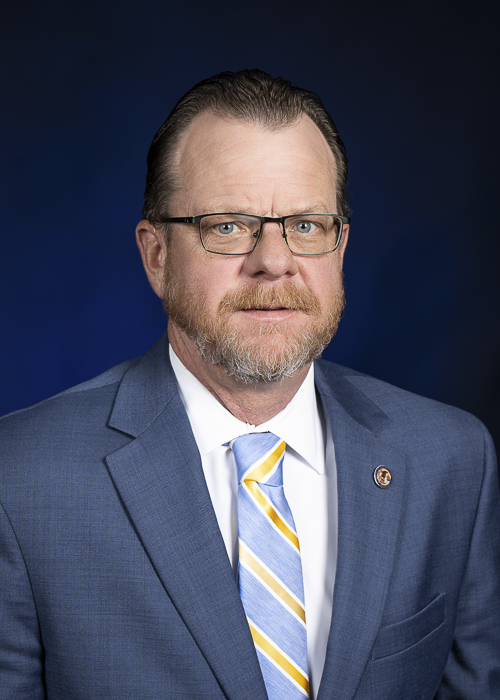
104th Regular Session Introduced by Larry Walsh

Creates a permanent Illinois Energy Policy Commission within DCEO to analyze affordability, reliability, and impacts of energy policy, advising annually through 2030.

0
WeVote Research Nonpartisan
Bill Summary · HB 5195

Summary of HB5195 (104th General Assembly, Illinois)

Title: DCEO-ENERGY CHOICE

Bill number: HB5195
Session: 104th General Assembly
Introduced: February 10, 2026
Sponsor: Rep. Lawrence “Larry” Walsh, Jr. (co-sponsor: Larry Walsh)
Jurisdiction: Illinois

Effective date: Immediately upon becoming law

Committee status: As of the latest action, referred to Rules and previously to Energy & Environment; amendments filed and re-referred

1) Main purpose and intent

  • Establishes the Illinois Future of Energy Choice and Economic Impact Commission (the Commission) within the Department of Commerce and Economic Opportunity (DCEO).
  • The overarching goal is to regularly analyze and advise on energy policy to address affordability, accessibility, resilience, and consumer energy choices in Illinois.
  • Builds on the Climate and Equitable Jobs Act (CEJA) framework by creating a formal, ongoing, multi-stakeholder body to monitor evolving energy challenges and solutions, including reliability, cost, and workforce impacts.

2) Key provisions and changes

  • Creation and scope
    • Adds new Section 605-1119 to the 20 ILCS 605 (Civil Administrative Code) establishing the Illinois Future of Energy Choice and Economic Impact Commission.
  • Membership (quotas and balance)
    • Legislative leaders: 2 members from the Senate (one appointed by the President, one by the Minority Leader).
    • 2 members from the House (one appointed by the Speaker, one by the Minority Leader).
    • Executive agency representation:
    • Director of the Illinois Power Agency (or designee)
    • Chairman of the Illinois Commerce Commission (or designee)
    • Director of the Illinois Environmental Protection Agency (or designee)
    • Director of DCEO (or designee) — serves as the Chair of the Commission
    • Sector and stakeholder representation:
    • 2 members representing natural gas utilities (appointed by DCEO)
    • 2 members representing electric utilities (appointed by DCEO)
    • 1 member representing a statewide organization representing regulated municipalities and cooperatives (appointed by DCEO)
    • 2 members representing a statewide business organization (appointed by DCEO)
    • 2 members representing a statewide labor organization (appointed by DCEO)
    • 1 member representing Illinois’ nuclear power industry (appointed by DCEO)
    • 1 member representing a trade association for wind, solar, renewable transmission, and storage (appointed by DCEO)
    • Up to 2 additional members with energy policy expertise (appointed by DCEO) from private sector or Illinois higher education institutions
  • Compensation and meetings
    • Members serve without compensation.
    • Must meet at least quarterly.
    • DCEO provides administrative support.
  • Duties and authority
    • Analyze Illinois’ status as a net energy exporter, including potential regulatory or statutory barriers to export. Propose solutions to mitigate negative impacts if such policies exist.
    • Analyze the economic impact of current energy policies, including effects on workers in utilities and energy sectors relying on diverse energy sources (natural gas, electricity, nuclear, etc.).
    • Assess whether existing energy policies hinder meeting energy demand, affordable prices, or job support; recommend delays or elimination of certain policy timelines, retirements, or disruptions where appropriate.
    • Develop forecasts (pessimistic, optimistic, and baseline) to inform future energy policy decisions on affordability, energy choices, workforce, economic development, resource adequacy, energy efficiency, and demand.
    • Study all sources affecting energy costs in Illinois; review industry data and other sources for regulatory, policy, or external pressures on industry or customers.
    • Accept public comments to inform the Commission’s work.
    • Identify opportunities and barriers to ensure state agencies endorse an inclusive energy policy approach that supports existing sources and explores new technologies.
  • Reporting
    • Annual reporting: The Commission must report to the Governor and General Assembly by December 1 each year with activities, findings, and recommendations.
  • Sunset
    • The provision establishing the Commission is repealed on December 31, 2030, unless further action is taken.

3) Who/what would be affected

  • State governance and policy framework
    • Creation of a standing, multi-stakeholder Commission within DCEO to influence energy policy decisions.
  • Stakeholders and sectors
    • Utilities (electric and natural gas), nuclear industry, wind/solar/renewable storage sectors.
    • Local governments (through a statewide municipalities/cooperatives organization).
    • Business and labor communities.
    • Higher education and private sector energy policy experts.
  • Public and regulatory processes
    • Public comment opportunities; annual public-facing reports to Governor and General Assembly.
  • Administrative impact
    • DCEO would provide ongoing administrative support and coordination for Commission activities.

4) Procedural and timeline aspects

  • Establishment and operation
    • Commission is created and immediately operative upon enactment.
  • Meetings and support
    • Quarterly meetings required; DCEO to provide administrative support.
  • Reporting
    • Annual reports due by December 1 each year starting after the Commission begins work.
  • Duration
    • The Commission (and its enabling section) is scheduled for repeal on December 31, 2030, barring any extension or renewal by subsequent legislation.

5) Potential considerations for readers

  • How the Commission’s findings might influence CEJA implementation, energy pricing, reliability investments, and incentives.
  • The balance of representation aims to incorporate diverse viewpoints (industry, labor, municipalities, environmental regulators, and academia).
  • The practical impact on policy timelines and possible adjustments to energy policy milestones if the Commission recommends delays or eliminations.

This summary captures the bill’s core structure, scope, and potential impact on Illinois energy policy and governance.

Compiled from official sources — confirm details with the bill’s official record.

Sign in to ask a question.