

WeVote

Bill

Bill

SB 3240

CUSTOMER SUPPORT SERVICE

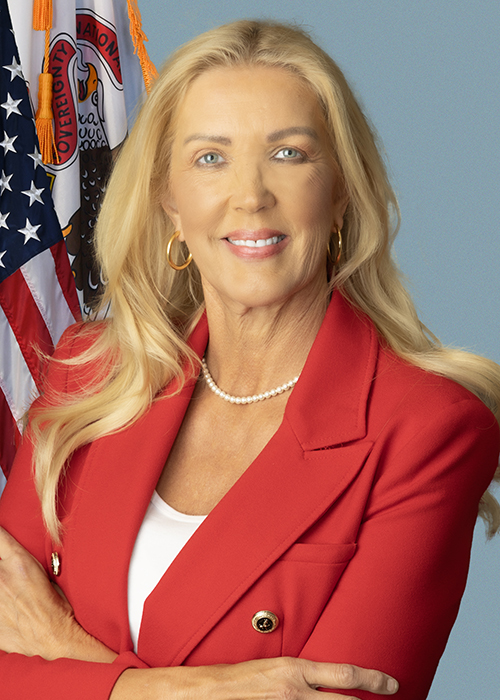
104th Regular Session Introduced by Sue Rezin

Illinois would require high-impact social media platforms to offer free, accessible customer support for reporting harmful content and enforce penalties if they fail to comply.

Rule 3-9(a) / Re-referred to Assignments
0
WeVote Research Nonpartisan
Bill Summary · SB 3240

Summary of SB 3240 (104th Illinois General Assembly)

Purpose and intent

  • SB 3240 Introduced by Sen. Sue Rezin on February 2, 2026.
  • The bill amends the Illinois Consumer Fraud and Deceptive Business Practices Act to require certain high-impact social media companies to provide a free, accessible customer support service for reporting harmful content.
  • It aims to ensure timely, transparent, and ongoing communication with users who report content believed to be illegal or in violation of the platform’s terms of service.
  • If enacted, violations would be enforceable by the Illinois Attorney General, with fines deposited into a mental health awareness fund.

Key provisions and changes

  • New section added: Section 2MMMM (Customer Support Service) to the Consumer Fraud Act.
  • Definition: “High-impact social media company” (HISMC) must meet all of the following:
    • Annual revenue of at least $3,000,000,000.
    • Provides an Internet-accessible platform with:
    • 300,000,000+ monthly active users for at least 3 of the preceding 12 months.
    • Primarily used to access or share user-generated content.
    • Exclusions: Companies that exclusively provide email/direct messaging, or platforms predominantly consisting of news, sports, entertainment, interactive video games, e-commerce, or provider-curated content where user comments/interactive features are incidental to the content.
  • Prohibited practice: An HISMC in Illinois may not fail to provide, at no cost, a customer support service for reporting harmful content the user believes is illegal or violates the platform’s terms.
  • Response and resolution timelines:
    • Initial response: Must respond within 1 business day after a customer’s initial contact.
    • Resolution steps: Must take active steps to resolve the issue and communicate the steps taken within 3 business days after initial contact (by mail, phone, or email as requested by the customer).
    • Ongoing communication: Must contact the customer at least once every 3 business days until the issue is resolved or determined unsolvable.
  • Enforcement and penalties:
    • The Illinois Attorney General may bring an action against an HISMC for non-compliance.
    • Fines: $1,000 per day, per violation.
    • Revenue from fines: Deposited into a fund to support mental health awareness in Illinois.
  • Effective date: The Act takes effect January 1, 2027 (as stated by the bill; section indicates “Effective date” of January 21, 2027, which may be a drafting discrepancy but the text lists 1/21/2027 as the effective date).

Who would be affected

  • Targeted entities: High-impact social media companies that meet the defined revenue and user-base thresholds.
  • Affected users: Illinois residents who use these platforms and report harmful content.
  • Government/enforcement: Illinois Attorney General would have authority to enforce the provisions through legal action.
  • Financial impact: Potential per-day fines for non-compliance; fines directed to a mental health awareness fund in Illinois.

Procedural and timeline considerations

  • Introduction and sponsor: Sen. Sue Rezin (co-sponsor listed).
  • Legislative timeline (as of the provided history):
    • Filed and assigned in February 2026.
    • Referred to committees with Rule 2-10 deadlines in 2026 (April 24, May 15 targets).
    • Bill status shows ongoing committee activity through spring 2026 with potential further readings and votes.
  • Passage would align with a January 1, 2027 (or January 21, 2027) effective date, depending on final drafting.

Notable details

  • The bill explicitly excludes certain types of platforms/products from the HISMC definition (e.g., pure email/direct messaging, or platforms whose primary focus is news, entertainment, certain games, e-commerce, or content where interactive features are incidental).
  • The objective is consumer protection, focusing on timely complaint handling and transparency in resolution efforts, with a funding mechanism via fines for mental health initiatives.

If you’d like, I can provide a side-by-side comparison with current law (815 ILCS 505) and outline potential implementation considerations for platforms and state agencies.

Compiled from official sources — confirm details with the bill’s official record.

Sign in to ask a question.