Summary: HR 7005 — Customer Non-Discrimination Act (119th Congress)
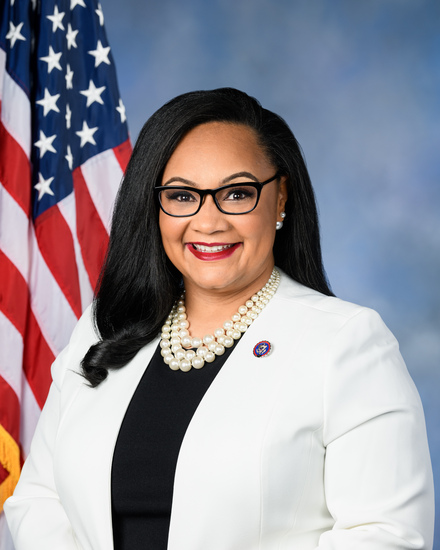
Proposed by: Rep. Bonnie Watson Coleman, with multiple cosponsors
Introduced: January 9, 2026
Committee: Judiciary
Purpose
- To prohibit discrimination or segregation in public accommodations on the basis of sex, including sexual orientation and gender identity, and to extend protections to a broad range of establishments and services.
Key Provisions and Changes
1) Expanded protected attributes
- Amends the Civil Rights Act of 1964 (Title II) to explicitly include:
- Sex (including sexual orientation and gender identity)
- National origin, race, color, religion remain in scope
- Adds definitions clarifying terms such as race, color, religion, sex, sexual orientation, and gender identity.
2) Broadening the scope of “public accommodations”
- Expands the list of covered establishments and services beyond traditional public facilities:
- Stores, shopping centers, online retailers or service providers
- Salons, banks, gas stations, food banks
- Service or care centers, shelters, travel agencies, funeral parlor
- Health care, accounting, and legal services
- Transportation-related establishments: train, bus, car services, taxis, airlines, and related stations/depot
- Also covers places that provide any good, service, or program, and “establishments” that provide transportation services.
3) Non-discrimination in facilities
- Prohibits denial of access to shared facilities (restrooms, locker rooms, dressing rooms) based on gender identity.
- The prohibition applies to facilities in accordance with an individual’s gender identity.
4) Rules of construction and definitions
- Defines “sex” to include pregnancy, childbirth, related medical conditions, sexual orientation, gender identity, and sex characteristics (including intersex traits).
- Defines “gender identity” as the gender-related identity, appearance, mannerisms, or other characteristics of an individual, regardless of designated sex at birth.
- Clarifies that “including” is expansive, not limiting.
- Establishes that “race,” “color,” “religion,” “sex,” and “national origin” may apply to associated or perceived characteristics of others, not just the individual’s own attributes.
5) Scope of legal claims and remedies
- The act does not limit existing civil rights remedies; individuals may pursue claims under related statutes (e.g., 42 U.S.C. 1983/1985) or other applicable laws.
- Federal law prohibiting discrimination is not to be interpreted as weakening pregnancy-related protections, sexual orientation, gender identity, or sex-stereotype prohibitions.
- Establishment scope includes entities whose operations affect commerce and who provide goods, services, or programs; not limited to physical facilities.
6) Anti-foreclosure of religious liberties
- Section 210 states that the Religious Freedom Restoration Act cannot be invoked to provide a claim or defense against enforcement of this act.
7) Non-preemption of other civil rights claims
- The Act preserves the availability of other Title II or related civil rights remedies and does not preclude concurrent claims under existing federal law.
Operational/Timeline Considerations
- The bill has been introduced and referred to the House Judiciary Committee. No floor vote or enacted date is provided within the text available.
- As with typical Civil Rights Act amendments, implementation would involve regulatory guidance and potential further rulemaking to harmonize with existing landmark civil rights frameworks.
Potential Impact
- Public accommodations: Broad protections against discrimination based on sex, sexual orientation, and gender identity in a wide array of public-facing services and establishments.
- Access to facilities: Stronger protections for transgender and non-binary individuals regarding access to gender-identity-aligned restrooms and similar facilities.
- Businesses and service providers: Requires compliance across diverse sectors, including online retailers and transportation services.
- Legal landscape: Creates a framework for potential civil rights litigation under Title II with extended definitions and broader coverage, while maintaining compatibility with other federal civil rights statutes.
Notes
- The bill’s language relies on expanding definitions and coverage within the Civil Rights Act of 1964, and would require enforcement through existing federal civil rights mechanisms, with potential regulatory guidance to operationalize the new standards.







Start the Conversation
Be the first to share your thoughts on this petition. Your voice matters!