

WeVote

Bill

Bill

HB 5037

Criminal procedure: statute of limitations; statute of limitations for certain criminal sexual conduct offenses related to a false representation in assisted reproduction; provide for. Amends sec. 24, ch. VII of 1927 PA 175 (MCL 767.24). TIE BAR WITH: HB 5036'25

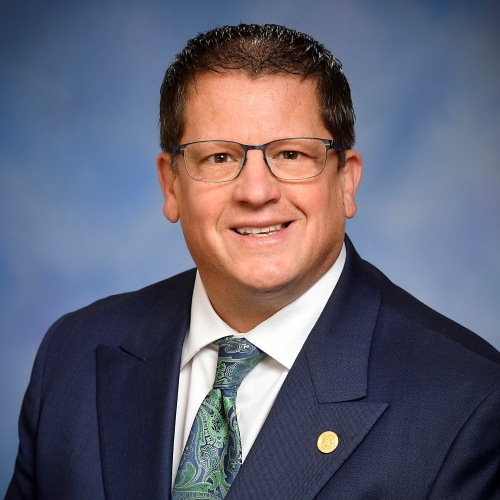
2025-2026 Regular Session Introduced by Brian BeGole and 8 co-sponsors

Extends filing window to 15 years for false representation in assisted reproduction; DNA allows late indictment if unidentified, then within 15 years after ID.

bill electronically reproduced 09/24/2025
0
WeVote Research Nonpartisan
Bill Summary · HB 5037

Summary — HB 5037 (103rd Legislature)

Title: Criminal procedure: statute of limitations; statute of limitations for certain criminal sexual conduct offenses related to a false representation in assisted reproduction; provide for. (Amends MCL 767.24)
Tie-bar: HB 5036

Main purpose

HB 5037 amends Michigan’s code of criminal procedure (MCL 767.24) to add the assisted‑reproduction false‑representation offense (proposed in HB 5036, MCL 750.219g) to the list of offenses with an extended statute of limitations. The bill sets the time limits for when an indictment for that offense may be filed and creates a DNA‑evidence exception that permits prosecution outside the ordinary limitation period under certain circumstances.

Key provisions

  • Adds proposed MCL 750.219g (false representation in assisted reproduction) to the statute‑of‑limitations section.
  • Sets the filing period for an indictment under section 750.219g at 15 years after the offense (subsection (5)(a)).
  • Provides a DNA exception (subsection (5)(b)): if evidence containing DNA from an unidentified individual is obtained, an indictment against that individual may be found and filed at any time after the offense; once that individual is identified, the indictment must be found and filed within 15 years after identification.
  • Retains related definitions and cross‑references already in MCL 767.24 for DNA and “identified.”
  • Effective date: 90 days after enactment.
  • Contingency: the act does not take effect unless HB 5036 is also enacted (enacting section 2).

What the bill does not do

HB 5037 does not itself create the assisted‑reproduction offenses or define penalties — those substantive crimes are proposed in HB 5036. HB 5037 solely addresses the timing for criminal prosecution of that offense.

Who is affected / likely impacts

  • Victims of assisted‑reproduction fraud (commonly called “fertility fraud”) would have a 15‑year window to initiate prosecution for the offense added by HB 5036; the DNA exception could allow prosecution beyond that window if unidentified DNA evidence exists.
  • Prosecutors and law enforcement: new procedural rules for charging and filing in these cases.
  • Health professionals and fertility clinics: indirectly affected because an extended filing period increases the exposure period for possible criminal charges if HB 5036 defining the offense becomes law.
  • Courts: will apply the new limitation/tolling rules when HB 5036 crimes are charged.

Procedure / timeline

  • Filed: March 13, 2025 (documented).
  • Introduced/read first time: September 24, 2025; referred to Committee on Families and Veterans.
  • Effective 90 days after enactment, but only if HB 5036 is enacted into law (tie‑bar).

Compiled from official sources — confirm details with the bill’s official record.

Sign in to ask a question.