

WeVote

Bill

Bill

HB 5510

Criminal procedure: sentencing; time period allowed for delayed sentencing; modify. Amends sec. 1, ch. XI of 1927 PA 175 (MCL 771.1). TIE BAR WITH: HB 5511'26

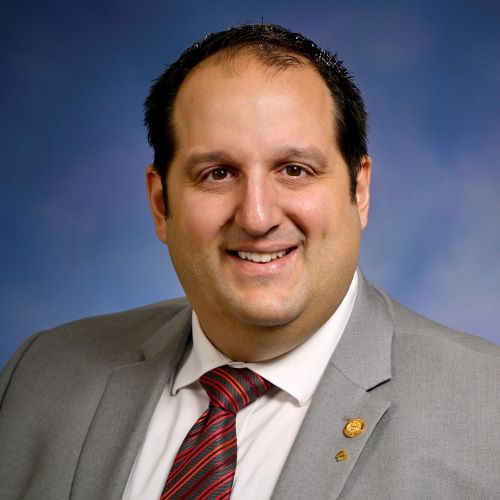
2025-2026 Regular Session Introduced by Joe Aragona and 12 co-sponsors

HB 5510 extends delayed sentencing for nonpayment of child support to 1–5 years (keeps 1 year for others); HB 5511 allows delaying judgment of conviction with conditions.

REFERRED TO COMMITTEE ON CIVIL RIGHTS, JUDICIARY, AND PUBLIC SAFETY
0
WeVote Research Nonpartisan
Bill Summary · HB 5510

Summary of Michigan House Bills 5510 and 5511 (2025-2026)

Jurisdiction: Michigan | Session: 2025-2026 | Bill Type: Criminal procedure; sentencing; delayed sentencing; entry of judgment of conviction

Note: HB 5510 ties to HB 5511. Both amend Chapter XI of the Code of Criminal Procedure (MCL 771.1 and related sections). HB 5510 as introduced 2/5/2026; HB 5511 as introduced 2/5/2026. Effective date and applicability contingent on enactment of both bills.

1) Purpose and Intent

  • HB 5510 aims to modify the delayed sentencing framework for defendants placed on probation, with a specific emphasis on cases involving nonpayment of child support (a felony under MCL 750.165). It seeks to:

    • Extend the maximum permitted delay before sentencing for certain probation-eligible cases from the current norm (up to 1 year) to a minimum of 1 year and a maximum of 5 years for nonpayment of child support, while preserving the existing 1-year cap for misdemeanors and other felonies.
    • Allow courts to delay the entry of the judgment of conviction under related authority, per HB 5511, during the extended delay period.
  • HB 5511 would create authority to postpone the entry of the judgment of conviction (not just the sentencing) in conjunction with a delayed sentence, under strict conditions:

    • The prosecutor (after consulting with the victim) must agree, and either:
    • The court finds good cause to delay judgment on the record, or
    • The defendant is accepted into a specialty court or rehabilitation program.
    • The bill delineates eligibility exclusions for delayed-entry-of-judgment, notably excluding certain child-related and serious offenses and traffic-related convictions involving a vehicle (felony or misdemeanor) from eligibility for delayed judgment.
    • Establishes a new separate section (MCL 777.1a) to govern this authority.

2) Key Provisions and Changes

  • HB 5510 (Delayed sentencing for nonpayment of child support):

    • Section 1 amendments to MCL 771.1:
    • When a defendant is placed on probation for offenses other than murder, treason, certain violent-sex offenses, armed robbery, or major controlled substance offenses, the court may delay sentencing.
    • New minimum and maximum delay periods:
      • Nonpayment of child support: delay for not less than 1 year and not more than 5 years.
      • Other misdemeanors and felonies: delay for up to 1 year (unchanged).
    • During the delay, the court can still impose and collect fines, costs, restitution, or supervision fees (if before the circuit court).
    • If the defendant is in the delay period, the court may delay entry of the judgment of conviction if allowed (per HB 5511’s proposed authority).
    • Fee provisions:
      • For delays managed by the circuit court, a supervision fee of $30 per month is due for up to 12 months (or up to 60 months if electronic monitoring is used? The text specifies ranges; the base framework is monthly, subject to caps).
      • If electronic monitoring is used, the fee is $60 per month for the months of supervision.
      • Fees are payable at the time of the delayed sentence order but can be paid monthly if the court approves installment payments.
      • Fee collection uses the Corrections code (MCL 791.225a). Only one supervision fee can apply at any given time; if overlapping fees would occur, the shorter remaining duration is waived.
    • Indigent defendants may have the supervision fee waived.
  • HB 5511 (Delay of entry of judgment of conviction):

    • Adds a new section (MCL 771.1a) allowing the court to delay entering the judgment of conviction when a delayed sentence is being pursued, with prosecutor consent and after victim consultation.
    • Eligibility restrictions:
    • Not eligible for delayed entry if it falls under certain sections that already allow delayed sentencing (e.g., youthful trainee discharge/dismissal, domestic violence-related offenses, first-time controlled substance offenses).
    • Traffic offenses involving operation of a vehicle that become a felony or misdemeanor are excluded.
    • The court retains discretion to delay entry of judgment in appropriate cases.
  • Effective date and legislative condition:

    • Each bill would take effect 90 days after enactment.
    • Neither bill can take effect unless both HB 5510 and HB 5511 are enacted.

3) Affected Parties and Impacts

  • Defendants:

    • Those charged with nonpayment of child support (felony) could receive substantially longer delays before sentencing (1–5 years), potentially impacting how and when punishment is imposed and how rehabilitation opportunities are pursued.
    • For misdemeanors and other felonies, the existing maximum 1-year delay remains.
    • The possibility of a delayed judgment of conviction (under HB 5511) could further affect the timing of criminal records and cases, subject to prosecutor and victim input and eligibility constraints.
  • Courts and the Department of Corrections (DOC):

    • Courts would administer extended delay periods and related supervision/fees.
    • DOC would collect supervision fees under the new delayed-sentence framework or delayed-judgment framework.
  • Victims:

    • Prosecution consents and victim consultation are required for delayed judgment, signaling potential impact on restitution and rehabilitation proceedings; the spending and placement in specialty courts may influence outcomes for victims.
  • Local governments and state:

    • Fiscal impact is indeterminate; potential savings from postponed incarceration vs. increased supervision costs; annual incarceration costs cited around $48,100 per inmate in state facilities (context for evaluating trade-offs).

4) Procedural and Timeline Notes

  • Delayed sentencing:

    • Applicable to most offenses except a listed set (murder, treason, certain violent sex offenses, armed robbery, major controlled substances).
    • HB 5510 extends the delay period for nonpayment of child support to 1–5 years; other offenses retain a 1-year maximum.
    • If delay is used, courts must record the reason for the delay.
  • Delayed judgment of conviction:

    • HB 5511 would authorize delaying judgment entry during the sentencing delay with prosecutor consent and victim consultation, plus good-ccause or rehab program acceptance triggers.
    • Prohibits delayed judgment in certain enumerated cases (youthful trainee exceptions, domestic violence, first-time controlled substances, specific traffic-related offenses).
  • Fees:

    • A supervision fee framework exists for delays; installment options may be provided; maximum durations and monitoring (electronic vs. non-electronic) affect fee amounts.
  • Enactment and tie-in:

    • Effective 90 days after enactment; both HB 5510 and HB 5511 must be enacted for any effect to occur.

5) Fiscal Considerations

  • The fiscal impact is indeterminate due to the uncertainty of how many defendants would receive delayed sentences or judgments.
  • Potential state savings from avoided or delayed prison confinement; potential local savings from delayed jail time.
  • Increased probation supervision costs and mandatory supervision fees could offset some savings and affect revenue.

If you’d like, I can provide a side-by-side comparison with current law (MCL 771.1) and a quick checklist of how a typical delayed-sentencing case would proceed under these proposals.

Compiled from official sources — confirm details with the bill’s official record.

Sign in to ask a question.