

WeVote

Bill

Bill

HB 5126

Criminal procedure: sentencing guidelines; sentencing guidelines for theft of cargo; create. Amends sec. 16r, ch. XVII of 1927 PA 175 (MCL 777.16r). TIE BAR WITH: HB 5125'25

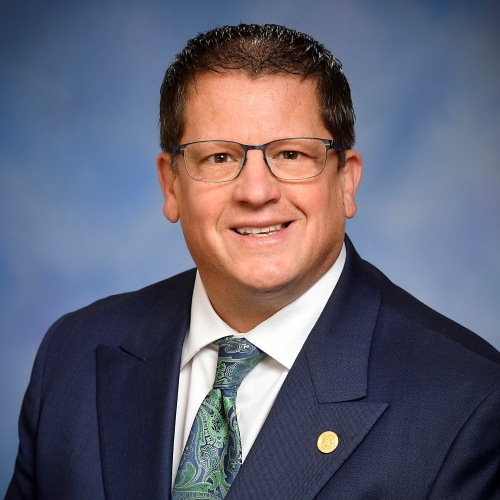
2025-2026 Regular Session Introduced by Brian BeGole and 16 co-sponsors

HB 5126 updates Michigan sentencing guidelines by listing theft/larceny offenses (including theft of cargo) with specific guideline classes, tying to HB 5125.

transmitted
0
WeVote Research Nonpartisan
Bill Summary · HB 5126

Summary — HB 5126 (2025)

Title: Criminal procedure: sentencing guidelines; sentencing guidelines for theft of cargo; create. Amends sec. 16r, ch. XVII of 1927 PA 175 (MCL 777.16r). Tie-bar with HB 5125.

Purpose / Intent

HB 5126 updates Michigan’s sentencing guideline statute (MCL 777.16r) to enumerate specific theft- and larceny-related felonies appearing in chapter 750 of the Michigan Compiled Laws and to assign those offenses to guideline offense classes/categories. Notably, the bill expressly lists “theft of cargo” (MCL 750.356e) among the covered offenses and assigns it an offense class/category. The broader intent is to clarify which chapter 750 offenses are subject to the Sentencing Guidelines grid and to specify their guideline classifications.

Key provisions / Changes

  • Amends section 16r of chapter XVII (MCL 777.16r) to include a detailed list of felonies from chapter 750, each paired with an offense class/category that corresponds to the sentencing guidelines.
  • Specifically lists and classifies numerous property/larceny offenses, including (examples from the bill text):
    • MCL 750.356(2): Larceny involving $20,000 or more (Class D)
    • MCL 750.356(3): Larceny involving $1,000 to $20,000 (Class E)
    • MCL 750.356a series: Larceny from/breaking into motor vehicles (Classes E, D, G depending on elements and amount)
    • MCL 750.356e: Theft of cargo (classified as Category D)
    • Other offenses included: larceny from the person, larceny of livestock, theft of firearms, larceny by conversion, larceny by false personation, retail fraud (first degree), etc.
  • Establishes monetary thresholds and the effect of prior convictions on class assignment where applicable (e.g., distinctions for $1,000–$20,000 vs. $20,000+).
  • Enacting section 1: bill takes effect 90 days after enactment.
  • Enacting section 2: effective only if companion legislation (Senate Bill No. ____ / HB 5125) of the 103rd Legislature is enacted — i.e., the bill is tie-barred.

Who is affected

  • Defendants charged with the listed chapter 750 offenses (including those charged with theft of cargo).
  • Prosecutors and defense attorneys (changes to offense classifications can affect charging and plea negotiations).
  • Judges applying the Michigan Sentencing Guidelines (the classifications determine guideline scoring and recommended ranges).
  • Michigan Department of Corrections and county jail systems to the extent guideline changes alter sentence lengths or patterns.
  • Law enforcement and insurers may be indirectly affected if shifts in charging/sentencing practices follow.

Procedural / Timeline notes

  • Filed: March 13, 2025 (bill record)
  • Introduced / electronically reproduced: October 23, 2025 (introduced by Rep. Steve Frisbie)
  • Read first time and referred to Committee on Judiciary: October 23, 2025
  • Companion / related bill: Senate Bill 2590 (companion); HB 5125 is tie-barred for effectiveness.
  • Effective date if enacted: 90 days after enactment, but only if the identified companion bill(s) are also enacted.

Potential impact

  • Legal clarity: Explicitly listing offenses and their guideline classes reduces ambiguity about guideline applicability.
  • Sentencing outcomes: Assigning theft of cargo and related offenses to specific guideline classes could change the presumptive sentencing ranges for those offenses (direction depends on how the listed classes compare to prior practice).
  • No fiscal estimates or specific sentence-length changes are provided in the bill text; actual fiscal/sentencing impacts would depend on rule application and prosecutorial practices after enactment.

Compiled from official sources — confirm details with the bill’s official record.

Sign in to ask a question.