

WeVote

Bill

Bill

HB 5038

Criminal procedure: sentencing guidelines; sentencing guidelines for false representation regarding assisted reproduction; provide for. Amends sec. 16l, ch. XVII of 1927 PA 175 (MCL 777.16l). TIE BAR WITH: HB 5036'25

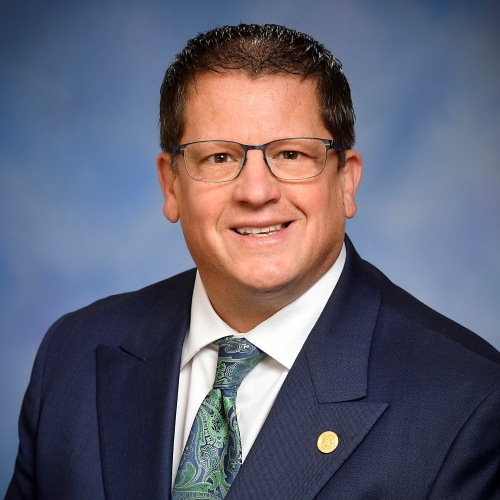
2025-2026 Regular Session Introduced by Brian BeGole and 9 co-sponsors

Adds two assisted reproduction offenses to Michigan sentencing guidelines (false representation; using an embryo/gamete without patient consent), contingent on HB 5036 becoming law.

bill electronically reproduced 09/24/2025
0
WeVote Research Nonpartisan
Bill Summary · HB 5038

Summary — HB 5038 (2025)

Title: Criminal procedure: sentencing guidelines; sentencing guidelines for false representation regarding assisted reproduction; provide for. (Amends sec. 16l, ch. XVII of 1927 PA 175 — MCL 777.16l.)
Tie bar: HB 5036

Purpose

HB 5038 adds new assisted‑reproduction–related criminal offenses (created in companion HB 5036) to Michigan’s sentencing guidelines schedule so that sentencing courts may score and sentence those offenses under the guidelines.

Key provisions

  • Amends Chapter XVII, section 16l of the Code of Criminal Procedure (MCL 777.16l) to list two assisted‑reproduction felonies in the sentencing guidelines table:
    • MCL 750.219g(1) — “False representation with regard to specific circumstances regarding an assisted reproduction procedure”: classified as a Class E offense against the person.
    • MCL 750.219g(2) — “Health professional knowingly or recklessly using a human embryo or gamete other than the one agreed to by the patient in an assisted reproduction procedure”: classified as a Class C offense against the person.
  • Enacting section provides that the amendatory act takes effect 90 days after enactment and that it does not take effect unless HB 5036 is also enacted.

Relationship to HB 5036 (required)

HB 5038 does not itself define the underlying offenses — it adds them to the sentencing schedule. HB 5036 (the tie‑barred bill) creates the substantive criminal offenses, including:
- A felony (up to 5 years imprisonment and up to $50,000 fine) for knowingly or intentionally providing false or misleading information about gametes/embryos, donor identity, donor medical/social/family history, etc.
- A felony (up to 15 years imprisonment and up to $100,000 fine) for a health professional knowingly or recklessly using an embryo or gamete other than the one the patient expressly consented to.
HB 5036 also contains definitions (e.g., assisted reproduction, gamete, donor, health professional) and provisions (e.g., anonymous donor is not a defense).

Who would be affected

  • Health professionals and assisted reproduction clinics (licensed under Article 15 of the Public Health Code) — by exposure to new criminal penalties and updated guideline scoring.
  • Patients and donors involved in assisted reproduction — as potential victims and as subjects of the statutory definitions.
  • Courts and sentencing authorities — by receiving guideline classifications for these offenses.
  • Related regulatory/civil processes (see companion bills HBs 5035 and 5039 addressing civil liability and professional discipline).

Procedural / timeline notes

  • Introduced 9/24/2025; referred to Committee on Families and Veterans.
  • Effective 90 days after enactment, only if HB 5036 also becomes law.
  • HB 5038 is focused solely on sentencing guideline placement — the new criminal statutes and penalties are in HB 5036.

Compiled from official sources — confirm details with the bill’s official record.

Sign in to ask a question.