

WeVote

Bill

Bill

HB 5080

Criminal procedure: sentencing guidelines; sentencing guidelines for disarming a law enforcement officer of a firearm if accomplished by force or if law enforcement officer is injured; provide for. Amends sec. 16x, ch. XVII of 1927 PA 175 (MCL 777.16x). TIE BAR WITH: HB 5079'25

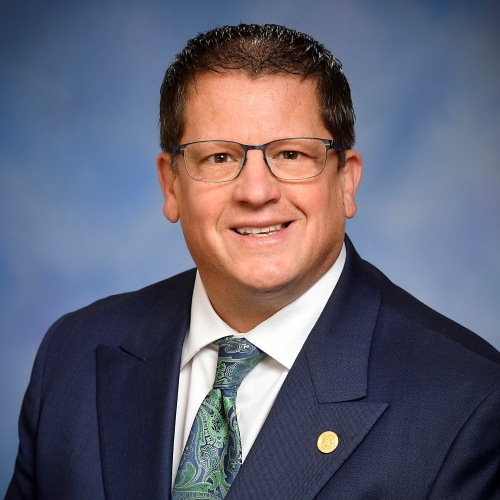
2025-2026 Regular Session Introduced by Brian BeGole and 5 co-sponsors

Disarming a peace officer or corrections officer by force becomes a Class C felony and is regulated under Michigan sentencing guidelines, with a 20-year max.

REFERRED TO COMMITTEE ON CIVIL RIGHTS, JUDICIARY, AND PUBLIC SAFETY
0
WeVote Research Nonpartisan
Bill Summary · HB 5080

Summary — HB 5080 (2025)

Title: Criminal procedure: sentencing guidelines; classify disarming a peace officer of a firearm using violence or force as a Class C felony (amends MCL 777.16x). Tied to HB 5079.

Purpose

HB 5080 places an enhanced disarming offense — taking a firearm from a peace officer or corrections officer by force or violence (as created in HB 5079) — within Michigan’s sentencing guidelines by classifying the offense as a Class C felony against a person (20-year statutory maximum).

Key provisions

  • Amends section 16x of chapter XVII of the Code of Criminal Procedure (MCL 777.16x) to include the offense:
    • 750.479b(3) — “Disarming a peace officer of a firearm using violence or force” — as a Class C felony against the person.
  • Sets statutory maximum term of imprisonment for the offense at 20 years (consistent with the underlying criminal statute created/amended in HB 5079).
  • Effectiveness:
    • Takes effect 90 days after enactment.
    • Does not take effect unless companion HB 5079 (which creates/defines the enhanced criminal offense) is enacted.

Who or what is affected

  • Defendants accused or convicted of using force or violence to take a firearm from a peace officer or corrections officer: the offense will be classified as Class C in the sentencing guidelines, guiding recommended sentences.
  • Law enforcement and corrections personnel: the underlying criminal statute (HB 5079) expands penalties and clarifies circumstances when the enhanced penalty applies.
  • Courts, prosecutors, defenders, and corrections agencies: will apply the sentencing grid placement and may see changes in caseload severity and supervision needs.

Background & related legislation

  • HB 5080 is the companion sentencing-guidelines bill to HB 5079, which creates the enhanced felony offense in the Penal Code (MCL 750.479b).
  • Reintroduction of provisions from prior session bills (HBs 4211/4212, 2021–22).
  • Related Senate companion: SB 1749.

Fiscal and policy impact

  • HB 5080 itself is not expected to have a direct fiscal impact (it only places the offense in the guidelines).
  • Fiscal impacts primarily stem from HB 5079: indeterminate increased costs to state prisons, parole/probation, and local courts if convictions increase; potential penal fine revenue changes (used for law libraries).
  • Support noted from the Michigan Department of Attorney General and the Michigan Sheriffs’ Association.

Legislative status (selected)

  • Introduced: Sept 26, 2025 (Rep. Mike Mueller et al.).
  • Passed House: Nov 6, 2025 (amended; immediate effect given by House action).
  • Referred: Nov 12, 2025 to Committee on Civil Rights, Judiciary, and Public Safety.
  • Effective date contingent on enactment of HB 5079; otherwise provision does not take effect.

Compiled from official sources — confirm details with the bill’s official record.

Sign in to ask a question.