Summary — HB 4332 (2025 introduction)
Status snapshot
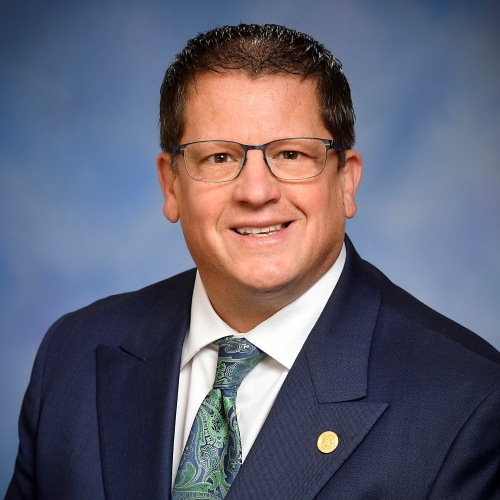
- Introduced April 17, 2025 (Rep. Brad Paquette). Read first time and referred to the House Committee on Health Policy. (Legislative history also shows related entries April 1, 2025, referring the bill to Corrections.)
- Note: an earlier, different HB 4332 (sponsored by Rep. Karen Whitsett in 2023–2024) amended the Home Rule City Act and was enacted as Public Act 83 of 2024. The 2025 filing with the same bill number proposes a new addition to the Public Health Code.
Purpose and intent
- Add a new section (sec. 2670) to the Michigan Public Health Code to prohibit "pathogen enhancement engineering or research" — i.e., altering pathogens to increase environmental persistence, transmissibility, pathogenicity, infectivity, or virulence — and to establish criminal penalties and a whistleblower reward tied to such conduct.
Key provisions
- Prohibition: It is unlawful for any person to conduct "pathogen enhancement engineering or research" (defined broadly to include altering naturally or synthetically derived pathogens to enhance persistence, transmissibility, pathogenicity, infectivity, or virulence).
- Criminal penalty: Violation is a felony punishable by up to 5 years' imprisonment, a fine up to $100,000, or both.
- Reward for reporting: If an individual reports conduct to "the department" that leads to discovery of a violation, the department must reward that individual $50,000.
- Notification and education duties: The department must notify employees of biological research facilities about the potential reward and create/distribute educational materials that include information on the Biological Weapons Convention and federal law (18 U.S.C. § 175).
- Definitions: "Person" uses the definition in section 1106 of the Public Health Code or includes a governmental entity.
Who would be affected
- Researchers and personnel at biological research facilities (academic, governmental, private) performing work with pathogens.
- Employers and institutions operating biological labs — subject to notifications and potential investigations.
- The designated “department” (presumably the state public health department) for administering notifications, education, investigation follow‑up, and reward payments.
- Potentially any individual who alters pathogens as described in the definition.
Potential impacts and considerations
- Enforcement and fiscal: Possible state costs to investigate violations and to pay $50,000 rewards; fines up to $100,000 could yield revenue but are secondary to enforcement costs. The bill does not specify funding sources.
- Research implications: The statutory definition is broad and could affect dual-use or legitimate gain-of-function research; institutions may change protocols or compliance procedures in response.
- Whistleblower incentive: A $50,000 reward creates a strong reporting incentive but may raise concerns about false reports or employment relations.
- Interaction with federal law: The bill explicitly references federal criminal law (18 U.S.C. § 175) and international treaty obligations (Biological Weapons Convention) in required education materials.
Procedural / timeline notes
- Current (as of the bill filing): Referred to House Health Policy Committee after first reading (4/17/2025).
- Past: A different HB 4332 concerning local blight penalties was enacted as Public Act 83 of 2024; readers should note the same bill number has been used for different measures across sessions.