

WeVote

Bill

Bill

HB 5511

Criminal procedure: sentencing; delayed entry of judgment of conviction when sentencing is delayed; allow with exceptions. Amends 1927 PA 175 (MCL 760.1 - 777.69) by adding sec. 1a to ch. XI. TIE BAR WITH: HB 5510'26

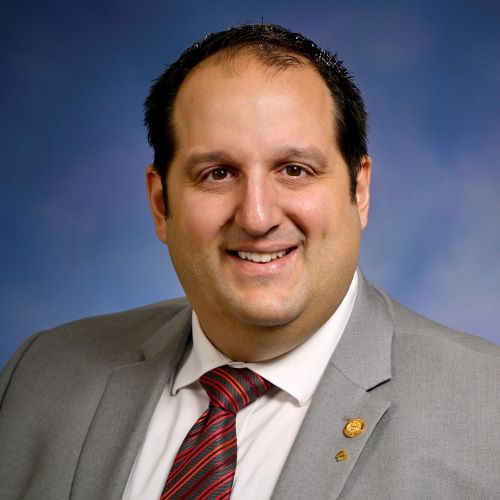
2025-2026 Regular Session Introduced by Joe Aragona and 12 co-sponsors

Courts may delay not only sentencing but also the entry of judgment of conviction if sentencing is delayed and good cause or a rehabilitation program is shown.

REFERRED TO COMMITTEE ON CIVIL RIGHTS, JUDICIARY, AND PUBLIC SAFETY
0
WeVote Research Nonpartisan
Bill Summary · HB 5511

Summary of HB 5511 (Michigan, 2025-2026)

This summary covers House Bill 5511, which amends the Michigan Code of Criminal Procedure to modify how sentencing and entry of judgment of conviction can be handled when sentencing is delayed.

1) Purpose and Intent

  • The bill aims to provide courts with the option to delay not only sentencing but also the entry of judgment of conviction when sentencing is delayed, in certain cases.
  • Specifically, it coordinates with ongoing probation procedures related to nonpayment of child support and allows additional flexibility to support rehabilitation, including participation in specialty courts or similar programs.

2) Key Provisions and Changes

New authority to delay judgment entry (Section 1a added to Chapter XI)

  • When a court is delaying sentence under the existing Section 1, the prosecutor (after consulting with the victim) may have the court delay the entry of the judgment of conviction until sentencing is complete.
  • Conditions for delaying judgment entry:
    • The court finds good cause to delay the entry of judgment on the record, or
    • The defendant is accepted into a specialty court or a similar rehabilitation program.
  • The court has discretion to grant this delayed judgment-entry mechanism.

Eligibility limitations (subsection (2))

  • A defendant is not eligible for a delayed entry of judgment under subsection (1a) if the conviction:
    • Falls under certain types eligible for a delayed sentence under specified sections (e.g., discharge and dismissal provisions for youthful trainees; domestic violence-related provisions; first-time controlled substance offenses in the Public Health Code).
    • Involves a traffic offense under the Michigan Vehicle Code (or a substantially similar local ordinance) in which the act involved either a felony or misdemeanor operation of a vehicle at the time of violation.

Effective date

  • The act takes effect 90 days after enactment.

Tie-in with HB 5510 (Required for effect)

  • The effectiveness of HB 5511 depends on HB 5510 being enacted. Both bills must be enacted for HB 5511 to take effect.

3) Who/What is Affected

defendants and cases

  • Defendants who are subject to delayed sentencing under Chapter XI (the Probation/Delayed Sentencing provisions), including those in nonpayment of child support cases, could be eligible for delayed entry of judgment if the conditions are met.
  • Prosecution and victims: The prosecutor must agree to the delayed judgment-entry after consulting with the victim.

Courts and processes

  • Courts would gain authority to delay the entry of judgment of conviction in addition to delaying sentencing, when appropriate.
  • Specialty courts or rehabilitation programs (e.g., drug treatment courts) are relevant pathways for eligibility.

Financial/administrative impacts

  • Probation supervision costs could increase due to the extended period before judgment.
  • Courts may impose supervision fees (as currently authorized), including:
    • $30 per month for up to 12 months (standard supervision).
    • $60 per month if electronic monitoring is used.
  • The fiscal impact is described as indeterminate but could involve savings from reduced incarceration time and potential increased fee revenue from extended supervision.

4) Procedural and Timeline Aspects

  • Effective date: 90 days after enactment, contingent on HB 5510 also becoming law.
  • Process: If a sentencing delay is in place, and the prosecutor agrees after victim consultation, the court may delay the entry of judgment until sentencing is complete under the new section 1a.
  • Limitations exclude certain offenses from eligibility, notably certain delayed-sentence eligible offenses and traffic-related offenses involving vehicle operation.

5) Fiscal Considerations

  • Indeterminate impact on state and local governments; depends on how many defendants receive delayed sentences and delayed judgments.
  • Potential state savings if delays reduce prison time; potential local savings if jail time is delayed.
  • Possible increased costs from extended probation supervision and administration.
  • An estimated cost per state prisoner in 2025 was about $48,100; local incarceration costs vary.

6) Supporting and Legislative Context

  • Sponsorship and committee: Judiciary Committee; multiple sponsors from both pro and con perspectives.
  • Related to nonpayment of child support offenses, but with broader implications for delayed sentencing and judgment entry.
  • Ties to HB 5510 for practical implementation.

If you’d like, I can provide a side-by-side comparison with current law or a concise one-page briefing for policymakers.

Compiled from official sources — confirm details with the bill’s official record.

Sign in to ask a question.