

WeVote

Bill

Bill

HB 6081

Criminal procedure: preliminary examination; certain rules and procedures for conducting a preliminary examination; revise. Amends sec. 11b, ch. VI of 1927 PA 175 (MCL 766.11b) & adds sec. 11c to ch. VI.

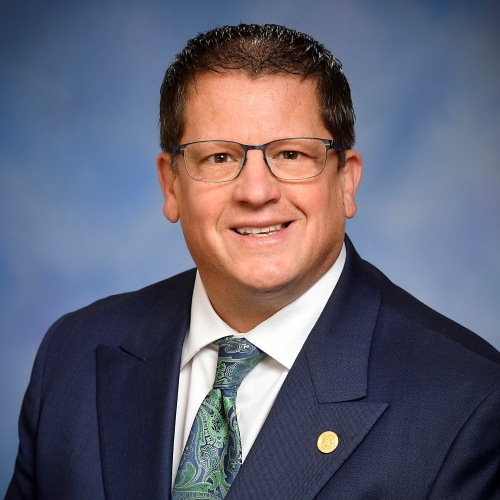
2025-2026 Regular Session Introduced by Brian BeGole and 5 co-sponsors

HB 6081 lets certain records and reports be admitted without testimony in early Michigan preliminary exams, then phases out normal evidence rules for exams starting after a set dat

bill electronically reproduced 06/16/2026
0
WeVote Research Nonpartisan
Bill Summary · HB 6081

Overview

HB 6081 (Session 2025-2026, Michigan) proposes changes to the rules governing preliminary examinations in criminal procedure. The bill amends existing statute (Chapter VI, Sec. 11b of 1927 PA 175, as amended) and adds a new Sec. 11c. The core thrust is to modify what evidence is admissible and how the preliminary examination is conducted, with a phased implementation based on dates relative to the act’s effective date.

Main purpose and intent

  • To adjust the use of hearsay and admissibility of certain evidence at preliminary examinations.
  • To differentiate two approaches over time: a version where certain documents and reports are admissible without testimony or additional authentication, and a later version where the rules of evidence do not apply at all to preliminary examinations.
  • To establish a transitional timeline governing when these provisions take effect and when they expire or cease to apply.

Key provisions and changes

Section 11b (amendment to existing rules of evidence at preliminary examination)

  • Subsection (1): Under current evidence rules, certain categories of evidence would be admissible at a preliminary examination without the testimony of the author or additional authentication. These include:
    • (a) Drug analysis field test results (to establish a substance is a controlled substance).
    • (b) Certified copies of court or government agency records (written/electronic orders, judgments, docket entries, etc.).
    • (c) Non-law-enforcement routine business reports.
    • (d) Law enforcement or public agency reports, excluding police investigative reports.
  • Subsection (2): The magistrate can permit subpoena and live testimony from witnesses whose hearsay testimony was introduced under this section if live testimony is relevant to determining probable cause.
  • Subsection (3): Defines “controlled substance” as per Section 7104 of the Public Health Code (1978 PA 368, MCL 333.7104).
  • Subsection (4): Specifies a sunset-like date window:
    • This section applies to preliminary examinations commenced on or before 90 days after the amendatory act’s effective date or by December 31, 2026, whichever is later.
    • Beginning 91 days after the effective date or January 1, 2027, whichever is later, this section does not apply (i.e., the provision would no longer govern those proceedings started after that date).

Section 11c (new provision)

  • Beginning 91 days after the amendatory act’s effective date or January 1, 2027, whichever is later, the rules of evidence do not apply at a preliminary examination.
  • This provision applies to preliminary examinations commenced 91 days after the effective date or January 1, 2027, whichever is later.

Who/what would be affected

  • Defendants and their counsel, prosecutors, and magistrates/administrative judges presiding over preliminary examinations.
  • Parties to cases where initial charges are pursued and a preliminary examination is scheduled.
  • Stakeholders relying on specific types of evidence (laboratory reports, court records, routine business records, and non-law-enforcement reports) in early-stage proceedings.

Procedural and timeline aspects

  • The bill introduces a two-phase approach:
    • Phase-in related to Sec. 11b: Applies to preliminary examinations commenced by 90 days after the act’s effective date or by December 31, 2026 (whichever is later).
    • Phase-out: Beginning 91 days after the effective date or January 1, 2027 (whichever is later), Sec. 11b’s provisions no longer apply.
  • Section 11c creates an additional, broader framework where, starting 91 days after the effective date (or January 1, 2027), the rules of evidence would not apply at a preliminary examination, effectively altering the evidentiary standard for those proceedings commenced in that window.
  • The act defines “controlled substance” for purposes of the proposed evidentiary changes.

Potential impacts and considerations

  • Short-term (through end of 2026): Expanded admissibility of certain non-testimonial records and reports at preliminary examinations, possibly reducing the need for live testimony from certain witnesses.
  • Long-term (starting 2027): A more substantial change where the traditional rules of evidence do not apply at preliminary examinations for proceedings begun after the specified date, which could impact the balancing of probative value versus potential prejudice and the overall fairness of early-stage determinations.
  • The ability for prosecutors or defense to compel live testimony from witnesses whose hearsay testimony was admitted remains, under Subsection (2) of Sec. 11b, if it is relevant to probable cause determinations.

Summary

HB 6081 seeks to redefine the evidentiary framework for Michigan preliminary examinations by expanding permissible non-testimonial evidence under Sec. 11b for certain cases initiated by late-2026, and by creating a broader regime under Sec. 11c that, for examinations commenced after a specified date, would eliminate the default application of the traditional rules of evidence. The bill sets a clear timing structure for when these changes take effect and when they phase out, with particular attention to drug-related evidence, court and agency records, and routine business reports.

Compiled from official sources — confirm details with the bill’s official record.

Sign in to ask a question.