

WeVote

Bill

Bill

SB 650

Criminal Procedure - Domestic Violence Offender Registry

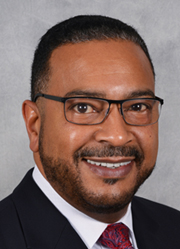
2025 Regular Session Introduced by Anthony Muse and 3 co-sponsors

Creates a public Domestic Violence Offender Registry for people with 3+ domestically related convictions; 15-year term, plus 20 more years per additional qualifying conviction.

Hearing 2/12 at 1:00 p.m.
0
WeVote Research Nonpartisan
Bill Summary · SB 650

SB 650 — Criminal Procedure: Domestic Violence Offender Registry

Status: Hearing scheduled Feb 12 at 1:00 p.m. | Introduced: early 2025 (reported Jan 25/Feb 20 in filings)
Primary subject: Establishes a publicly accessible registry for repeat domestic-violence–related offenders

Purpose / Intent

Create and maintain a central, public Domestic Violence Offender Registry to inform the public and law enforcement about individuals convicted repeatedly of domestically related crimes and to provide a statutory framework for registration, duration, exemptions, and penalties.

Key provisions

  • Establishes a Domestic Violence Offender Registry to be created and maintained by the Department of Public Safety and Correctional Services (DPSCS).
  • Who must register: any person convicted three or more times of a “domestically related crime.” A “domestically related crime” means (1) a crime of domestic violence under Family Law §4‑701 or (2) a crime against a victim who had a sexual relationship with the defendant within the 12 months preceding the offense. A conviction includes findings of guilt or pleas of guilty/no contest.
  • Registration procedure:
    • Registrants must register with the county sheriff where they reside on or before release, the start of probation or suspended sentence, or when receiving a sentence with no incarceration.
    • Required information: legal name, current residential address/location, the qualifying crimes and dates/locations, and a full‑face digital head‑and‑shoulders image (photograph).
    • Sheriffs forward registration data to DPSCS; DPSCS updates the central registry from sheriff submissions and other available information.
    • Registrants must update annually and must report any address changes within 10 days.
  • Duration:
    • Registration remains in effect 15 years after the later of the latest conviction date or release from incarceration.
    • The 15‑year term is extended by an additional 20 years for each qualifying conviction occurring after initial registration.
  • Public access: registry information must be made available via Internet, telephone, written request, and in person.
  • Exemptions/removal:
    • A person required to register may petition the circuit court for an exemption. The court may exempt and order removal if it finds the crimes and criminal history do not indicate a risk of reoffense and the person is not a danger to others; the court must provide written findings.
    • Registration termination also occurs if convictions are reversed, vacated, set aside, or the person is pardoned.
  • Penalty for noncompliance: failure to register or knowingly providing inaccurate information is a misdemeanor punishable by up to a $2,000 fine.

Who is affected

  • Required registrants: individuals with three or more qualifying domestically related convictions.
  • State agencies: DPSCS (creates/operates registry), county sheriffs (collect/register, obtain images, forward data), Judiciary (handles exemption petitions).
  • Local governments: sheriffs’ offices will incur administrative costs (staffing, processing).
  • Public and victims: gain access to registry data.
  • Defense/public defender offices may see litigation/workload changes (e.g., exemption petitions), though fiscal analyses vary.

Administrative & fiscal impacts (estimates)

  • DPSCS one‑time programming costs: approx. $1.39 million (FY2026 estimate).
  • DPSCS staffing: estimate provided by agency for 15 staff (1 manager, 2 supervisors, 12 registry specialists) — ~$1.1 million in FY2026, rising in later years; actual needs depend on caseload and interpretation of supervision responsibilities.
  • Judiciary programming: one‑time costs ~ $10,742 (FY2026).
  • Local sheriff offices: potential significant increases in workload/costs (many counties report potential need for added staff).
  • Public Defender: some offices estimated additional staff, though state analysts note impacts may be manageable within existing resources.
  • Racial equity considerations: analyses note potential disparate impacts given existing domestic violence arrest/conviction patterns (data show overrepresentation of Black victims and arrests in related categories).

Procedural / timeline notes

  • Hearing: scheduled Feb 12 at 1:00 p.m. (per bill metadata).
  • Effective date in the bill text (Maryland draft): October 1, 2025.
  • Implementation would require DPSCS programming, sheriff coordination, and administrative procedures to operationalize registration, updates, public access, and court exemption processes.

Considerations / tradeoffs

  • Public safety vs. privacy/stigma: registry increases transparency for victims and communities but raises concerns about public disclosure, collateral impacts on registrants, and potential racial disparities.
  • Local cost burden: sheriffs and counties may need resources to absorb registration intake, photo capture, record forwarding, and annual updates.
  • Legal standards for exemption: the circuit‑court petition process creates a judicial safety valve but may generate litigation and case processing workload.

If you want, I can:
- Draft a one‑page stakeholder brief (law enforcement, courts, advocacy groups) summarizing operational needs; or
- Extract the exact statutory text sections and create a side‑by‑side comparison with existing sex‑offender registry law for implementation guidance.

Compiled from official sources — confirm details with the bill’s official record.

Sign in to ask a question.