Summary — HB 5079 (Michigan)
Title: Crimes: public office and officers; penalties for disarming a law enforcement officer of a firearm if accomplished by force or if law enforcement officer is injured; increase. (Amends MCL 750.479b)
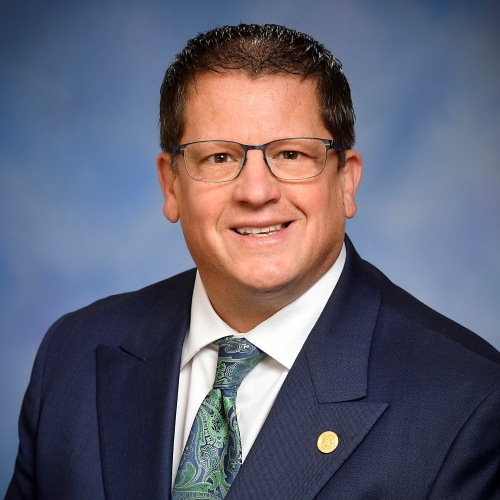
Sponsor: Rep. Mike Mueller (primary); cosponsors: Mike Harris, Brian BeGole, Jay DeBoyer, Angela Rigas, William Bruck
Status (most recent): Passed House (Nov 6, 2025); referred to Senate Committee on Civil Rights, Judiciary, and Public Safety (Nov 12, 2025). Filed earlier in 2025; substitute (H‑1) adopted in committee. Effective date: 90 days after enactment.
Purpose
- To increase criminal penalties for taking a firearm from a peace officer or corrections officer when force or violence is used (or attempted) and to clarify who qualifies as a peace officer for purposes of the statute.
Key provisions
- Retains existing baseline penalties for taking a non‑firearm weapon from an officer: felony punishable by up to 4 years imprisonment and/or up to $2,500 fine (if the defendant knew or had reason to know the victim was an officer, officer was acting in the line of duty, weapon taken without consent, and officer authorized to carry).
- Retains existing baseline penalty for taking a firearm without force: felony punishable by up to 10 years imprisonment and/or up to $5,000 fine (same circumstances as above).
- Creates an enhanced felony penalty when the firearm is taken (or attempted to be taken) using force or violence while the officer is on duty and authorized to carry: as passed by the House, the maximum statutory imprisonment was set at 15 years (note: earlier committee/reports referenced a 20‑year maximum; the House‑passed text sets 15 years) and/or up to $5,000 fine.
- Confirms that convictions for this offense do not preclude charging or convicting the defendant for other offenses committed in the same transaction and that sentences may run consecutively.
- Expands the statutory definition of “peace officer” to explicitly include certain state security employees (MCL 28.6c) and motor carrier officers appointed under MCL 28.6d, in addition to existing categories (police officers, sheriffs/deputies, campus public safety officers, state and federal conservation officers, etc.).
- The companion bill (HB 5080) would insert the enhanced firearm‑disarming offense into the sentencing guidelines as a Class C felony with a 20‑year statutory maximum, but that bill is contingent on HB 5079’s enactment and the House‑passed text reduced the statutory maximum to 15 years.
Who would be affected
- Peace officers and corrections officers (expanded statutory coverage) — increased statutory protection and a higher maximum penalty for forcible disarmament.
- Individuals who forcibly take or attempt to take firearms from officers — subject to the enhanced felony.
- Criminal justice system: prosecutors, courts, county/local court caseloads, state prisons, and probation/parole systems.
Fiscal impact
- Indeterminate. Potential increases in state incarceration and supervision costs tied to additional or longer felony sentences. FY2024 figures cited in analysis: average prison cost ~ $46,200 per inmate; parole/felony probation supervision ~$5,500 per supervised offender. Any additional fines would increase funding for public/county law libraries (constitutional recipients of penal fines). Precise impact depends on number of offenses and sentencing outcomes.
Procedural / timeline notes
- Filed and considered in 2025, substitute (H‑1) adopted, passed by the Michigan House Nov 6, 2025 (immediate effect granted by House vote), and referred to the Senate committee Nov 12, 2025. If enacted, the amendment takes effect 90 days after the date of enactment.
Related legislation
- HB 5080 (companion) — would place the enhanced offense into the sentencing guidelines (Class C felony); conditional on enactment of HB 5079.
- SB 1576 — Senate companion.