

WeVote

Bill

Bill

HB 5575

Crimes: public office and officers; certain terms related to the crime of intimidating or harassing an individual based on actual or perceived employment as a first responder; define. Amends 1931 PA 328 (MCL 750.1 - 750.568) by adding sec. 409d. TIE BAR WITH: HB 5574'26

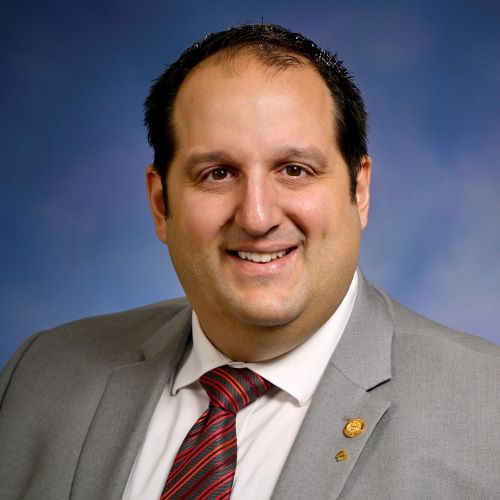
2025-2026 Regular Session Introduced by Joe Aragona and 14 co-sponsors

Adds a new section to criminalize intimidation or harassment of individuals because they are first responders, with enhanced penalties.

REFERRED TO COMMITTEE ON CIVIL RIGHTS, JUDICIARY, AND PUBLIC SAFETY
0
WeVote Research Nonpartisan
Bill Summary · HB 5575

Overview

HB 5575 (2025-2026) from Michigan proposes amendments to 1931 PA 328 (MCL 750.1 – 750.568), adding a new section 409d. The bill is linked (tied) to HB 5574 and HB 5526 (per “TIE BAR WITH” note). It aims to address crimes involving intimidation or harassment targeted at individuals based on their actual or perceived employment as a first responder.

Purpose and intent

  • To strengthen protections for first responders by explicitly criminalizing actions that intimidate or harass someone because of their employment as a first responder.
  • To create clearer legal definitions and potential penalties for offenses that target first responders, reducing the likelihood that such conduct goes unpunished under broader harassment or intimidation statutes.

Key provisions and changes

  • Adds new statute: Section 409d to the Michigan Penal Code (1931 PA 328).
  • Scope: Applies to actions that intimidate or harass an individual due to their actual or perceived status as a first responder (e.g., police, firefighter, emergency medical personnel).
  • Penalties: While the exact penalties are not stated in the provided summary, the change typically would align with existing harassment/intimidation offenses, potentially elevating penalties when the target is a first responder. The precise classification (misdemeanor vs. felony level, and any enhancements) would be defined in the text of Section 409d.
  • Tie-bar: The bill is tied to HB 5574 and HB 5526, indicating concurrent consideration or integrated provisions with those bills.

Who is affected

  • Individuals who threaten, harass, or intimidate someone specifically because that person is employed as a first responder (actual or perceived).
  • First responder personnel who may be targeted based on their occupation.
  • Potentially the general public/intended offenders who engage in daily harassment or intimidation that would meet the new criteria for enhanced offense when directed at first responders.

Procedural and timeline aspects

  • Introduced: February 24, 2026 by Rep. Mike Harris.
  • Schedule: Referred to the Senate/Judiciary committee as of the latest action history.
  • Action history indicates electronic reproduction on February 26, 2026, and first reading on February 24, 2026.
  • Co-sponsors: A broad group of representatives, indicating bipartisan support in the House.

Potential impact and considerations

  • Clarity and consistency: Provides a specific legal avenue to prosecute crimes motivated by bias against first responders’ employment, reducing ambiguity in existing statutes.
  • Deterrence: Aims to deter individuals from committing harassment or intimidation against first responders by imposing targeted penalties.
  • Enforcement: Requires law enforcement and prosecutors to apply the new section when relevant, and may necessitate evidence of motive related to employment status.
  • Legislative alignment: Tie-bar with HB 5574 and HB 5526 suggests coordinated reforms, possibly covering related crimes or broader protections for first responders.

Note: The exact text of Section 409d (definitions, elements of the offense, and penalty structure) is not provided here. For a complete understanding, review the bill’s final language, including any defined terms (e.g., “intimidation,” “harassment,” “first responder”) and any enhancement provisions.

Compiled from official sources — confirm details with the bill’s official record.

Sign in to ask a question.