

WeVote

Bill

Bill

HB 5271

CRIM PRO-CHILD VICT-TESTIMONY

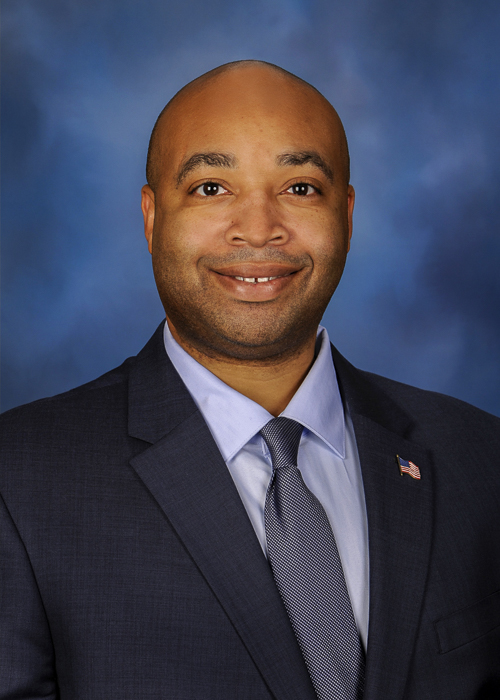
104th Regular Session Introduced by Justin Slaughter

The bill ends the automatic CCTV testimony presumption for children under 13 and allows court discretion on CCTV use for vulnerable witnesses, with safeguards.

0
WeVote Research Nonpartisan
Bill Summary · HB 5271

Summary of HB5271 (104th General Assembly, Illinois)

Purpose and intent

  • The bill amends the Code of Criminal Procedure of 1963 to modify provisions governing how certain vulnerable victims testify in criminal proceedings.
  • Specifically targets testimony of child victims (under 18) and individuals with certain intellectual or developmental disabilities in serious offenses, with a focus on whether their testimony can be conducted outside the courtroom via closed circuit television (CCTV).

Key provisions and changes

  • Repeals an existing rebuttable presumption (currently in law) that a child under 13 must testify outside the courtroom and that the child’s testimony should be shown via CCTV.
    • In other words, the bill removes the automatic presumption favoring CCTV testimony for young children, returning discretion to the court.
  • Maintains a separate framework for witnesses with disabilities (moderate, severe, or profound intellectual disability or developmental disability) that allows CCTV testimony outside the courtroom if certain conditions are met, including the court’s determination that in-person courtroom testimony would cause serious emotional distress or prevent communication.
  • Court authority and process:
    • If the court denies the State’s request to take the child’s testimony outside the courtroom (via CCTV), the bill requires tolling of the speedy trial deadline for 30 days to allow the State to renew the motion before trial.
    • When CCTV testimony is used, specific participants permitted in the room with the witness are enumerated (prosecuting attorney, defense attorney, judge, CCTV operators, and certain individuals deemed to contribute to the witness’s well-being, including relatives, therapists, and court security, among others).
    • The defendant must remain in the courtroom and may not communicate with the jury during CCTV proceedings if the case is tried before a jury.
    • The defendant can communicate with those present in the CCTV room by any appropriate electronic method.
  • Scope of applicability:
    • Applies to prosecutions of offenses including, but not limited to, criminal sexual assault, predatory criminal sexual assault of a child, aggravated criminal sexual assault, criminal sexual abuse, aggravated criminal sexual abuse, aggravated battery, aggravated domestic battery, trafficking in persons, involuntary servitude, and involuntary sexual servitude of a minor.
    • The term “developmental disability” includes conditions such as cerebral palsy, epilepsy, and autism; the bill also defines “developmental disability” more broadly.
  • Protections and limitations:
    • The CCTV provision includes requirements that the court make findings that CCTV does not prejudice the defendant if CCTV testimony outside the courtroom is being used.
    • The bill reinforces that this section does not apply if the defendant is proceeding pro se.
    • The section does not preclude physical presence of both the victim and defendant in the courtroom for identification purposes, where appropriate.
  • Timing and effective date:
    • The bill references existing timelines and tolling provisions related to speedy trial requirements and the ability to renew motions for CCTV testimony.
    • The text notes that the amendments apply to prosecutions pending on or commenced on or after the effective date of amendatory Act of 1994 (historical language), but the bill itself is introduced in 2026 and specifies applicability as amended.

Who would be affected

  • Child victims of serious crimes (under 18) and victims with certain intellectual or developmental disabilities who would otherwise testify in court.
  • Prosecutors and defense attorneys handling these cases.
  • Judges presiding over such cases.
  • Court staff and CCTV operators responsible for facilitating testimony via closed circuit television.
  • Family members, therapists, guardians, and others deemed to contribute to the witness’s well-being who may accompany the witness in the CCTV room.
  • Defendants in these cases, who must remain in the courtroom during CCTV testimony and may communicate with those present in the CCTV room.

Procedural and timeline aspects

  • If CCTV testimony is denied, the State may renew its motion after a 30-day tolling of the speedy trial deadline.
  • A finding by the court is required before CCTV testimony can be used outside the courtroom, ensuring the arrangement does not prejudice the defendant.
  • The bill preserves judicial discretion while imposing procedural safeguards to protect the welfare of vulnerable witnesses.
  • The changes focus on balancing the needs and protection of vulnerable witnesses against the defendant’s rights to a fair trial.

Notes

  • Co-sponsor: Rep. Justin Slaughter
  • The text references specific Illinois statutory sections (725 ILCS 5/106B-5) and aligns with existing provisions for vulnerable witnesses, adding clarifications and adjustments to the presumptions surrounding CCTV testimony.

Compiled from official sources — confirm details with the bill’s official record.

Sign in to ask a question.