

WeVote

Bill

Bill

HF 4606

Credit River; municipal sanitary sewer and water infrastructure funding provided, bonds issued, and money appropriated.

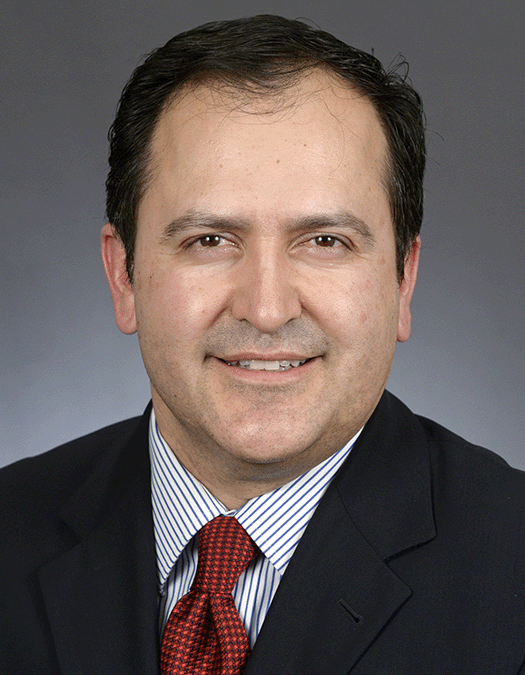
2025-2026 Regular Session Introduced by Jon Koznick

HF 4606 provides state bonds and funding to help Credit River area municipalities plan, design, and construct upgrades to sanitary sewer and drinking water systems.

Introduction and first reading, referred to Capital Investment
0
WeVote Research Nonpartisan
Bill Summary · HF 4606

Summary of HF 4606 (Minnesota) — 2025-2026 Session

Title

Credit River; municipal sanitary sewer and water infrastructure funding provided, bonds issued, and money appropriated

Purpose and Intent

HF 4606 authorizes state financial support for municipal sanitary sewer and water infrastructure projects in the Credit River area. The bill outlines the issuance of bonds to fund infrastructure improvements and provides appropriations to support project planning, construction, and related costs. The primary aim is to accelerate or enable compliance with public health, environmental, and service reliability goals by upgrading or extending sewer and water facilities for affected municipalities within the Credit River region.

Key Provisions and Changes

  • Infrastructure Funding Authorization

    • The bill provides for state funding to assist municipalities in developing or upgrading sanitary sewer and drinking water systems within the Credit River area.
    • Funding is positioned to support capital projects necessary to improve service capacity, age- or condition-related deficiencies, and environmental and public health protections.
  • Bond Issuance

    • The measure authorizes the issuance of bonds (likely state bonds) to finance the infrastructure investments.
    • Details typically specify bond amounts, terms, interest rate parameters, and repayment mechanisms (though exact figures would be in the bill’s text).
  • Appropriations and Money Management

    • The bill appropriates money to support project readiness, design, environmental review, land acquisition, construction, or other eligible costs related to the sewer and water projects.
    • It may allocate funds for planning grants, local match requirements, and ongoing maintenance or monitoring once projects are completed.
  • Administrative and Oversight Provisions

    • Provisions commonly include project selection criteria, compliance with state environmental rules, reporting requirements, and oversight by a designated state agency (e.g., a state finance or public works agency).
  • Local Government Involvement

    • Participating municipalities within the Credit River area would likely be eligible to apply for funds or benefit from the bonds, subject to established state criteria and local match requirements.
    • Possible requirements for local planning, intergovernmental cooperation, and project prioritization aligned with regional needs.

Who would be Affected

  • Municipalities and Water/Sewer Utilities within the Credit River region that pursue eligible projects.
  • Residents and Businesses in those municipalities who would benefit from improved sewer and water infrastructure, including potential improvements in reliability, capacity, water quality, and environmental safeguards.
  • Local Governments responsible for project administration and ensuring compliance with state requirements.
  • State Agencies involved in financing, bond issuance, and oversight (e.g., the department or agency administering capital investment and bonding programs).

Procedural and Timeline Aspects

  • Introduction and Referral
    • Introduced and referred to the Capital Investment committee on March 23, 2026.
  • Next Steps in Process
    • The bill would typically undergo committee hearings, refinement of project lists and funding levels, and potential amendments.
    • If advanced, it would proceed to floor action in the Minnesota Legislature, followed by potential reconciliation and enactment into law.
  • Funding Timeline
    • Bond issuance would occur as part of the state’s capital bonding cycle, with disbursements aligned to project milestones (planning, bidding, construction, and completion) and compliance reporting deadlines.

Notes

  • The summary above reflects the bill’s stated purpose and typical components found in capital investment and bonding bills related to municipal water/sewer infrastructure. The exact dollar amounts, bond terms, eligible project lists, and specific administrative requirements would be detailed in the bill’s text and any adopted amendments.
  • As HF 4606 is in the early stage of the 2025-2026 session, watch for committee actions that may expand or narrow eligible projects, modify funding levels, or adjust timelines.

Compiled from official sources — confirm details with the bill’s official record.

Sign in to ask a question.