

WeVote

Bill

Bill

HB 6028

Courts: veteran's court; veterans treatment court; modify. Amends secs. 1200, 1201, 1203, 1205, 1206 & 1209 of 1961 PA 236 (MCL 600.1200 et seq.).

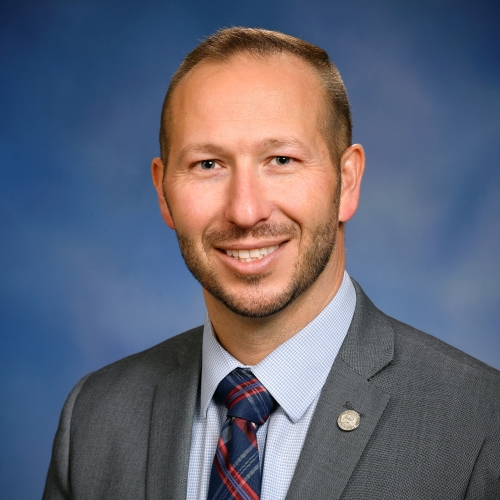
2025-2026 Regular Session Introduced by Matt Bierlein and 10 co-sponsors

HB 6028 standardizes Michigan veterans courts to follow the Buffalo model, requiring MOUs, state certification, VA collaboration, strict admission criteria, and potential discharge

bill electronically reproduced 06/02/2026
0
WeVote Research Nonpartisan
Bill Summary · HB 6028

Summary of HB 6028 (2025-2026) — Michigan

Objective

HB 6028 proposes to modify Michigan’s provisions governing veterans treatment courts (veterans courts). The bill updates definitions, admission criteria, operation, certification, funding, and discharge/dismissal processes to formalize and expand the role of veterans courts within the court system. It emphasizes adherence to the Buffalo veterans treatment court model’s 10 key components and seeks to standardize interagency collaboration, case processing, and post-program outcomes for veterans with substance use, mental health, or trauma-related issues.

Key Provisions and Changes

  • Definitions (Section 1200)

    • Clarifies terms used throughout the act, including:
    • Department of Veterans Affairs (VA) as the U.S. VA.
    • Domestic violence offense, LEIN, mental illness, participant, prosecutor, traffic offense.
    • Veteran status criteria (with allowances for service-connected conditions in certain discharge scenarios).
    • Veteran service organization (VSO) and veterans treatment court (veterans court).
    • Definition of a violent offender for eligibility purposes.
  • Adoption and Structure of Veterans Courts (Section 1201)

    • Requires veterans courts to comply with the modified 10 key components of drug treatment courts as promulgated by the Buffalo model, notably: integrated treatment with justice processing, nonadversarial proceedings, early placement, continuum of treatment, frequent monitoring, coordinated responses to compliance, ongoing judicial interaction, evaluation/assessment, continuous interdisciplinary education, and partnerships with VA, public agencies, and community organizations.
    • Enables circuit or district courts to adopt a veterans court by statute or rule, contingent on a memorandum of understanding (MOU) with:
    • Prosecuting attorney(s)
    • Defense bar representative(s)
    • Community treatment providers
    • Veterans service organizations
    • U.S. Department of Veterans Affairs
    • MOUs may include additional parties (e.g., local law enforcement, probation, domestic violence providers, court funding units, community corrections), and must specify roles and renewal/amendment conditions.
    • Requires court training through the state court administrative office (SCAO).
  • Interjurisdictional Admissions and Transfers (Section 1201(4))

    • Courts may accept participants from other Michigan jurisdictions based on residence or court unavailability.
    • Transfers can occur at any stage (including pre-adjudication) with consent of:
    • Defendant and defense attorney
    • Transferring judge and prosecutor
    • Receiving veterans court judge and prosecutor (and funding unit if applicable)
  • Certification Requirement (Section 1201(5))

    • Beginning January 1, 2018, veterans courts must be certified by the SCAO to operate or continue operating.
    • Certification procedure to be established by the SCAO.
    • Uncertified courts cannot perform core functions (e.g., charging fees, dismissals/discharges, receiving funding, or certifying eligibility for restricted licenses).
  • Admission Eligibility and Process (Section 1203)

    • Admission is discretionary; violent offenders are not eligible.
    • Eligibility may consider prior successful participation in veterans or other specialty courts.
    • Additional pathways to eligibility include scenarios like youthful trainee status or deferred/probationary dispositions under specific statutes.
    • Mandatory preadmission screening/evaluation covering:
    • Veteran status verification (DD214 acceptable)
    • Criminal history and prior program participation
    • Risk assessment
    • Substance use history and dependence assessment (prefer VA clinical assessment)
    • Mental health history (prefer VA clinical assessment)
    • Identification of special needs or circumstances
    • Confidentiality protections for preadmission information, with limited exceptions.
  • Admission Conditions and Collaboration (Section 1205)

    • Eligibility inquiries linked to offense types related to military service, acceptance of guilty plea, and written waivers of certain speedy-trial and hearing rights as part of admission.
    • Prosecutor approval required for admissions that may involve discharge/dismissal or deviation from sentencing guidelines.
    • Victim and community input allowed via written statements to the court.
  • Court Orders, Fees, and Information Access (Section 1206)

    • Admitted participants facing current charges must generally plead guilty.
    • Depending on eligibility and type of offense, the court may defer proceedings, place on probation, or proceed to sentencing under the treatment court framework.
    • Original court retains jurisdiction unless MOUs specify otherwise.
    • Courts may require a reasonable veterans treatment court fee to defray program costs, remitted to the local funding unit.
    • State Police LEIN access may be used to monitor compliance with orders.
  • Discharge, Dismissal, and Post-Program Effects (Section 1209)

    • Upon completion or termination, the court must document whether the participant finished successfully or not.
    • Successful completion can lead to discharge and dismissal under the agreed terms, with:
    • No adjudication of guilt for certain dismissals
    • Records shielded from public disclosure, with limited access for courts, corrections, law enforcement, and prosecutors to duties or qualifications
    • A single discharge/dismissal allowed per person
    • If discharge/dismissal occurs, records are sent to LEIN with notes of veterans court participation; otherwise, standard guilt/adjudication and sentencing follow.
    • For terminated participants, the court must adjudicate guilt and proceed with disposition, reporting to LEIN accordingly.

Who Is Affected

  • Courts: Circuit and district courts that establish or operate veterans treatment courts.
  • Participants: Veterans who may be eligible for admission based on structured criteria and who participate in the court-supervised treatment program.
  • Prosecutors, defense counsel, treatment providers, VSOs, VA representatives, and community organizations involved in MOUs.
  • Victims: Given rights to submit input regarding admission decisions.
  • State agencies: State Court Administrative Office (certification/oversight) and Michigan State Police (LEIN reporting).

Timelines and Procedural Aspects

  • Certification deadline: January 1, 2018 (for operations under this framework).
  • Effective date: Enacting section states the act takes effect 90 days after enactment.
  • Ongoing reporting and data handling: Confidentiality provisions govern information from preadmission and program participation; LEIN entries updated upon discharge/dismissal or guilty adjudication as applicable.

Practical Impact

  • Standardizes and potentially expands the use of veterans courts across Michigan, tying authorization, funding, and operational requirements to formal MOUs and state certification.
  • Elevates VA involvement and access to clinical assessments to inform admissions and treatment planning.
  • Creates structured pathways for admitting eligible veterans, monitoring treatment, and potentially dismissing or discharging offenses without traditional adjudication in cases meeting criteria (subject to prosecutor approval).
  • Introduces explicit confidentiality protections for preadmission data and a controlled framework for public records related to program participation.

Note: The bill text indicates a 2018 certification requirement, suggesting historical alignment; the current 2025-2026 session would reflect updates to remain consistent with the Buffalo model and existing statutory framework.

Compiled from official sources — confirm details with the bill’s official record.

Sign in to ask a question.