

WeVote

Bill

Bill

HR 1463

Congratulating Marquis Hill on receiving a Legacy Beyond a Lifetime Award from the Wise Up to Rise Up Foundation.

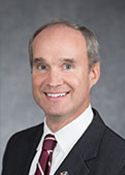
89th Legislature (2025) Introduced by Mike Schofield

Prohibits using federal funds to implement or enforce the FDA’s final rule on Medical Devices; Laboratory Developed Tests, blocking the rule’s funding despite other laws.

Reported enrolled
0
WeVote Research Nonpartisan
Bill Summary · HR 1463

Summary — H.R. 1463 (2025): Congratulating Marquis Hill / Federal‑funds prohibition on FDA LDT rule

Bill number: H.R. 1463
Title: Congratulating Marquis Hill on receiving a Legacy Beyond a Lifetime Award from the Wise Up to Rise Up Foundation.
Status: Reported enrolled; adopted by the House (June 1, 2025)
Introduced: February 21, 2025
Classification: Resolution
Primary sponsor: Rep. Brad Finstad
Cosponsors: August Pfluger, Dan Crenshaw, Neal P. Dunn, Mariannette Miller‑Meeks, Andy Barr

Purpose and notable anomaly

The bill’s short title is a congratulatory resolution honoring Marquis Hill. However, the bill’s operative language contains a policy provision that is substantive and unrelated to the congratulatory subject: a prohibition on the use of federal funds to implement or enforce an FDA final rule concerning medical devices and laboratory developed tests (LDTs) (89 Fed. Reg. 37286, published May 6, 2024). This discrepancy between the title and the substantive text is notable and relevant to interpreting impact.

Key substantive provision

  • Prohibits the use of any Federal funds to implement, administer, or enforce the Food and Drug Administration’s final rule titled “Medical Devices; Laboratory Developed Tests” published May 6, 2024 (89 Fed. Reg. 37286), or any substantially similar rule.
  • The prohibition is framed as “notwithstanding any other provision of law,” indicating an intent to preempt other statutory authorities to the extent necessary to block federal funding for that rule’s implementation.

Who or what would be affected

  • Primary federal agencies: Food and Drug Administration (FDA) and Department of Health and Human Services (HHS), to the extent they rely on federal funds to implement or enforce the rule.
  • Clinical laboratories, diagnostic manufacturers, and developers of LDTs: would be affected by a funded federal non‑enforcement posture toward the FDA rule, potentially leaving regulatory status unchanged or creating enforcement uncertainty.
  • Patients and healthcare providers: potential downstream effects on oversight of diagnostic testing and public‑health activities.
  • Federal fiscal operations: any federal appropriations that would otherwise support implementation or enforcement could not be used for that purpose if the prohibition is legally effective.

Procedural history / timeline

  • Feb 21, 2025: Introduced in House; referred to House Committee on Energy and Commerce.
  • May 28–30, 2025: Filed and placed on Local & Consent Calendars; considered in Local & Consent Calendars.
  • Jun 1, 2025: Placed on the Congratulatory & Memorial Resolutions Calendar; laid before the House, adopted, and reported enrolled.

Legal and practical considerations

  • As drafted, the provision is a funding prohibition. Its practical effect depends on the bill’s final legal status (e.g., whether enacted into law) and interaction with appropriations statutes. A single‑chamber adoption or simple House resolution may be nonbinding; a funding restriction enacted into law would bar use of federal funds for the specified purposes.
  • The provision’s broad “notwithstanding” language aims to limit federal funding regardless of other statutes, which could raise legal and procedural questions (e.g., appropriations jurisdiction, constitutional separation of powers, and challenges in court).

If you’d like, I can:
- Compare the cited FDA final rule (89 Fed. Reg. 37286) to summarize what specific changes the rule makes to LDT regulation, or
- Outline likely legal pathways and stakeholder responses if this funding prohibition were enacted.

Compiled from official sources — confirm details with the bill’s official record.

Sign in to ask a question.