

WeVote

Bill

Bill

HRES 1335

Condemning actors seeking to defraud the United States Government, and expressing the sense of the House of Representatives that governmentwide fraud and improper payment prevention reforms will meaningfully improve the financial prosperity of the United States, and that Federal program eligibility should be verified before payment.

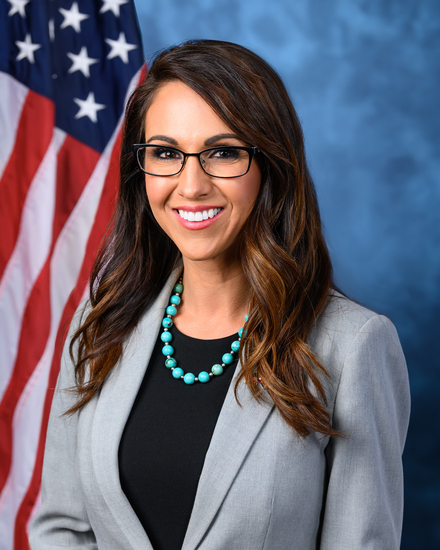
119th Congress Introduced by Lauren Boebert and 7 co-sponsors

The bill promotes pre-payment verification of federal program eligibility to curb fraud and improper payments across all programs.

Motion to reconsider laid on the table Agreed to without objection.
0
WeVote Research Nonpartisan
Bill Summary · HRES 1335

Overview

H.R. 1335 is a House of Representatives resolution that condemns individuals and entities seeking to defraud the U.S. government. It expresses the sense of the House that broad governmentwide reforms to prevent fraud and improper payments are necessary and that federal program eligibility should be verified before payments are issued.

Main purpose and intent

  • Declares condemnation of fraud against the United States.
  • Argues that comprehensive fraud prevention and improper payment reforms across all federal programs will strengthen the government’s financial health and taxpayer protections.
  • Emphasizes pre-payment verification of federal program eligibility and spending as a central policy reform.

Key provisions and changes

As a resolution, the bill does not enact new law or create new programs by itself. Instead, it:

  • Asserts that fraud and improper payments in federal programs constitute a unsustainable fiscal emergency.
  • Cites Comptroller General (GAO) findings from 2025 about:
    • About $3 trillion improperly paid since 2003.
    • Fiscal year 2025 estimated improper payments around $186 billion (increase of roughly $24 billion from 2024).
    • Estimated annual fraud losses across all federal programs ranging from $233 billion to $521 billion (based on 2018–2022 data).
  • Highlights pandemic-era spending as a context for vulnerabilities and fraud risk, including:
    • Over $4.6 trillion in federal funds appropriated to mitigate COVID-19 impacts (roughly $2.7 trillion in the first four months of the pandemic).
    • Noting widespread fraud schemes uncovered during and after the pandemic.
  • Cites ongoing investigations by the House Committee on Oversight and Government Reform into fraud in Minnesota, California, Ohio, and other states, accusing state agencies of insufficient controls and overreliance on self-attestation.
  • References creation of or actions by a Task Force to Eliminate Fraud and a related Executive Order (March 2026) to coordinate national fraud prevention efforts.
  • Lists contemporaneous law-enforcement actions and fraud suspensions (e.g., health care, hospice, home health funding suspensions, and fraud investigations) to illustrate fraud risks and enforcement responses.
  • Declares that the primary policy reform needed to address the emergency is conducting eligibility determinations and payment verifications before awards/payments are issued.

Who/what is affected

  • Federal programs and agencies: the resolution targets broader improvements in fraud prevention and payment integrity across all federal programs, emphasizing pre-payment eligibility verification.
  • State, local, and tribal program administrators: cited in the resolution as areas of concern regarding integrity controls; the text advocates strengthening oversight and preventing misutilization of federal funds.
  • Taxpayers: positioned as the ultimate beneficiaries, noting that improper payments and fraud reduce resources available for legitimate services.

Procedural and timeline aspects

  • Introduced June 3, 2026, by Rep. Fallon (co-sponsors include Reps. Sessions, Gosar, and Crane).
  • Referred to the House Committee on Oversight and Government Reform.
  • As a resolution, it does not itself set enforceable requirements or funding; rather, it signals congressional intent and lays the groundwork for potential future legislation or policy actions by establishing the chamber’s stance on fraud prevention and pre-payment verification.

Potential impact

  • Political and policy signal: reinforces emphasis on fraud prevention as a national priority and may influence future legislative proposals or budgetary decisions.
  • Informational impact: cites GAO data and ongoing investigations to underscore perceived vulnerabilities and justify stricter pre-payment controls.
  • Administrative implications: could encourage the development or adoption of governmentwide processes for verifying program eligibility before payments, potentially affecting how agencies design eligibility checks, recipient verification, and fraud risk assessments (though actual rules would require subsequent statutory or administrative action).

Compiled from official sources — confirm details with the bill’s official record.

Sign in to ask a question.