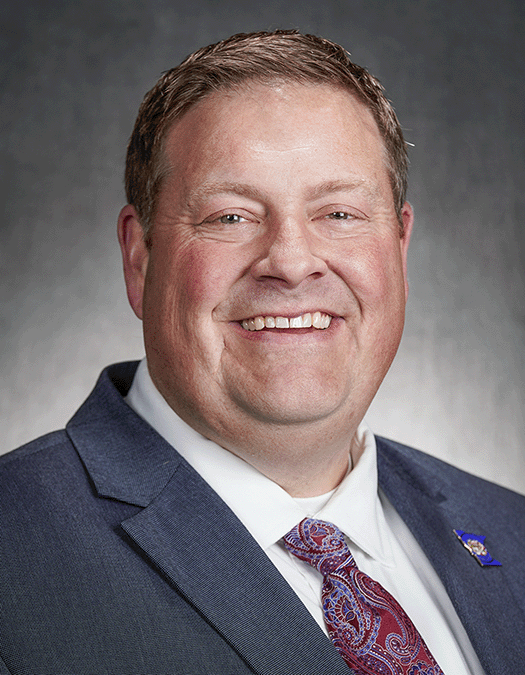
HF 2420 creates the Commission on Governmental Efficiency and Ethics. The commission is tasked with investigating allegations of fraud in state programs and undisclosed legislative conflicts of interest. The bill authorizes investigation, reporting, and associated oversight with the aim of increasing government efficiency and ethics accountability. A formal report is required, detailing findings and recommendations.
Establishment of a Commission: Creates the Commission on Governmental Efficiency and Ethics. The commission would be charged with examining state programs for potential fraud and evaluating allegations of undisclosed legislative conflicts of interest.
Investigative Authority: The commission would have the authority to investigate fraud in state programs and to review cases involving undisclosed conflicts of interest among legislators. The exact scope, powers (e.g., subpoenas, access to records), and process would be defined in the statute (not provided in the summary).
Reporting Requirement: The commission must prepare and transmit a report detailing its investigations, findings, and recommendations. The timing, recipients (e.g., to the Legislature, governor, or public), and requirements for periodic updates would be specified in the bill.
Scope of Matters Covered:
- Fraud in state-administered programs (potential waste, abuse, misuse of funds, or program integrity concerns).
- Legislative conflicts of interest that are undisclosed or improperly disclosed, with an emphasis on ethics compliance and transparency.
Procedural Provisions: Likely includes appointment process for commission members, terms of service, qualifications, and funding mechanisms. The precise makeup, appointment authority, and quorum requirements would be defined in the bill text.
Funding: The title indicates that money is appropriated, implying a dedicated appropriation to support the commission’s operations (staff, audits, investigations, reporting). Specific dollar amounts and funding timeline would be in the bill.
State Programs and Agencies: Potentially affected through enhanced oversight and investigations related to fraud. Agencies could face scrutiny, audits, or corrective actions based on commission findings.
Legislators and Legislative Process: Legislators could be subjects of ethics investigations if undisclosed conflicts of interest are alleged. Legislative operations may be influenced by increased ethics transparency and potential reforms.
State Government Employees and Contractors: Those involved in program administration or procurement could be scrutinized for fraud or conflicts of interest.
Public and Stakeholders: Increased access to findings and reports could influence public trust and accountability in state government.
Introductory Status: Introduced and referred on March 17, 2025 to the State Government Finance and Policy committee.
Next Steps: If advanced, the bill would move through committee hearings, potential amendments, and floor votes in the Minnesota Legislature. The bill would specify the commission’s term lengths, appointment process, operating rules, and report deadlines.