

WeVote

Bill

Bill

HR 6668

Clean Water Standards for PFAS Act of 2025

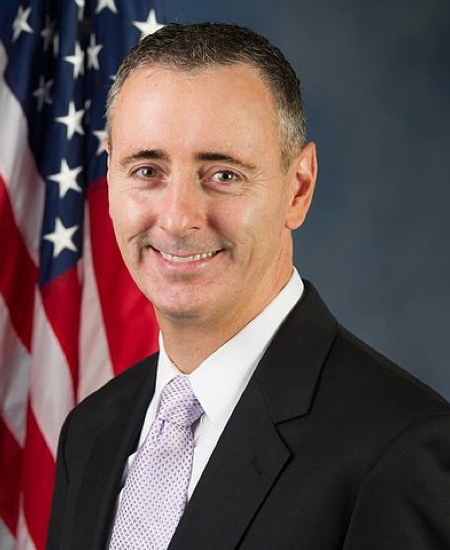
119th Congress Introduced by Brian Fitzpatrick and 1 co-sponsor

EPA must set nationwide PFAS water criteria and effluent limits by industry, with phased 2026–2028 deadlines, monitoring, and a new PFAS testing method (1633A).

Introduced in House
0
WeVote Research Nonpartisan
Bill Summary · HR 6668

Summary: HR 6668 — Clean Water Standards for PFAS Act of 2025

Overview

HR 6668 is a introduced House bill titled the Clean Water Standards for PFAS Act of 2025. The primary aim is to set up nationwide effluent limitations guidelines and standards, along with water quality criteria, under the Federal Water Pollution Control Act for per- and polyfluoroalkyl substances (PFAS). The bill would require the EPA to establish measurable criteria and regulate discharges of PFAS from specific industry categories, with a phased timeline for development and implementation.

Key Provisions

  • Definitions

    • Establishes terms for the act, including:
    • Administrator = EPA Administrator
    • Effluent limitation (as defined by the Federal Water Pollution Control Act)
    • Measurable PFAS substances
    • Perfluoroalkyl and polyfluoroalkyl substances (PFAS) definitions
    • Treatment works (as defined in the Clean Water Act)
  • Water Quality Criteria and Effluent Standards

    • requires the EPA to publish human-health-based water quality criteria for each measurable PFAS substance or class within 3 years of enactment (under CWA §304(a)(1)).
    • requires final EPA action on effluent limitations guidelines and standards (emission controls for discharges) for specified PFAS substances and classes, under the CWA.
  • Priority Industry Categories and Deadlines

    • The bill mandates action by specific industry categories on staggered timelines:
    • 2026 (by Sept 30, 2026): Organic chemicals, plastics, synthetic fibers (40 CFR Part 414); electroplating (Part 413); metal finishing (Part 433).
    • 2027 (by Sept 30, 2027): Textile mills (Part 410); landfills (Part 445).
    • 2028 (by Sept 30, 2028): Leather tanning and finishing (Part 425); paint formulation (Part 446); plastics molding and forming (Part 463).
  • Monitoring Requirements

    • Effective upon enactment, EPA must require monitoring of discharges of PFAS for the listed point source categories (and for discharges to POTWs) and for specified measurable PFAS substances.
    • Additional monitoring for pulp/paper/paperboard (Part 430), airports (49 U.S.C. §47102), and electrical/electronic components (Part 469).
  • Decision Timeline

    • By December 31, 2026, EPA must decide whether to commence developing effluent guidelines for the categories listed in the 2027-2028 groups (and explain any decision not to proceed).
    • If commenced, final effluent limitations guidelines and standards must be published by December 31, 2028.
  • Method 1633A

    • Requires, by January 31, 2026, EPA to promulgate Method 1633A for PFAS analysis in water (as described by the EPA document on PFAS analysis).

Affected Parties

  • Industries and facilities that discharge PFAS, including:
    • Organic chemicals, plastics, synthetic fibers producers
    • Electroplating, metal finishing facilities
    • Textile mills, landfills
    • Leather tanning and finishing, paint formulation, plastics molding and forming
  • Facilities with discharges to publicly owned treatment works (POTWs)
  • Sectors such as pulp/paper/paperboard, airports, and electrical/electronic components due to monitoring requirements

Procedural and Timeline Aspects

  • Status: Introduced in the House on December 11, 2025; referred to the Committee on Transportation and Infrastructure.
  • Short Title: Clean Water Standards for PFAS Act of 2025.
  • Implementation Window: Phased deadlines spanning 2026–2028 for industry-specific effluent guidelines; 3-year horizon for water quality criteria.
  • Methodology: Establishes a specific new analytical method (Method 1633A) to standardize PFAS measurement.
  • The bill is introductory and sets forth a framework; actual regulatory actions would be subject to later committee deliberations and potential amendments.

Compiled from official sources — confirm details with the bill’s official record.

Sign in to ask a question.