

WeVote

Bill

Bill

HR 9854

Citizenship Act of 2026

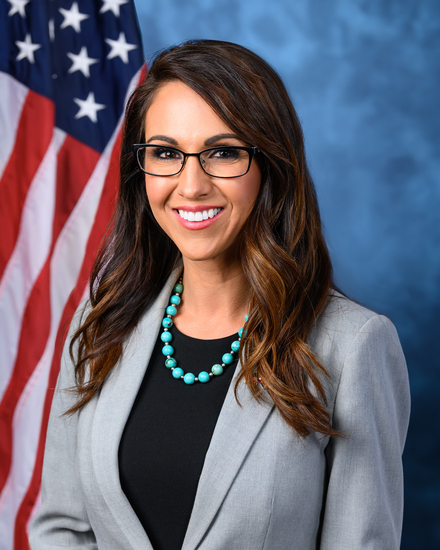
119th Congress Introduced by Lauren Boebert and 4 co-sponsors

The bill would exclude U.S.-born children from birthright citizenship if their parent is designated an invader (unauthorized, birth tourism, or surrogacy-based) and bans courts fro

Introduced in House
0
WeVote Research Nonpartisan
Bill Summary · HR 9854

Overview

HR 9854, the Citizenship Act of 2026, introduced in the 119th Congress, seeks to redefine birthright citizenship in the United States and to designate certain individuals as “invaders” for purposes of immigration law. The bill would exclude the children of “invaders” from birthright citizenship and would codify a framework for identifying who qualifies as an invader. It includes provisions related to birth tourism, surrogacy contracts, and judicial review, along with defined timelines and severability.

Purpose and intent

  • Declare that individuals who enter the United States without authorization, or who come to the U.S. for birth tourism, are to be treated as invaders.
  • Amend the Citizenship Act of 2026 to revoke birthright citizenship for children born in the U.S. to invaders.
  • Address concerns raised about illegal immigration, birth tourism, and surrogacy arrangements as tools for acquiring U.S. citizenship for a child.

Key provisions

  • Section 3. Congressional Declarations:
    • Designates certain persons as invaders for purposes of INA 301(a):
    • People not lawfully admitted or unlawfully present in the U.S.
    • People seeking admission or adjustment of status to give birth in the U.S., as determined by consular officers or the Attorney General.
    • Adds a designation for individuals entering into commercial surrogacy with the intent of having a child born in the U.S., treated as invaders.
  • Section 4. Amendments to 301(a) (Birthright Citizenship):
    • Rewrites 301(a) to exclude:
    • Children born to invaders whose mother was not lawfully admitted or who was unlawfully present, and whose father was not a U.S. citizen or permanent resident at birth.
    • Children born to invaders where the mother sought U.S. admission or status for the purpose of birth, and the father was not a U.S. citizen or lawful permanent resident.
    • Children born as a result of a commercial surrogacy contract involving an invader.
  • Section 5. Judicial Review:
    • States that no court may review the existence of an invasion (delegates to the President or Congress).
  • Section 7. Effective Date:
    • Applies to all children born after enactment to a person designated as an invader at the time of birth.
  • Section 8. Severability:
    • Provides standard severability language to preserve remaining provisions if any part is struck down.
  • Section 6. Construction:
    • Clarifies that the act does not revoke criminal or civil jurisdiction over invaders, nor authorize military force under the War Powers Resolution.

Who would be affected

  • Individuals designated as invaders under Section 3 (unlawfully admitted or present, or seeking admission/status to give birth in the U.S., including those involved in birth tourism or surrogacy).
  • Children born in the United States to such invaders would be excluded from birthright citizenship under amended INA 301(a).
  • Commercial surrogacy arrangements with nationals from defined nations could be treated as invader scenarios.

Procedural and timeline notes

  • Status: Referred to the House Judiciary Committee (as of introduction on July 22, 2026).
  • Effective date: Applies to births occurring after enactment date to individuals designated as invaders.
  • Judicial review: Limited, with removal of a pathway to challenge the designation of invasion in federal courts.

Potential impacts and considerations

  • Substantive change to birthright citizenship for a subset of U.S.-born children.
  • Expansion of the concept of “invasion” beyond traditional security framing to include birth-related immigration pathways.
  • Potential legal and practical questions about enforcement, definitions, and the handling of pending or future birth cases, as well as compatibility with existing constitutional interpretations and Supreme Court precedent referenced in the bill.
  • Policy debate surrounding immigration control, birth tourism, surrogacy, and the implications for families and children affected.

Compiled from official sources — confirm details with the bill’s official record.

Sign in to ask a question.