HB 2607 — Campus Free Speech Protection Act (summary)
Status: Introduced; referred to Rules Committee
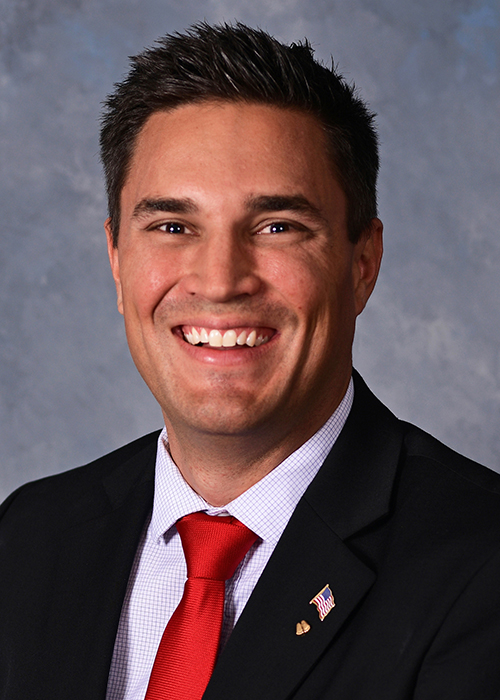
Sponsor: Rep. Adam M. Niemerg
Introduced: February 2025 (text filed with LRB)
Scope: Public institutions of higher education in Illinois (state universities, community colleges, and similar public colleges)
Summary
This bill (the “Campus Free Speech Protection Act”) requires the governing board of each Illinois public institution of higher education to adopt and publish campus policies that protect and promote free expression on campus. It specifies what those policies must guarantee, how they must be made available to students and faculty, limits on allowable restrictions, protections for student organizations and speakers, and procedural expectations for institutions.
Key provisions and requirements
- Deadline: Governing boards must adopt the required policies by no later than January 1, 2026.
- Definitions: The bill defines “faculty,” “student,” and “public institution of higher education” for coverage purposes.
- Core guarantees the policies must ensure:
- Protection of constitutional freedom of expression for students and faculty.
- Broad latitude for members of the campus community to speak, write, listen, challenge, learn, and discuss any issue.
- Maintenance of a “marketplace of ideas” where ideas are not suppressed because they are offensive, disagreeable, or unpopular.
- Prohibition of substantial obstruction or interference with others’ expressive activities.
- Viewpoint‑neutral treatment in grading, evaluation, and selection for official events; prepared student remarks may not be altered except in a viewpoint‑neutral way or at student request. Student speech that is obscene/vulgar/indecent may be excluded.
- Equal access for religious and political student organizations to public forums and protection from discrimination in internal governance, leadership selection, membership criteria, and defining beliefs.
- Student activity fee funding decisions may not be based on an organization’s viewpoints.
- Outdoor, generally accessible campus areas are to be treated as traditional public forums—i.e., not limited to narrow “free speech zones.”
- Time/place/manner restrictions: Any restriction on outdoor or otherwise First Amendment‑protected speech must be:
1. reasonable;
2. justified without reference to speech content;
3. narrowly tailored to serve a compelling governmental interest; and
4. leave ample alternative methods for communication.
Institutions may adopt reasonable permit requirements but may not bar spontaneous outdoor assemblies or literature distribution.
- Speakers and fees:
- Students and faculty may invite guest speakers regardless of viewpoint.
- Institutions shall not disinvite speakers solely because their anticipated speech may be offensive to some.
- Students may not be charged fees based on speech content or anticipated listener reaction.
- Publication and notice:
- Policies must be included in student and faculty handbooks and posted in a prominent location on the institution’s website.
- Institutions may also distribute policies by institutional email annually or include them in orientation.
Prohibited/permissible conduct and remedies
- The bill’s text (as presented) states it “sets forth both prohibited and permissible conduct” and provides remedies for violations; the detailed provisions and specifics of remedies (civil causes of action, administrative remedies, damages, attorney’s fees, etc.) are not included in the excerpt provided.
Limits and clarifications
- The bill expressly does not permit students to intentionally, materially, and substantially disrupt another’s scheduled or reserved expressive activity (i.e., protection for organizers of scheduled events).
- The Act applies to public (state) higher education institutions; private institutions are not covered by this text.
Potential impacts
- Institutional policy changes by the January 1, 2026 deadline; updates to handbooks, websites, orientation materials.
- Operational effects on permitting, event management, student activities funding, and speaker-invitation procedures.
- Possible increased litigation or administrative complaints over alleged violations (depending on the remedies language in sections not shown).
- The bill notes it may create a State Mandates Act reimbursement requirement (indicating potential fiscal impacts to institutions or state/local governments).
If you’d like, I can:
- Extract and summarize the bill’s specific enforcement/remedy language if you provide the remainder of Section 15 and related sections; or
- Produce a side-by-side comparison of this bill with current institutional free-speech policies or with similar statutes in other states.