

WeVote

Bill

Bill

SB 1022

Campaign finance: other; definition of statewide elective office in the Michigan campaign finance act; remove reference to university boards. Amends sec. 12 of 1976 PA 388 (MCL 169.212). TIE BAR WITH: SJR J'26

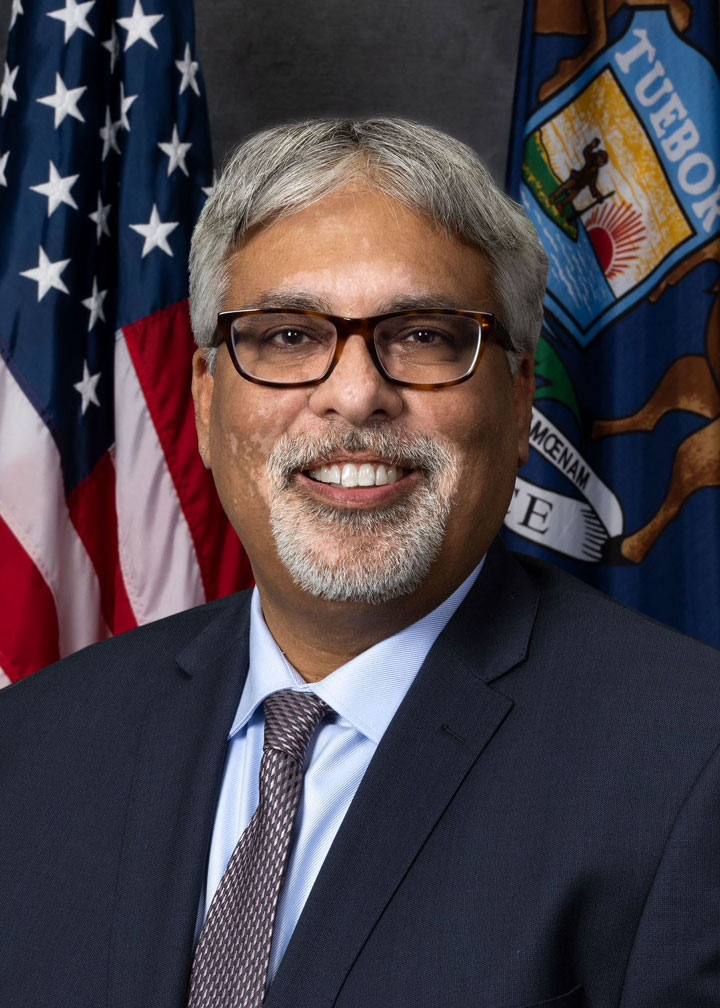
2025-2026 Regular Session Introduced by Sam Singh

SB 1022 expands campaign finance coverage to include university boards as statewide elective offices, subject to a constitutional amendment adoption.

REFERRED TO COMMITTEE ON GOVERNMENT OPERATIONS
0
WeVote Research Nonpartisan
Bill Summary · SB 1022

Purpose and intent

  • SB 1022 amends the Michigan Campaign Finance Act (1976 PA 388), specifically section 12 (MCL 169.212), to redefine what counts as “statewide elective office” and to remove references to university boards from those definitions.
  • The bill is tied to a constitutional amendment proposal (SJR J'26), meaning its enactment depends on Senate Joint Resolution J of the 103rd Legislature becoming part of the state constitution.

Key provisions

  • Redefinition of terms:
    • Qualifying contribution: The bill retains the concept of a qualifying contribution for gubernatorial elections (up to $100 and limited per calendar year), with specifics on timing (made after April 1 of the year before a governor is elected) and residency (Only residents of Michigan may contribute as qualifiers).
    • Senate political party caucus committee: Defined as an independent committee established by a state senate political party caucus under section 24a. No substantive change is indicated beyond definitional alignment.
    • State elective office: Retains the broader category for purposes of campaign finance definitions, including statewide elective offices and the office of state legislator.
    • Statewide elective office: The notable change is the expanded list of positions considered “statewide elective office.” The bill includes:
    • Governor
    • Lieutenant Governor
    • Secretary of State
    • Attorney General
    • Justice of the Supreme Court
    • Member of the State Board of Education
    • Regent of the University of Michigan
    • Member of the Board of Trustees of Michigan State University
    • Member of the Board of Governors of Wayne State University
  • Removal of references to university boards: By including university board positions in the “statewide elective office” category, the bill effectively brings these university board roles under the same campaign finance provisions that apply to other statewide offices. This represents a shift from potential previous treatment of university boards as separate or non-statewide elective entities.

Who/what is affected

  • Campaign finance provisions for individuals and committees:
    • Contributors: Michigan residents may contribute qualifying amounts toward gubernatorial campaigns, subject to the $100 per qualifying contribution cap and aggregate per year.
    • Candidates: Officials for the listed statewide offices are now encompassed by the same campaign finance framework as other statewide offices.
    • University boards: Members of the boards of the University of Michigan, Michigan State University, and Wayne State University become explicitly covered by “statewide elective office” provisions.

Procedural and timeline aspects

  • Enactment condition: The act explicitly states it does not take effect unless Senate Joint Resolution J of the 103rd Legislature is adopted as part of the Michigan Constitution (Article XII, Section 1). This means the bill’s substantive changes are contingent on a concurrent constitutional amendment.
  • Introduction and referral: Introduced and referred in June 2026 to the Committee on Government Operations, with Senator Sam Singh as sponsor and co-sponsor.
  • Effective date: No operative date until the constitutional amendment condition is satisfied.

Summary of potential impact

  • Expands campaign finance coverage to include university governance bodies as statewide elective offices, aligning their campaign financing with other high-level statewide roles.
  • Could affect reporting, contribution limits (qualifying contributions), and compliance requirements for campaigns associated with these university board positions.
  • Shifts potential disclosure, contribution tracking, and governance finance oversight to a broader set of statewide offices, contingent on the constitutional amendment’s adoption.

If you’d like, I can provide a side-by-side comparison of current law versus SB 1022 language for the affected offices.

Compiled from official sources — confirm details with the bill’s official record.

Sign in to ask a question.