

WeVote

Bill

Bill

HR 9866

C.A.R.E. for Mental Health Professionals Act

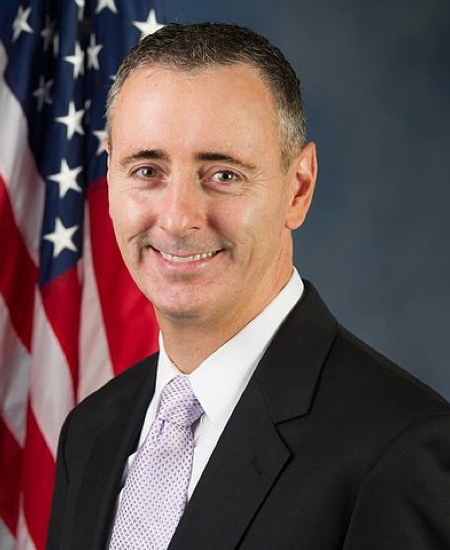
119th Congress Introduced by Brian Fitzpatrick and 1 co-sponsor

The bill would fund grants to expand interstate licensure compacts for mental health professionals, facilitating cross-state practice and creating compact commissions.

Introduced in House
0
WeVote Research Nonpartisan
Bill Summary · HR 9866

Overview

HR 9866, the C.A.R.E. for Mental Health Professionals Act (Compacts, Access, and Responsible Expansion for Mental Health Professionals Act), would create a federal grant program to support interstate licensure portability for mental health professionals. The program aims to expand the workforce by incentivizing practice across state lines through interstate compacts and by supporting the creation or operation of interstate compact commissions.

Purpose andIntent

  • Enable faster expansion of the licensed mental health workforce by leveraging interstate licensure compacts.
  • Support the development, operation, and maintenance of interstate compact commissions that implement and facilitate these compacts.
  • Specifically target counselors and other credentialed mental health professionals to practice in states participating in relevant compacts.

Key Provisions

  • Establishment of the Mental Health Licensure Portability Program (MHLP Program) within the Department of Health and Human Services, acting through the Administrator of the Health Resources and Services Administration (HRSA).
  • Grant authority: The Secretary of Health and Human Services shall award grants to eligible entities for projects that: 1) Incentivize counselors to practice in states that have entered into interstate compacts designed to expand the credentialed mental health workforce. 2) Develop, operate, or maintain interstate compact commissions authorized to implement provisions of such compacts.
  • Definitions (to clarify terms used in the act):
    • Administrator: HRSA Administrator.
    • Commission: A joint interstate governmental agency composed of states that have entered into an interstate compact to implement and facilitate the compact.
    • Counselor: Licensed professionals trained to provide guidance to individuals, families, and groups on personal, social, or psychological issues.
    • Eligible Entity: An interstate compact commission or licensure board of a state participating in an occupational licensure interstate compact (related to mental health professions such as counseling, psychiatry, psychology, social work, or pediatric counseling).
    • Interstate Compact: An agreement among two or more states recognizing professional qualifications to license mental health professionals via mutual recognition criteria.
    • State: As defined in 31 U.S.C. 6501 (federal/state taxonomy for state).
  • Authorization of appropriations: The bill authorizes $4,000,000 in appropriations for each fiscal year 2026 through 2029 to carry out the act.

Who Would be Affected

  • Mental health professionals who are counselors or other credentialed clinicians in psychology, psychiatry, social work, pediatric counseling, etc., who are practicing in states participating in relevant interstate compacts.
  • State licensure boards and interstate compact commissions that participate in or administer compacts for licensure recognition.
  • Eligible entities (including professional associations or state boards) that implement or operate compact commissions or related programs to facilitate portability.

Procedural and Timeline Aspects

  • Procedural: The act would take effect upon enactment, with a directive to establish the MHLP Program no later than 90 days after enactment.
  • Funding: Annual authorization of $4 million for fiscal years 2026–2029 to support grant awards under the program.
  • Reporting/Administration: Grants would be awarded to eligible entities to support compact-related activities, implying oversight by HRSA through the Administrator.

Potential Impact

  • Could reduce barriers to practice across state lines for mental health professionals by strengthening and expanding interstate compacts.
  • May increase access to mental health care in underserved or rural areas by making it easier for professionals to practice in multiple states.
  • Encourages the creation and maintenance of interstate compact commissions, potentially standardizing licensure recognition and reducing licensure duplication.
  • Provides federal support for state and professional associations to align licensure requirements across participating states.

Compiled from official sources — confirm details with the bill’s official record.

Sign in to ask a question.