

WeVote

Bill

Bill

SJR 22

Authorizing Legislature to Eliminate Ad Valorem Tax on Business and Inventory Tangible Personal Property Amendment

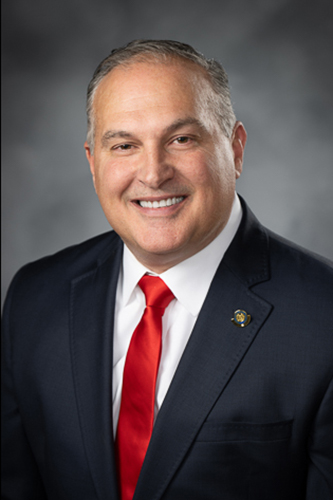
2026 Regular Session Introduced by Brian Helton

SJR 22 would repeal the BPIPT tax on business inventory starting July 1, 2029 and replace the lost revenue with a fixed general sales tax rate allocated to counties and local gover

To Judiciary
0
WeVote Research Nonpartisan
Bill Summary · SJR 22

Summary of SJR 22 (2026) — West Virginia

Purpose and intent

  • SJR 22 is a proposed constitutional amendment that would authorize the Legislature to repeal the ad valorem property tax on business and inventory of tangible personal property (BPIPT) and to establish a funding replacement mechanism for counties and political subdivisions that currently rely on that tax.
  • If approved by voters, the amendment would take effect July 1, 2029, with a phased structure for replacing the revenue.

Key provisions and changes

  • Effective date of repeal: July 1, 2029, all business and inventory ad valorem tax on tangible personal property would be repealed.
  • Revenue replacement mechanism: Beginning July 1, 2029, and each July 1 thereafter, the Legislature would set a fixed rate for the general state sales tax. The rate would be calibrated to equal the estimated revenue that would have been generated from the BPIPT tax if it had not been repealed.
  • Distribution of replacement revenue: The revenue raised from the fixed general sales tax rate would be promptly and regularly distributed to counties and local political subdivisions in amounts that mirror the funding those entities previously received from the BPIPT tax.
  • Constitutional action: The amendment would add a new section 1c to Article X (Taxation and Finance) of the West Virginia Constitution and be labeled Amendment 1 for the purposes of voter ratification.
  • Summary statement: The amendment’s stated purpose is to allow repeal of the BPIPT tax and to require creation of a mechanism to replace the lost funding for counties receiving those taxes.

Who would be affected

  • Businesses subject to the BPIPT tax on tangible personal property (business inventory and other tangible property) would lose this tax burden starting July 1, 2029.
  • Counties and local governmental entities that currently receive funds from BPIPT would receive replacement revenue via the designated general sales tax mechanism.
  • Consumers statewide, through the general sales tax, would indirectly contribute to the replacement funding stream.

Procedural and timeline notes

  • Legislative process: SJR 22 is introduced in the Senate (Senators Willis and Helton) and referred to the Judiciary Committee, then to the Finance Committee.
  • Voter action: The measure is a proposed constitutional amendment and would be placed on the ballot for ratification or rejection at the next general election in 2026.
  • Legislative actions required: If the amendment is approved by the voters, it would amend the state constitution, enabling the scheduled repeal and the revenue replacement framework.

Potential implications to consider

  • Revenue impact: Replacing BPIPT with a higher or fixed rate of general sales tax could shift tax burdens, potentially affecting business costs and consumer prices. The exact impact depends on the resulting sales tax rate and economic behavior.
  • Local funding stability: The replacement mechanism is designed to maintain funding levels for counties and local entities that previously depended on BPIPT receipts, seeking to preserve local government services and programs.
  • Economic considerations: Proponents might argue the repeal reduces compliance burdens on businesses; opponents might raise concerns about the sufficiency and predictability of replacement revenue through the sales tax.

Note: This summary reflects the text and stated purpose of SJR 22 as introduced. If enacted, the detailed implementation would be governed by subsequent statutory and regulatory action consistent with the constitutional amendment.

Compiled from official sources — confirm details with the bill’s official record.

Sign in to ask a question.