

WeVote

Bill

Bill

HR 7530

Assistance for Rural Water Systems Act of 2026

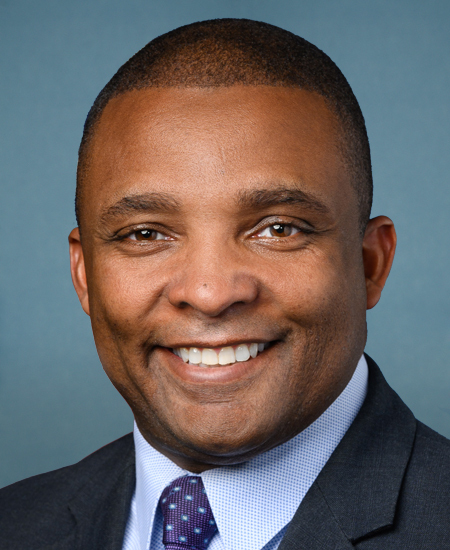
119th Congress Introduced by Don Davis and 1 co-sponsor

Provides grants and low-interest loans to rural water, wastewater, and waste disposal entities, plus loan forgiveness/refinancing to ease financial hardship and improve services.

Referred to the Subcommittee on Commodity Markets, Digital Assets, and Rural Development.
0
WeVote Research Nonpartisan
Bill Summary · HR 7530

Overview

  • Bill: H.R. 7530
  • Session: 119th Congress, 2nd Session
  • Title: Assistance for Rural Water Systems Act of 2026
  • Purpose: Amend the Consolidated Farm and Rural Development Act to provide additional financial assistance to rural water, wastewater, and waste disposal systems, and to address financial hardships in certain areas.

Main purpose and intent

  • To expand federal support for rural water, wastewater, and waste disposal facilities.
  • Create and authorize new “additional assistance” tools to help eligible rural utility entities maintain public health, safety, and service reliability, and to address financial difficulties in economically distressed or disadvantaged areas.

Key provisions and changes

  • Establishment of new program authority: Section 306B added to the Consolidated Farm and Rural Development Act.
  • Definition:
    • Eligible entity: A rural water, wastewater, or waste disposal facility that can receive assistance under existing programs (section 306(a), 306A, 306C, or 306D).
  • Types of assistance available (subsection (b)):
    • Grants and loans: The Secretary may provide a grant, a zero-percent interest loan, or a 1-percent interest loan to an eligible entity.
    • Existing loan modification: The Secretary may do one or more of the following regarding existing loans:
    • Forgive principal or interest, or modify terms/conditions.
    • Refinance part or all of another loan (related to eligible purposes under sections 306(a)(1) or 306C) to an eligible entity.
    • Important limitation: The Secretary may not provide assistance under the loan modification/substitution provisions (paragraph (2)) for loans made under the new grant/loan authority (paragraph (1)).
  • Eligible purposes (subsection (c)):
    • Assistance may be provided as determined necessary to:
    • Ensure resources to maintain public health, safety, or order.
    • Address financial hardships of the eligible entity, particularly if located in an advantaged or economically distressed area (as defined in subsection (d)).
  • Determination of eligibility and distressed status (subsection (d)):
    • The Secretary must establish:
    • A residential indicator of affordable water services in each state or geographic area, calculated as the cost per household as a percentage of median household income.
    • Factors related to disadvantaged or economically distressed areas to support eligibility determinations.

Who would be affected

  • Rural water, wastewater, and waste disposal facilities and their governing entities (e.g., small municipalities, special districts, or cooperatives) that operate in rural areas.
  • Households served by rural water systems, indirectly benefiting from improved affordability and reliability of services.
  • Federal Rural Development programs and stakeholders within the Department of Agriculture involved in water/waste disposal infrastructure.

Procedural and timeline aspects

  • Introduction date: February 12, 2026.
  • Referral:
    • Initially to the House Committee on Agriculture.
    • Subsequently referred to the Subcommittee on Commodity Markets, Digital Assets, and Rural Development (March 20, 2026).
  • The bill text indicates standard legislative process steps but does not specify funding levels, grant caps, or implementation timelines. If enacted, rules and implementation would be governed by the Department of Agriculture and any accompanying appropriations.

Potential impact and considerations

  • Financial flexibility for rural utilities: Grants and low-interest loans (0% or 1%) could stabilize or expand service in distressed rural areas.
  • Debt relief mechanisms: Principal/interest forgiveness or loan refinancings could reduce financial burdens on struggling utilities.
  • Focus on affordability and equity: The cost-of-service indicator and distressed-area criteria aim to direct assistance toward areas with higher affordability challenges and greater need.
  • Compliance and administration: Agencies would need to establish eligibility criteria, application processes, and monitoring to ensure funds address eligible uses and avoid misuse.

If you’d like, I can provide a plain-language quick-reference sheet or a side-by-side comparison with existing rural water program authorities to highlight how H.R. 7530 would change current law.

Compiled from official sources — confirm details with the bill’s official record.

Sign in to ask a question.