

WeVote

Bill

Bill

HF 1066

Appropriation for soil and water conservation district aid increased.

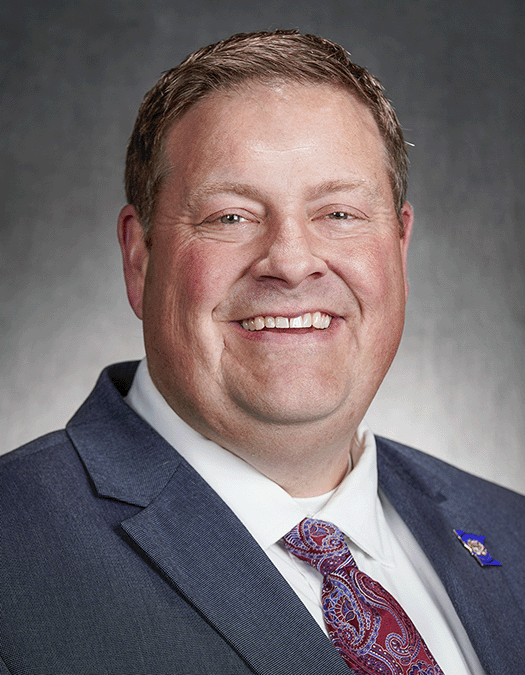
2025-2026 Regular Session Introduced by Keith Allen and 22 co-sponsors

HF 1066 would increase state funding to Minnesota’s Soil and Water Conservation Districts to expand conservation programs, technical assistance, and cost-sharing.

Author added Allen
0
WeVote Research Nonpartisan
Bill Summary · HF 1066

Summary of HF 1066 (2025-2026) – Minnesota

Title

Appropriation for soil and water conservation district aid increased.

Purpose and Intent

HF 1066 proposes increasing state aid to Minnesota’s Soil and Water Conservation Districts (SWCDs). The bill aims to provide greater financial support to SWCDs to help them implement soil and water conservation programs, with the overall goal of improving natural resource management, water quality, and soil health across the state.

Key Provisions and Changes

  • Increased Appropriation for SWCDs: The central provision is an enhanced state funding allotment to SWCDs. The bill specifies higher annual or biennial appropriations to support districts in carrying out conservation activities.
  • Allocation Mechanics (if specified in text): The bill may detail how funds are allocated among SWCDs (e.g., formula-based distribution by need, population served, or watershed priority). See the bill text for exact distribution rules.
  • Eligible Expenditures: Funds would be available for programs and activities such as cost-sharing for terrace construction, cover crops, nutrient management, buffer strips, water quality monitoring, technical assistance, and related conservation projects.
  • Matching or Local Requirement (potential): The bill could include whether state aid requires local or nonstate matching funds or leverages federal programs (e.g., NRCS activities). Check for any match requirements or coordination requirements with other programs.
  • Reporting and Accountability: Provisions may establish reporting, performance metrics, or audit requirements to ensure funds are used for intended conservation outcomes.
  • Effective Date: The bill would specify when the increased funding takes effect (e.g., beginning of the next fiscal year or a specified date).

Affected Entities and Stakeholders

  • Primary Beneficiaries: Minnesota Soil and Water Conservation Districts and the local units they support—district staff, boards, and watershed projects.
  • Local Governments and Landowners: Farmers, ranchers, and property owners who participate in conservation programs funded by SWCDs.
  • State Agencies: Minnesota Department of Agriculture and potentially the Board of Water and Soil Resources (BWSR), which administer and coordinate SWCDs' activities.

Procedural and Timeline Considerations

  • Legislative Status: Introduced and referred to the Taxes committee (as of initial reading). The committee process will determine amendments and whether the bill advances.
  • Sponsors: The bill has a broad slate of sponsors, including a number of co-sponsors from both parties and multiple districts. Noteworthy co-sponsors include Wayne Johnson, Cal Warwas, Natalie Zeleznikar, Shane Mekeland, Paul Torkelson, Liz Reyer, and many others.
  • Next Steps: If advanced, the bill would move through committee hearings, potential amendments, floor votes in the House, and, if passed, would proceed to the Senate for consideration. Conference committee or veto considerations could apply if the companion Senate file differs.

Potential Impacts and Implications

  • Conservation Capacity: Increased funding could enable SWCDs to expand technical assistance, outreach, and on-the-ground conservation practices.
  • Soil and Water Quality: Enhanced support may accelerate implementation of practices that reduce soil erosion, improve water quality, and promote sustainable land management.
  • Economic Considerations: Local beneficiaries might experience improved access to cost-sharing and program support, potentially influencing farm profitability and land-use decisions.
  • Administrative Oversight: Greater funds necessitate robust reporting and accountability to ensure funds are used effectively and transparently.

If you would like, I can extract specific figures or language from the bill text (once available) to provide precise dollar amounts, time frames, and any match requirements or performance metrics.

Compiled from official sources — confirm details with the bill’s official record.

Sign in to ask a question.