

WeVote

Bill

Bill

HD 4442

An Act relative to the Lowell Mason Act to mandate a percentage of Chapter 70 funds for Arts Education Programs

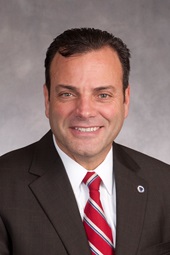
194th Legislature (2025-2026) Introduced by Paul McMurtry

The bill requires all districts to dedicate 1% of total Chapter 70 funds to new, standards-based Arts Education Programs starting FY 2026.

Reported, referred to the committee on Joint Rules, reported, rules suspended and referred to the committee on Education
0
WeVote Research Nonpartisan
Bill Summary · HD 4442

Summary: HD 4442 — Lowell Mason Arts Education Equity Act

Overview

HD 4442, titled An Act relative to the Lowell Mason Act to mandate a percentage of Chapter 70 funds for Arts Education Programs, would create Chapter 70C and require public and charter school districts to allocate an additional 1% of their total Chapter 70 funding to new, standards-based Arts Education Programs. The bill aims to ensure all Massachusetts students have access to high-quality arts education aligned with the MA Arts Curriculum Framework (2019).

  • Introduced: March 27, 2025
  • Current status: Reported; referred to the committee on Joint Rules, rules suspended and referred to the committee on Education
  • Section references: Inserts new Chapter 70C after Chapter 70
  • Effective date: July 1 following enactment

Key Provisions

Section 1–3: Allocation and Use of Funds

  • Creation of Chapter 70C, the Lowell Mason Arts Education Equity Act.
  • Beginning in FY 2026, each district must receive an additional 1% of its total Chapter 70 Funds dedicated to Arts Education Programs.
  • Calculation basis: The 1% is based on the district’s total Chapter 70 Funds plus its required local contribution to reach foundation funding.
  • Restricted uses (District level):
    • 80% of the 1% for salaries of newly hired certified visual and performing arts educators (dance, media arts, music, theatre/drama, visual arts).
    • 20% for:
    • Professional development and district-wide arts curriculum aligned with the 2019 MA Arts Curriculum Framework
    • Supplies, HQIM, and equipment (e.g., instruments, stage systems, art materials)
    • Extracurricular and co-curricular arts programs (including artist residencies, after-school programs, and transportation)
    • Up to 1% for administrative expenses to implement the act
  • Restricted uses (State level):
    • Three full-time DESE staff positions for Instruction, Finance, and Accountability; at least one additional full-time arts content specialist.
  • Prohibition: Funds may not be used to support current arts faculty or programs or non-arts programs.

Section 4: Compliance and Reporting

  • Districts must report annually on how the Arts Education Funds are allocated and spent.
  • Funds must supplement, not supplant, prior arts funding; cannot replace sunsetting or decreased federal funding or cause year-to-year staff reductions with later reliance on Chapter 70 funding.
  • DESE monitoring with annual public reports on its website; the dedicated DESE staff will oversee compliance.
  • Waivers: One-year waivers may be granted for good cause (e.g., shortage of certified arts educators) with conditions.
  • Noncompliance may trigger corrective actions, including withholding portions of Chapter 70 Funds.

Section 5: Funding Sources

  • New arts allocation is in addition to existing funding requirements.
  • Potential sources cited: Fair Share Funding, Massachusetts Lottery-Gaming receipts, or Student Opportunity Act Funding.

Section 7–8: Implementation, Support, and Effective Date

  • DESE to provide technical assistance and establish a Grant Program to support arts education and partnerships with local arts organizations.
  • Evaluation metrics to be reported annually on the DESE website.
  • Effective date: July 1 after enactment; Legislature may appropriate additional funding beyond the mandate.

Impact and Affected Parties

  • Affected: All public and charter school districts, districts’ arts educators, DESE, and students.
  • Impacts: New funding stream for arts education, potential expansion of arts staffing, professional development, and arts-related programs; enhanced DESE oversight and reporting requirements.
  • Policy goal: Align funding with the MA Arts Curriculum Framework to broaden equitable access to arts education.

Provisions for Context

  • Definitions anchor “Arts Education Programs” to standards-based, pre-K–12 arts curricula aligned with MA’s framework.
  • Funds must be used for arts-specific improvements and cannot be diverted to non-arts areas.

Compiled from official sources — confirm details with the bill’s official record.

Sign in to ask a question.