

WeVote

Bill

Bill

SB 309

AN ACT relating to the Justice and Public Safety Cabinet.

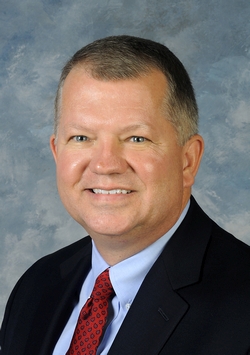
2026 Regular Session Introduced by Danny Carroll and 1 co-sponsor

The bill reorganizes the Justice and Public Safety Cabinet to streamline structure, reporting, and oversight, and establishes local restorative justice advisory committees for juve

to Committee on Committees (S)
0
WeVote Research Nonpartisan
Bill Summary · SB 309

Summary of SB 309 (2026 Regular Session, Kentucky)

Purpose and intent

  • The bill reorganizes and clarifies the structure of the Justice and Public Safety Cabinet (JPSC) and related departments, consolidating agencies, defining reporting lines, and introducing new or redefined divisions and offices.
  • It also updates local juvenile justice governance by establishing restorative justice advisory committees and directing their responsibilities.

Key provisions and changes

  • Reorganization of the Justice and Public Safety Cabinet (JPSC)

    • The JPSC shall consist of the following departments:
    • Department of Corrections
    • Department of Criminal Justice Training (with Training Operations Division and Administrative Division)
    • Department of Juvenile Justice (with multiple offices and divisions, including new and reorganized units such as Office of Support Services, Office of Detention, Office of Rehabilitation and Reentry Services, and Division of Compliance)
    • Department of Kentucky State Police (with offices and divisions including Administrative Services, Operations, and Technical Services; multiple divisions within each)
    • Department of Public Advocacy (to include six specified divisions: Protection and Advocacy, Law Operations, Trial Services, Post-Trial Services, Conflict and Contract Services, Education/Strategic Planning/Recruitment)
    • Each department (except Public Advocacy) is headed by a commissioner appointed by the cabinet secretary (with Governor approval per statute). Public Advocacy remains an independent state agency attached to the JPSC for administrative purposes.
    • The cabinet itself will include several centralized offices to support operations, including:
    • Office of the Secretary
    • Office of Human Resource Management (with Division of Human Resource Administration and Division of Employee Management)
    • Office of Legal Services (providing cabinet legal representation and capable of investigating certain matters; input from the secretary on matters involving juveniles or policy)
    • Office of Legislative and Intergovernmental Services
    • Office of Communications (including Information and Technology Services Division)
    • Office of Financial Management Services (including Division of Financial Management)
    • Grants Management Division
    • Office of the Kentucky State Medical Examiner
    • Office of Drug Control Policy (with oversight over substance abuse programs and annual project coordination; required promulgation of regulations for oversight; oversight effective by December 31 of each year)
  • Local juvenile restorative justice advisory committees (KRS 15A.064 amendments)

    • Each county, or joint county group, shall establish a local juvenile restorative justice advisory committee (or assign responsibility to an existing body).
    • Required membership includes: Chief District Judge, county attorney, assistant public advocate, representatives from Department for Community Based Services, Department of Juvenile Justice, local law enforcement, each local school district, diverse community members, and a representative from a victims advocacy group.
    • Responsibilities include establishing sustainable restorative justice programs to address underlying causes of negative behavior and develop local programs with referrals from courts, DJJ, schools, or social service agencies.
    • Restorative justice programs cannot include participation by a child classified as a violent offender under KRS 439.3401.
    • Committees must meet quarterly and report to the Department of Juvenile Justice (with possible alignment to the Office of Community and Mental Health Services).

Who would be affected

  • State agencies under the JPSC would experience organizational structure changes, new reporting lines, and potential expansion or consolidation of offices and divisions.
  • The Department of Public Advocacy maintains independent status but would be structurally attached to JPSC for administrative purposes.
  • Local juvenile justice stakeholders would include county judges, prosecutors, public advocates, school districts, law enforcement, social services, and victims’ advocacy groups, who participate in restorative justice advisory committees.
  • Substance abuse program oversight would involve the Office of Drug Control Policy and various executive branch substance abuse initiatives.

Procedural and timeline aspects

  • The bill outlines appointment processes for cabinet-level positions and sub-agency directors, with existing statutory references (KRS 12.050, KRS 12.210, KRS 31.020, etc.) governing appointments and reporting relationships.
  • The Office of Drug Control Policy is required to review and coordinate all current substance abuse projects by December 31 of each year and promulgate related administrative regulations.
  • Local restorative justice committees have a quarterly meeting requirement and must report to DJJ.

Illustrative details

  • Administrative leadership roles are specified for many offices (e.g., executive directors, commissioners, and division heads) with reporting structures to the JPSC secretary.
  • The Kentucky State Police structure includes multiple divisions (West/East Troops, Special Enforcement, Commercial Vehicle Enforcement) and a separate Office of Technical Services (Forensic Services, Electronic Services, Records Management).
  • The Office of the Kentucky State Medical Examiner and the Office of Drug Control Policy are given prominent administrative roles within the cabinet.

This summary highlights the bill’s central objective: to reorganize and streamline the Justice and Public Safety Cabinet’s structure, strengthen oversight and support functions, and promote restorative justice at the local level for juvenile matters.

Compiled from official sources — confirm details with the bill’s official record.

Sign in to ask a question.