

WeVote

Bill

Bill

HB 7051

AN ACT RELATING TO STATE AFFAIRS AND GOVERNMENT -- DEPARTMENT OF CHILDREN, YOUTH AND FAMILIES

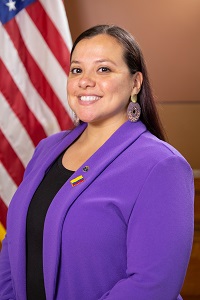
2026 Regular Session Introduced by Karen Alzate and 9 co-sponsors

DCYF must conservatively save a portion of youths’ benefits in protected accounts to protect federal eligibility while supporting their future needs.

05/14/2026 Committee recommended measure be held for further study
0
WeVote Research Nonpartisan
Bill Summary · HB 7051

Purpose and intent

  • HB 7051 proposes an act to modify the Rhode Island Department of Children, Youth and Families (DCYF) framework by requiring the department to establish and manage separate savings accounts for youth in care who receive certain benefits (Social Security, SSI, veterans benefits, or railroad retirement benefits).
  • The core aim is to preserve and manage the youth’s benefits in a way that protects eligibility for federal benefits by conserving a portion of those funds in segregated accounts, thereby reducing the risk of asset-limit violations and supporting future needs for the youth.

Key provisions and changes

  • Definitions (Section 42-72-37):

    • “Benefits” covers social security benefits, supplemental security income (SSI), veterans benefits, and railroad retirement benefits.
    • “Youth's attorney” and “guardian ad litem” are those appointed in the proceeding where DCYF is guardian or custodian.
  • Application and eligibility for benefits (a–b):

    • Upon receiving temporary custody or guardianship, DCYF must assess eligibility for benefits and, if eligible, file applications on behalf of the youth.
    • DCYF must review cases regularly to reassess eligibility and encourage cooperation from youths over 18.
  • Representative payee (b):

    • DCYF must identify a representative payee per federal rules (20 CFR 404.2021; 416.621). If DCYF seeks to be the payee, input from the youth’s attorney and guardian ad litem should be considered when selecting an alternative payee.
    • If DCYF serves as payee for a youth over 18, a court order is required.
  • Notifications (c):

    • DCYF must promptly notify youths aged 16+, their attorneys and guardian ad litem, and a parent/guardian or other responsible adult about benefit-related applications, SSA/VA/RORB communications, and any department requests or appeals.
  • Use and conservation of benefits (d):

    • From Jan 1, 2027, and ongoing while DCYF is the representative payee, DCYF must conserve a minimum percentage of the youth’s benefits:
    • SSI for ages 14–15: at least 40%
    • SSI for ages 16–17: at least 80%
    • SSI for ages 18–20: 100% (subject to a court order permitting DCYF to manage the funds for the youth)
    • From July 1, 2027, and ongoing for non-SSI benefits (e.g., Social Security, veterans benefits, railroad retirement), the same conservation percentages apply (40% for 14–15, 80% for 16–17, 100% for 18–20 with court authorization).
    • DCYF must exercise discretion in line with federal law to maximize the youth’s best interests, including considering asset/resource limits.
  • Asset protection options (d4):

    • DCYF may conserve benefits via several mechanisms to avoid triggering federal asset/resource limits, including:
    • PASS accounts (Plan to Achieve Self-Support)
    • 529 college savings plans
    • Individual development accounts
    • ABLE accounts (a 529A account)
    • Special needs trusts
    • Using funds for current needed services if in youth’s best interest
    • Compliance with dedicated accounts for back benefits when required
    • Other federal-exclusion options to protect eligibility
  • Reporting and oversight (e, f, g, h, i, j):

    • By Jan 1, 2028, DCYF must report to the General Assembly on youth in care receiving benefits who are not subject to these provisions and discuss expansion goals and barriers.
    • Annual accounting obligations: DCYF must provide an annual accounting to the youth’s attorney and guardian ad litem, and within 10 business days of request, to the youth themselves. Accounts must detail benefit receipts, disbursements, and requests/denials.
    • Final accounting and transition: Upon termination of guardianship, DCYF must provide final accounting to SSA, the youth’s counsel, and the future guardians/adopter, plus guidance on how to apply to become the representative payee.
    • Financial literacy: DCYF must provide financial literacy training starting at age 14, developed with input from the statewide Speak advisory board.
    • Rules and regulations: DCYF must adopt implementing rules by October 1, 2026.
    • Reporting requirements (i): By Jan 1, 2029, annual/state fiscal-year reports on number of youths entering care and benefits awarded/received through DCYF-filed applications.
    • Additional annual reports (j): Beginning Jan 1, 2029, report on conserved accounts, average conserved amounts by age, and total conserved by age group.
  • Effective date (k):

    • The act takes effect upon passage.

Who and what is affected

  • Youth in DCYF care who receive or may become eligible for benefits (Social Security, SSI, veterans benefits, railroad retirement benefits).
  • DCYF as guardian or potential representative payee for these youths.
  • Youths’ attorneys and guardians ad litem, and the youth’s parents or guardians (or other responsible adults) who receive notifications.
  • Federal programs and compliance with federal asset/resource limits (through the use of specialized savings mechanisms).

Procedural and timeline aspects

  • Implementing rules and regulations due by October 1, 2026.
  • Financial-conservation requirements begin:
    • January 1, 2027 (SSI conservation tiers)
    • July 1, 2027 (non-SSI benefits conservation tiers)
  • First reporting requirements to the General Assembly by January 1, 2028, with additional annual reporting starting January 1, 2029.
  • Ongoing annual accounting and final accounting upon termination of guardianship.

Overall, the bill establishes protected, segregated savings mechanisms for youths in DCYF custody who receive governmental or retirement benefits, aiming to preserve eligibility while supporting the youths’ future needs and financial literacy.

Compiled from official sources — confirm details with the bill’s official record.

Sign in to ask a question.