

WeVote

Bill

Bill

HB 316

AN ACT relating to local firearms control ordinances.

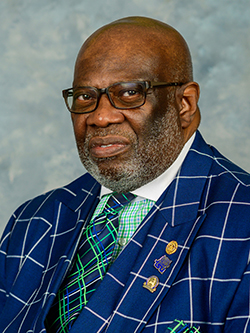
2026 Regular Session Introduced by George Brown and 2 co-sponsors

The bill lets local governments regulate firearms and related items, protects peer support communications with specific disclosures, and lets government buildings restrict conceale

to Local Government (H)
0
WeVote Research Nonpartisan
Bill Summary · HB 316

Bill Overview

HB 316 (2026 Regular Session, Kentucky) relates to local firearms control authorities and peer support protections for public safety employees. The bill expands local governments’ ability to regulate firearms and clarifies protections for peer support counseling communications, while also addressing carrying of deadly weapons in certain government buildings.

Main Purpose and Intent

  • Allow local governments (cities, counties, urban-county governments, charter counties, consolidated or unified local governments) to enact ordinances regulating firearms, ammunition, components, accessories, and related transfers, ownership, storage, and transportation.
  • Establish and preserve confidentiality and privilege around peer support counseling communications for public safety employees, with specified exceptions.
  • Affirm local authority to regulate concealed carry within government-owned or controlled buildings, with exemptions and limited penalties, and clarify consistency with existing Kentucky law.

Key Provisions

Local Firearms Regulation (Section 1)

  • Repeals and reenacts KRS 65.870 to permit local governments to regulate:
    • Manufacture, sale, purchase, taxation, transfer
    • Ownership, possession, carrying, storage, transportation
    • Firearms, ammunition, ammunition components, firearm components, firearms accessories, or combinations thereof
  • This broad authorization is stated as notwithstanding KRS 237.104, meaning localities can act notwithstanding existing state preemption constraints in that provision.

Peer Support Counseling Protections (Section 2)

  • Defines terms related to peer support within public safety:
    • Peer support counseling program, peer support counseling session, peer support participant, peer support specialist, public agency, and public safety employee.
  • Allows public agencies to create peer support programs for emotional support following traumatic experiences.
  • Maintains confidentiality of peer support communications, with carve-outs for:
    • Clear suicide intent or plan disclosed by a participant
    • Explicit threats of imminent physical harm to a victim
    • Legally reportable abuse/neglect of children or vulnerable adults
    • Admissions of criminal conduct
    • Information required to be disclosed by law
  • Grants a privilege protecting peer support communications from disclosure in disciplinary, civil, or criminal proceedings, except as above.
  • Allows certain non-confidential disclosures:
    • Anonymous data for research or education
    • Observations outside the session not contained in peer support communications
    • Knowledge obtained by a public agency employee independent of the counseling content

Concealed Carry in Government Buildings (Section 3)

  • Affirms that, with exceptions, colleges/universities and units of government may regulate possession of deadly weapons in portions of buildings they own/control.
  • Buildings used for public housing by private persons, highway rest areas, firing ranges, and private dwellings owned/controlled by the government are exempt from these restrictions.
  • Restrictions are to be clearly posted; penalties are not criminally imposed by this section but may include entrance denial, removal, or internal employment discipline.
  • Clarifies that these provisions do not apply to other government units beyond the specified statewide scope.
  • States that, unless otherwise provided by statute or federal law, there is no criminal penalty for carrying a concealed weapon at locations where unconcealed weapons may be carried under constitutional rights.

Who Would Be Affected

  • Local government entities (cities, counties, urban-county governments, charter counties, consolidated/unified local governments) would gain explicit authority to regulate firearms and related items within their jurisdiction.
  • Public safety employees and public agencies implementing peer support programs would have confidential protections for peer support communications, with specific exceptions.
  • State and local government buildings and controlled spaces could implement signage and restricted-access policies for concealed or carried weapons, subject to exemptions outlined.

Procedural and Timeline Aspects

  • The bill was introduced in January 2026 and referred to the Local Government committee, indicating progression through the standard legislative process.
  • No specific effective date is stated within the text excerpt; typical implementation would follow final passage and gubernatorial action, with potential timelines for regulation enactment and enforcement set by accompanying regulatory processes.

Potential Impacts and Considerations

  • Local firearm control: Enables broader, localized regulation of firearms and related items, potentially increasing local controls beyond current state-level constraints.
  • Public safety programs: Strengthens privacy protections for peer support participants while balancing safety by permitting certain disclosures.
  • Building access: Provides local governments with tools to manage weapon access within government properties, while preserving certain exemptions and limiting penalties to non-criminal disciplinary measures where appropriate.

If you’d like, I can summarize potential fiscal implications, anticipated opposition/support viewpoints, or compare with existing Kentucky preemption and firearm safety statutes.

Compiled from official sources — confirm details with the bill’s official record.

Sign in to ask a question.