

WeVote

Bill

Bill

HB 7458

AN ACT RELATING TO EDUCATION -- POSTSECONDARY TUITION ASSISTANCE FOR SHORTAGE TEACHING FIELDS

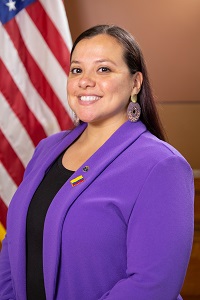
2026 Regular Session Introduced by Karen Alzate and 3 co-sponsors

Creates a state-funded tuition assistance fund to help Rhode Island students training as teachers in shortage fields (notably 7–12 science/math), with a three-year teaching service

04/30/2026 Committee recommended measure be held for further study
0
WeVote Research Nonpartisan
Bill Summary · HB 7458

Summary of HB 7458 (Rhode Island, 2026) – Postsecondary Tuition Assistance for Shortage Teaching Fields

Overview

  • Purpose: Establish a state-funded tuition assistance program to support students pursuing teaching licenses in Rhode Island in shortage teaching fields, with an emphasis on encouraging graduates to teach in subjects with critical educator shortages (notably sciences and mathematics for grades 7–12).
  • Jurisdiction: Rhode Island
  • Session: 2026
  • Introduced: January 30, 2026
  • Referred to: House Finance
  • Status: As of the latest action, held for further study in committee (April 30, 2026)

Key Provisions

1) Creation of the Shortage Teaching Fields Tuition Assistance Fund

  • Establishes a restricted receipt fund within the Office of the Postsecondary Commissioner (OPC) called the Shortage Teaching Fields Tuition Assistance Fund.
  • Purpose: Use state funds to pay a portion of tuition and other eligible costs of attending a Rhode Island postsecondary institution for individuals pursuing teacher training in shortage fields.

2) Definitions

  • “Costs of attending”: Expandable to include non-tuition expenses required to complete the degree (e.g., transportation, childcare, books/materials) as determined by OPC regulations.
  • “Shortage teaching fields”: Includes, at minimum, sciences and mathematics for grades 7–12; other fields may be added by OPC rules.
  • “Service requirement”: Employment obligations tied to receipt of tuition assistance.
  • “Tuition assistance recipients”: Eligible students receiving funds under this chapter.

3) Eligibility (Who Qualifies)

  • Must be enrolled or accepted in a Rhode Island postsecondary program to become a teacher in a shortage field.
  • Must complete the required service obligation; must comply with any other conditions set by OPC.
  • Not required to provide SAT/AP scores for admission, nor to be a Rhode Island resident.
  • If a recipient leaves the program to teach in a shortage field before degree completion, the aid received becomes a loan to be repaid.
  • If a recipient does not complete the service requirement, the aid becomes a loan to be repaid.
  • Transferring within Rhode Island postsecondary institutions does not affect eligibility, as long as other requirements are met.

4) Service Requirement

  • Recipients must complete at least three years of full-time teaching in a shortage field at any elementary or secondary school in Rhode Island.

5) Disbursement of Funds

  • Funds cover tuition, room, board, mandatory fees, and other costs of attending a Rhode Island postsecondary institution to become a teacher in a shortage field.
  • Benefits are applied after other financial aid is awarded.
  • Private institutions: Aid may be used, but private tuition, room, board, and mandatory fees cannot exceed the amount charged by Rhode Island colleges for the same year; additional costs beyond that must be covered under OPC regulations.

6) Administration and Regulations

  • OPC administers the fund and develops rules to implement the chapter.
  • Rules may address:
    • How shortage fields are defined and updated (at least every two years).
    • Multilingual guidance on applying for the program.
    • How the service requirement can be fulfilled, including leaves for health, pregnancy, military service, etc.
    • Nature and extent of costs eligible for assistance.

7) Reporting and Evaluation

  • By August 1, 2027, and annually thereafter, OPC must report to the legislature and governor on:
    • Number of approved requests
    • Actual dollars paid in the prior year
    • Shortage field(s) funded
    • Postsecondary institutions attended
  • Reports must protect the privacy of recipients.

Impact and Implications

  • Targeted Support: Aims to reduce teacher shortages in Rhode Island by subsidizing the cost of pursuing teacher preparation in high-need fields, particularly grades 7–12 sciences and mathematics.
  • Incentive to Stay: The three-year teaching service requirement creates a clear workforce commitment in exchange for financial assistance; failure to complete service or degree results in loan repayment.
  • Funding Scope: The program uses a dedicated fund within OPC, with potential limitations on using funds for private institutions (capped to the resident college’s charges for equivalent costs).
  • Accessibility: Provisions to improve accessibility include multilingual application guidance and consideration of leaves for health, family, military needs.

Timeline and Next Steps

  • Effective Date: Upon passage.
  • Oversight: OPC will promulgate rules and regulations and monitor program implementation.
  • Evaluation: Annual reporting to lawmakers and the governor starting in 2027.

If you’d like, I can provide a glossary of terms or a side-by-side comparison with similar tuition assistance programs in other states.

Compiled from official sources — confirm details with the bill’s official record.

Sign in to ask a question.