

WeVote

Bill

Bill

HB 6107

AN ACT RELATING TO EDUCATION -- PILOT PROGRAM FOR VIRTUAL REALITY LEARNING PLATFORM

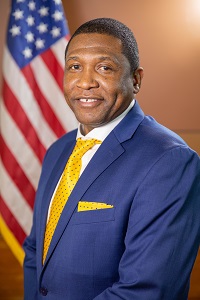
2025 Regular Session Introduced by Nathan Biah and 9 co-sponsors

Establishes a $2M Rhode Island VR pilot for grades 6–12 math to boost Algebra I engagement and achievement via teacher training and evaluated, standards-aligned VR platforms.

05/01/2025 Committee recommended measure be held for further study
0
WeVote Research Nonpartisan
Bill Summary · HB 6107

Summary — HB 6107 / LC002271

Title: AN ACT RELATING TO EDUCATION — PILOT PROGRAM FOR VIRTUAL REALITY LEARNING PLATFORM
Introduced: March 19, 2025 (Rhode Island, LC002271)
Status: Committee recommended measure be held for further study (05/01/2025)

Note: the package of text provided also contains unrelated language amending Michigan’s school code (MCL 380.1531). The operative bill described below is the Rhode Island proposal (LC002271), a House education bill to establish a VR pilot for math/science.

Purpose

To create a state-funded pilot program that uses virtual reality (VR) experiential learning platforms to improve student engagement and mathematics achievement (particularly Algebra I) for grades 6–12 STEM education.

Key provisions

  • Appropriation: $2,000,000 beginning in fiscal year 2026 specifically for this pilot.
  • RFP requirement: The Department of Education must issue a request for proposals (RFP) for an experiential VR platform that has demonstrated significant improvement in Algebra I benchmarks, verified by an independent third‑party evaluation.
  • Program features: The selected platform must provide tactile, multimodal, standards‑aligned learning experiences using 3‑D models and interactives to visualize and manipulate abstract math and science concepts and connect learning to real‑world economic/career contexts.
  • Use of funds: Funds shall be used to train and coach middle and high school mathematics teachers to deliver problem‑ and student‑centered lessons using VR headsets in selected districts.
  • Target districts: Commissioner will select districts “where there is a demonstrated need for increased student engagement and achievement in mathematics.”
  • Procurement and evaluation timeline:
    • RFP process must be completed by August 1, 2025.
    • The selected provider must supply a third‑party written report to the commissioner prior to the start of the next full school year following the pilot’s start, documenting impact on engagement and achievement.
  • Effective date: Upon passage.

Who would be affected

  • Primary beneficiaries: Students in grades 6–12 (math/STEM) in participating districts.
  • Educators: Middle and high school math teachers (training and coaching funded).
  • Vendors: VR platform providers meeting the RFP criteria and third‑party evaluators.
  • State budget: $2 million appropriation from FY2026 education funds.

Procedural / timeline notes

  • RFP completion deadline: August 1, 2025.
  • Third‑party impact report due before the next full school year after pilot launch.
  • As of 05/01/2025 the bill was recommended by committee to be held for further study.

Potential impacts and considerations

  • Positive: May increase student engagement, offer multimodal supports for abstract concepts, and improve Algebra I outcomes if the platform is effective.
  • Risks/implementation issues: equitable access to hardware, classroom logistics, ongoing operating costs beyond the pilot, data privacy, quality of professional development, and scaling if successful.
  • Evaluation: The bill emphasizes third‑party verification of effectiveness (both as an RFP criterion and post‑selection reporting), which supports accountability but depends on the rigor of the chosen evaluations.

Compiled from official sources — confirm details with the bill’s official record.

Sign in to ask a question.