

WeVote

Bill

Bill

HB 7582

AN ACT RELATING TO EDUCATION -- HEALTH AND SAFETY OF PUPILS

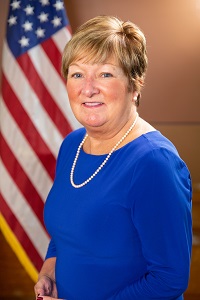
2026 Regular Session Introduced by Julie Casimiro and 9 co-sponsors

The bill requires annual, standardized indoor air quality inspections in all Rhode Island schools with HVAC, upgrades to MERV 13 filtration where feasible, and enhanced housing aid

04/28/2026 Committee recommended measure be held for further study
0
WeVote Research Nonpartisan
Bill Summary · HB 7582

Summary of HB 7582 (Rhode Island, 2026) – AN ACT RELATING TO EDUCATION — HEALTH AND SAFETY OF PUPILS

Date Introduced: February 6, 2026
Introduced by: Representatives Cotter, Read, Chippendale, Casimiro, Fogarty, Shallcross Smith, Potter, Furtado, Noret
Committee: House Finance
Status: As of April 28, 2026, Committee recommended holding for further study

Purpose and Intent

HB 7582 seeks to strengthen health and safety in Rhode Island schools by focusing on indoor air quality (IAQ) and related facilities improvements. The bill would require systematic IAQ inspections and evaluations of all school buildings with HVAC systems, establish guidelines for acceptable indoor air conditions, and provide for enhanced funding incentives for indoor air quality improvements in school construction projects.

Key Provisions

1) New: School Air Quality (16-21-44)

  • Establishes definitions related to IAQ, HVAC, filtration, and professional standards. Notable terms include:
    • Certified testing, adjusting, and balancing (TAB) technicians
    • Qualified personnel and skilled and trained workforce (with Davis-Bacon Act requirements)
    • Professional engineering standards (e.g., ASHRAE 62.1, 55, 241)
    • PM2.5, PM10, CO2, temperature, humidity, ventilation, and filtration metrics
  • Requires the Rhode Island Department of Health (DOH) to set IAQ guidelines for schools, covering:
    • Temperature, humidity, CO2, PM2.5, PM10, ventilation, and filtration
  • Directs the Department of Education (DOE) and the School Building Authority (SBA) to expand the needs survey to include uniform IAQ inspections and evaluations of each school building and its HVAC systems, conducted in coordination with local school boards.
    • Evaluations must identify deficiencies against DOH recommendations and other health-related building performance issues.
    • Assessments, including cost estimates for addressing issues, to be performed by qualified personnel at least once every five years, contingent on state funding.
    • Data collection and procedures must cover: environmental measurements (occupied conditions), filtration maintenance, verification of HVAC components per professional standards, and maintenance verification.
  • Results of inspections must be posted online and transmitted to the principal, the Department of Elementary and Secondary Education, and the local school board.

2) HVAC Filtration Upgrade (Mandatory MERV 13)

  • All schools with HVAC systems must install filtration achieving MERV 13, where feasible, as determined by the school board in line with professional engineering standards and system compatibility.
    • If MERV 13 is not feasible for an existing system, schools must implement the highest feasible filtration that does not significantly impair system lifespan or performance.
  • School personnel must inspect and replace filters per manufacturer guidance.
  • All HVAC adjustments must be performed by qualified personnel.

3) Reporting and Oversight

  • DOE, in coordination with DOH, must submit a report to the General Assembly within one year of the act’s effective date detailing:
    • Indoor air quality procedures, guidelines, and best practices
    • Funding status for expanded IAQ improvements and assessments
    • Status updates tied to the needs survey data
  • Thereafter, IAQ needs surveys and reports are to occur on a five-year cycle, aligned with § 16-105-3, subject to funding.

4) Point of Contact

  • DOE must designate a publicly identifiable point of contact for IAQ and ventilation concerns in public schools.

5) Rules and Regulations

  • DOH and DOE are authorized to promulgate rules and regulations necessary to implement the act.

6) Section 16-7-44 – School Housing Project Costs (Enhancements)

  • Establishes enhanced reimbursement for indoor air quality improvements:
    • Adds a 5% enhanced temporary school housing aid reimbursement rate for approved school construction projects that include eligible IAQ improvements.
    • Eligible IAQ improvements include HVAC repairs/upgrades/replacements, increased ventilation, air filtration or cleaning technologies, and other demonstrated IAQ improvements.
  • References general governance for school housing costs and bonds, with specific provisions about financing methods (e.g., use of bonds through certain authorities) and a 2008 baseline for bond-related rules.

Who/What Would be Affected

  • Public and charter K-12 school buildings with HVAC systems statewide.
  • School districts and local school boards (in collaboration with DOE and DOH) for IAQ inspections and improvements.
  • DOE and DOH (through required guidelines, reports, and rulemaking).
  • Construction projects involving school housing (potentially eligible for enhanced aid if IAQ improvements are included).
  • Vendors and professionals for IAQ testing, balancing, filtration, and engineering assessments (TAB technicians, qualified personnel, apprentice pathways, and skilled workforce under Davis-Bacon Act guidelines).

Timelines and Procedural Details

  • Effective date: Upon passage.
  • IAQ inspections: To be conducted at least once every five years, pending state funding.
  • Data reporting: Initial DOE/DOH report due within one year of enactment; subsequent five-year cycle for needs survey updates.
  • Filtration upgrade requirement: Must meet or maximize filtration to MERV 13, considering system feasibility.
  • Enhanced housing aid: Applies to eligible indoor air quality improvements in construction projects (enhanced reimbursement rate applies to qualifying projects).

Practical Impact

  • Aims to improve student health and learning outcomes by ensuring better indoor air quality and ventilation in schools.
  • Encourages modernization of filtration and ventilation, with stronger oversight and data transparency.
  • Provides financial incentive (5% enhanced aid) to incorporate IAQ improvements into school construction projects, potentially accelerating upgrades.

Compiled from official sources — confirm details with the bill’s official record.

Sign in to ask a question.