

WeVote

Bill

Bill

HB 7415

AN ACT RELATING TO EDUCATION -- ESTABLISHMENT OF CHARTER PUBLIC SCHOOLS

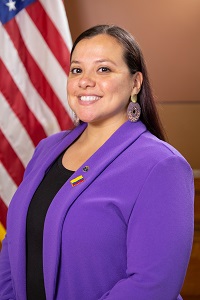
2026 Regular Session Introduced by Karen Alzate and 9 co-sponsors

Rhode Island HB 7415 freezes new district, independent, and mayoral charter approvals for 2026–2029 and ties state funding to prior approval, shaping charter growth and oversight.

06/18/2026 Signed by Governor
0
WeVote Research Nonpartisan
Bill Summary · HB 7415

Summary of HB 7415 (2026) – Rhode Island

Purpose and intent

  • Establishes and regulates charter public schools in Rhode Island, including district charter schools, independent charter schools, and mayoral academies.
  • Reframes charter schools as public schools operating under state law to pursue innovation, accountability, and high student achievement, while ensuring protections for students and adherence to federal and state laws.
  • Sets limits on the total number of charters and directs allocation to increase opportunities for at-risk students.

Key provisions and changes

  • 16-77-3.1 (Legislative purpose and framework)

    • Charter public schools provide alternatives within the public system with higher accountability in exchange for more school autonomy.
    • Charter schools are public schools under state law and must comply with civil rights and special education laws. They are nonsectarian and nonreligious, and may not be operated by for-profit entities.
    • Rules to be enacted by the commissioner to govern creation, operation, rescission, financial accountability, and other standards.
    • Cap on charters: not more than 35 (later text shows 25) total charters; at least 50% of new charters must focus on at-risk populations.
    • The Council on Elementary and Secondary Education cannot grant approvals for district/independent/mayoral charters to begin operations in the 2026-2027, 2027-2028, or 2028-2029 school years.
    • New charter state funding/approval contingent on prior state approval and appropriation up to those years.
  • 16-77-5.1 (Oversight by commissioner)

    • Complaint mechanism against charter schools; if unresolved, complaints go to the commissioner.
    • Charter approval for establishment or continuation is for up to five years, with required approval from the council.
    • Requires local support (written) for network charters from the sending districts after at least one public hearing.
    • Defines “network charter school” (encompasses multiple schools or grade spans).
    • Pre-2016 independent charter provisions preserved for existing charters (grandfathering noted).
  • 16-77.2-2 (District charter schools)

    • Procedures for creation, including submission deadlines (by Dec 1 prior year), required plan, 180 instructional days, governance and community involvement, facility and services details, safety, enrollment, discipline, and employment terms.
    • Teachers/administrators must be certified; they receive prevailing wages/benefits and participate in retirement systems.
    • Variances: explicit process to request exemptions from certain statutes/regulations.
    • Funding/financial plan and annual audits required.
    • For existing schools seeking a district charter, faculty must approve by 2/3; parent approval required by majority of students enrolled.
    • Approval of charter may involve variances and, if necessary, can be submitted to the Board of Regents for consideration of these variances.
    • No preliminary/final approval for district charters to begin operation in 2026-2027 to 2028-2029 school years.
  • 16-77.3-2 (Independent charter schools)

    • Similar submission requirements as district charters, with emphasis on governance, accountability, safety, enrollment, personnel, and finances.
    • Nonprofit organizations seeking independent charters must have their financial records reviewed by the Auditor General; financial approval is prerequisite to final operation.
    • Auditor General review can require annual audits; potential withdrawal of approval if financial irregularities are found.
    • Local support is not explicitly required for all independent charters but may be required as applicable.
    • Also prohibited from beginning operation in 2026-2027 to 2028-2029 without prior approval.
  • 16-77.4-2 (Mayoral academies)

    • Parallel framework to district/independent charters with specifics for mayoral academies.
    • Includes provisions on governance, staffing, facilities, services, enrollment, discipline, and employment terms.
    • Mayoral academies may opt to have teachers/administrators participate in prevailing wages/benefits, retirement, and service credit if they elect to do so.
    • Requires variances, financial plans, annual audits, and bylaws.
    • Requires written local support if required by local statute.
    • No preliminary or final approval for beginning operation in 2026-2027 to 2028-2029.
  • Section 5 (Effective date)

    • The act takes effect upon passage.
  • Overall timing constraint

    • The act freezes new approvals for district, independent, and mayoral charter schools for operations beginning in 2026-2027 through 2028-2029, and it restricts state funding/appropriation for any new charters not previously approved before July 1, 2025 for fiscal years 2026-2027 through 2028-2029.

Who would be affected

  • Prospective charter operators: district, independent, and mayoral academies must follow the new comprehensive charter process, governance, and reporting requirements.
  • Local school districts: may need to provide written support for network charters; governance and collaboration around facilities, services, and enrollment policies.
  • Students and families: charter schools would be public options with expanded diversity of programs, with explicit protections, reporting, and accountability standards.
  • Charter employees: subject to Rhode Island public school employment rules, with potential participation in prevailing wages, retirement, and service credit depending on the charter type and options chosen.
  • State and local authorities: the Auditor General and the Council on Elementary and Secondary Education would oversee financial integrity, approval timing, and variances from standard regulations.

Procedural and timeline aspects

  • New charter approvals for 2026-2027 to 2028-2029 are postponed; no creation or expansion actions may begin in those years.
  • State funding/appropriation for new charters or expansions requires prior approval (Board of Education approval) before July 1, 2025.
  • Charter school approvals are tied to five-year durations with required oversight and regular reporting to parents, communities, and the commissioner.
  • Local support requirements apply to network charters; independent charters require Auditor General review of finances prior to final approval.

If you’d like, I can provide a side-by-side comparison with existing Rhode Island charter law or a plain-language FAQ for readers.

Compiled from official sources — confirm details with the bill’s official record.

Sign in to ask a question.