

WeVote

Bill

Bill

HB 5556

AN ACT RELATING TO BUSINESSES AND PROFESSIONS -- PSYCHOLOGISTS

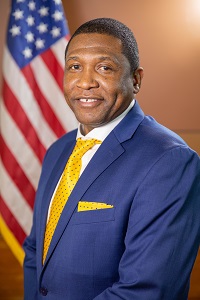
2025 Regular Session Introduced by Nathan Biah and 7 co-sponsors

Creates a licensed school psychologist pathway with internship qualifications, enabling independent school-based evaluations and expanded mental-health services in schools.

04/24/2025 Committee recommended measure be held for further study
0
WeVote Research Nonpartisan
Bill Summary · HB 5556

Summary — HB 5556 (2025)

Title: AN ACT RELATING TO BUSINESSES AND PROFESSIONS — PSYCHOLOGISTS
Introduced: Feb 26 / Mar 14, 2025 (sponsors: Reps. DeSimone, Fellela, McNamara, Biah, Slater, Kazarian, Hull, O'Brien)
Committee status: House Public Health — 04/24/2025 Committee recommended measure be held for further study
Companion bill: SB 2640

Main purpose

HB 5556 is intended to address a documented shortage of school psychologists in Rhode Island by (1) creating a clearer licensure pathway for school psychologists through the Department of Health, (2) strengthening graduate training and internship requirements in school psychology, and (3) expanding access to school-focused psychological services in schools and the community.

Key findings cited

  • National Association of School Psychologists (NASP) recommends a maximum ratio of 500 students per school psychologist.
  • Rhode Island has an estimated statewide ratio of 763:1 and urban district averages near 1,000:1.
  • There are insufficient credentialed graduates from in‑state higher education programs to meet demand, and shortages are expected to persist.

Major provisions and changes

  • Amends R.I. Gen. Laws Chapter 5-44 (Psychologists) — updates definitions and licensing categories.
  • Adds a defined category of “licensed school psychologist” and establishes qualifications referencing § 5-44-9.1.
  • Defines a “graduate program” in school psychology as state‑accredited, requiring at least 60 graduate semester hours (or equivalent) with coursework covering data-based decision-making, student assessment, multi-tiered systems of support, mental health interventions, consultation, family–school–community collaboration, ethics, IDEA/ESSA requirements, and related domains.
  • Establishes a required “school psychology internship” as a culminating supervised field experience with minimums: 1,200 total hours over an academic year and at least 600 hours in school-based settings (full text truncated in bill copy supplied).
  • Requires the Department of Health to create a licensure pipeline that enables licensed school psychologists to independently contract and provide educational evaluations, consultation, and other school-related services.
  • Includes a statutory definition of “living wage” (for unspecified uses in the chapter).

Who would be affected

  • Students and families: potential improved access to school-based assessment, mental health, and behavioral supports.
  • School districts and schools: could increase available pool of credentialed school psychologists; may affect staffing models and budgets.
  • Higher education institutions: required to meet/maintain program standards and produce more credentialed graduates.
  • Licensed psychologists and applicants: creates/clarifies pathway for school‑psychology licensure and independent contracting.
  • Department of Health and Board of Psychology: administrative duties to implement licensure pipeline and oversee standards.

Procedural/timeline notes

  • Introduced in late Winter/early Spring 2025; read first time 04/07/2025.
  • Referred to House Public Health; scheduled for hearing 04/24/2025. On 04/24/2025 the committee recommended the measure be held for further study (i.e., not advanced out of committee at that hearing).
  • No fiscal note or appropriation language included in the supplied text; earlier referral indicates review by Finance, Revenue & Bonding.

Potential impacts and considerations

  • Expected benefit: increase in qualified school psychologists and expanded access to psychoeducational services in schools and communities.
  • Implementation considerations: capacity of Rhode Island graduate programs to expand cohorts; costs to school districts for hiring; administrative workload for Dept. of Health and the Board of Psychology to implement new licensure categories and oversight; undefined use of the “living wage” definition.
  • Fiscal effects are not detailed in the bill text provided and may require evaluation by the Finance committee.

Compiled from official sources — confirm details with the bill’s official record.

Sign in to ask a question.