

WeVote

Bill

Bill

HD 4091

An Act ensuring access to addiction services

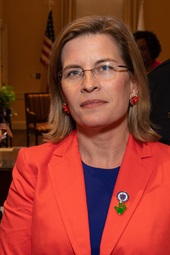
194th Legislature (2025-2026) Introduced by Marjorie Decker

The bill ensures more accessible treatment by maintaining adequate bed capacity, distributing facilities regionally, and using a court roster to match needs with appropriate (inclu

0
WeVote Research Nonpartisan
Bill Summary · HD 4091

HD 4091 — An Act ensuring access to addiction services

Overview

HD 4091, introduced in the 2025-2026 Massachusetts General Court, seeks to ensure broader and more consistent access to treatment for alcohol and substance use disorders. The bill focuses on bed capacity, geographic distribution of facilities, and court involvement in placement for treatment, while maintaining existing commitments to voluntary, evidence-based care and preserving defined boundaries for correctional facilities.

Key Provisions

  • Definitions (Section 1)

    • Redefines “Facility” as a public or private facility operated, licensed, or approved by the Department of Public Health (DPH) or the Department of Mental Health (DMH) that provides care for alcohol or substance use disorders.
    • Explicitly excludes jail or correctional entities and any entity funded/controlled/operated by a county sheriff or public-safety agencies from being a “Facility.”
    • Defines “Secure facility” as a facility that, per DPH or DMH designation, provides higher-security levels to protect individuals and the community.
  • Bed Capacity, Access, and Court Involvement (Section 2)

    • The Secretary of Health and Human Services must ensure an adequate supply of beds in facilities and secure facilities for treatment, with secure facilities geographically distributed across Massachusetts.
    • DPH must maintain a roster of available public and private facilities and secure facilities, including bed counts and security levels, and provide this roster to the trial court.
    • If a court finds that a person requires a facility with higher security, the person may be committed to a secure facility.
    • Upon release, the person is encouraged to consent to further treatment and may voluntarily remain in the facility, transition to a lower-security facility, or move to a facility not on the roster.
  • Corrections Note (Section 3)

    • Clarifies that nothing in this section relieves a correctional entity of its legal responsibility to offer evidence-based treatment for alcohol or substance use disorders to incarcerated persons on a voluntary basis.

Affected Parties

  • Individuals with alcohol or substance use disorders who may be placed in treatment facilities or secure facilities via court processes.
  • Courts (trial courts) that reference the roster and determine security needs for placement.
  • Public and private treatment facilities, and the state agencies DPH, DMH, and the Secretary of Health and Human Services.
  • Correctional entities, which retain the duty to provide voluntary, evidence-based treatment.

Implementation and Timeline

  • The bill requires ongoing bed capacity planning, geographic distribution, and maintenance of a facility roster.
  • When court findings indicate heightened security needs, placement to a secure facility is authorized.
  • No explicit funding or effective date is specified in the text provided; implementation would depend on subsequent appropriation and regulatory action.

Potential Impacts

  • Improves access to addiction treatment through defined bed capacity and regional distribution.
  • Creates a transparent mechanism (the roster) for courts to identify available treatment options.
  • Balances court-ordered treatment needs with ongoing emphasis on voluntary, evidence-based care and protections for incarcerated individuals’ rights.
  • May require additional funding and coordination across state agencies and treatment providers.

Compiled from official sources — confirm details with the bill’s official record.

Sign in to ask a question.