Summary of S.3022 (194th MA Legislature): The ENOUGH Act
Purpose and overall aim
- Create a dedicated Engaging Neighborhoods, Organizations, Unions, Governments and Households Fund (the ENOUGH Fund) within the Executive Office of Housing and Livable Communities.
- The fund supports place-based, community-driven strategies to reduce poverty and improve outcomes for children and families in Massachusetts’ most distressed neighborhoods.
- The program seeks to align housing and community development investments with cradle-to-career education, health, housing, and workforce opportunities, leveraging public, private, and philanthropic resources to transform communities.
Key provisions and changes
1) Creation and funding of the ENOUGH Fund
- Establishes a separate fund on the Commonwealth’s books managed by the Executive Office of Housing and Livable Communities.
- Sources of funds:
- Appropriations, bond proceeds, or other money designated by the General Court
- Public and private gifts, grants, donations
- Interest earned on fund money
- Funds in the ENOUGH Fund are not to be reappropriated elsewhere and amounts remaining at the end of a fiscal year stay available for the fund (no lapse to the General Fund).
2) Use of funds
- Administer and finance a grant program to support community-driven, place-based poverty reduction efforts.
- Funds may cover: direct services to grant constituents, administration, technical assistance, capacity building, and program evaluation.
- Grantees can receive training on equity, data-driven decision-making, and best practices.
3) Grant program design and purpose
- Objective: implement cradle-to-career, place-based strategies that improve outcomes for children and families in distressed neighborhoods, aligning housing and community development with education, services, and supports.
- Specific purposes (selection):
- Reduce concentrated poverty and expand economic opportunity
- Improve community health, well-being, and safety
- Provide cradle-to-career access to high-quality education, training, and care
- Connect residents to quality jobs and in-demand occupations
- Support family-sustaining income and access to affordable housing and health care
- Provide support for disability services, child welfare-involved families, justice-involved populations
- Link individuals to benefits and support programs
- Support students’ success through integrated services and enrichment
- Leverage federal, local, and private funding
- Emphasis on a comprehensive, multi-sector approach with data-informed decisions.
4) Eligibility and place-based partnerships
- Eligible entities: non-profits, higher education institutions, public schools/districts, local government offices, and community-based organizations (including neighborhood-based nonprofits).
- Geographic focus: areas with >20% of children in poverty, high concentrations of low-income residents, or multiple distress signals (e.g., poverty concentration, obesity, academic failure, chronic absenteeism, delinquency, or justice involvement).
- Required to form place-based partnerships to apply for grants.
5) Grant tracks and timeline
- Tracks:
- Year-long partnership development grants: establish partnerships, convene leaders, form accountability structures
- Two-year plan development grants: asset mapping, needs assessment, resident engagement for action plans
- Two-to-four-year implementation grants: execute action plans, leverage additional funding, monitor progress, establish ongoing leadership
- Implementation grants may be extended up to two additional years if accountability data supports extension.
6) Application, review, and administration
- The ENOUGH Office, with its advisory committee, must create a transparent, competitive grant process.
- Annual requests for applications (RFA) must be widely disseminated, including in at least the top five languages spoken in the state.
- Technical assistance and guidance provided; emphasis on equitable access.
- Priority to applicants serving long-term distressed communities, fostering cross-sector collaboration, equity, and engagement of people with lived experience.
- Finalist site visits or interviews may occur.
7) Accountability, performance, and reporting
- Grantees must set baseline and performance targets aligned with metrics on poverty reduction, economic security, education, health, and safe communities.
- Possible research partnerships to improve cradle-to-career understanding; data-sharing coordination with state agencies while protecting privacy.
- Annual reporting due by October 1, including:
- Fund sources and amounts
- Expenditures and anticipated funding needs
- Grant recipients and sizes
- Project summaries
- Performance data, challenges, and best practices
- Report to governor and legislative committees; posted on the agency website
8) ENOUGH Fund Advisory Committee
- An advisory committee to assist the EOHLC in management, operation, and grant awards.
- Composition includes:
- Secretaries from key state offices (Housing, Health and Human Services, Education, Economic Development, Labor and Workforce Development, Transportation)
- The Massachusetts Development Finance Agency president (or designee)
- The Director of Rural Affairs (or designee)
- Eight gubernatorial appointees with expertise in poverty-related areas (varied fields such as cash benefits, housing, early education, workforce development, health, transportation, disability services, etc.)
- Terms: 5 years, non-compensated (may be reimbursed for travel)
- Meetings: at least bi-annually; advised to review and approve grant applications recommended by the EOHLC
Who is affected
- Primary beneficiaries: residents of designated distressed neighborhoods, especially children and families, who gain access to cradle-to-career supports, housing, health, and employment opportunities.
- Eligible partners: nonprofits, higher education, public schools and districts, local government units, and community-based organizations.
- State agencies: coordination with state data systems and program alignment across housing, health, education, transportation, labor, and social services sectors.
- Advisory committee members: officials and experts serving on a multi-agency panel to guide funding decisions.
Procedural and timeline notes
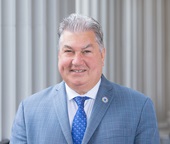
- Filing and sponsorship: introduced in December 2025; co-sponsored by Sal N. DiDomenico and Pavel M. Payano.
- House actions show concurrent movement with rules suspensions and referrals to relevant committees, with hearings scheduled (as of 2026).
- If enacted, fund administration and grant cycles would follow annual RFA processes, with multi-year grant tracks and annual reporting deadlines.
Overall impact
- Establishes a centralized funding stream and governance framework aimed at reducing poverty through coordinated, place-based strategies.
- Looks to align housing, education, health, and economic mobility with rigorous oversight, community engagement, and data-driven accountability.
- Emphasizes equity, multilingual outreach, and involvement of residents with lived experience in program design and implementation.