

WeVote

Bill

Bill

S 3676

American Decade of Sports Act

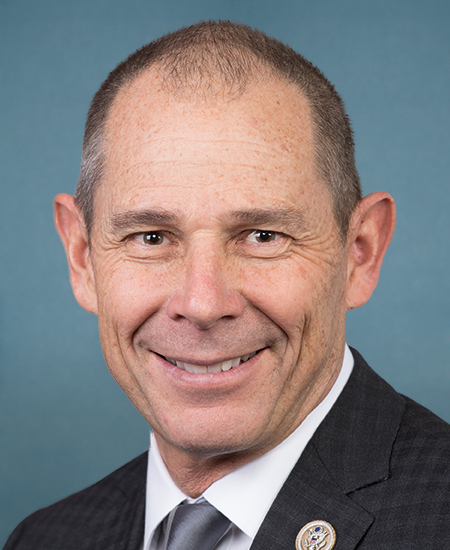
119th Congress Introduced by John Curtis and 3 co-sponsors

Establishes a 10-year Office of Sports Diplomacy to leverage major U.S.-hosted events (2024–2034) for a coordinated, public-facing diplomacy strategy.

Committee on Foreign Relations. Reported by Senator Risch with an amendment in the nature of a substitute. Without written report.
0
WeVote Research Nonpartisan
Bill Summary · S 3676

Overview

  • Bill: S.3676 (119th Congress) – American Decade of Sports Act
  • Purpose: Establish a national sports diplomacy program that strategically leverages major international sporting events hosted in the United States during 2024–2034 to enhance U.S. soft power, diplomatic relationships, and global leadership.
  • Introduced by: Sen. J. Rosen (with bipartisan co-sponsors: Sens. Young, Padilla, Curtis, Rosen)
  • Status: Reported by the Senate Committee on Foreign Relations with an amendment in the nature of a substitute; placed on the Senate Legislative Calendar for General Orders.

Main Purpose and Intent

  • Create a coordinated, long-term “mega-decade” sports diplomacy strategy tied to high-profile events hosted in the United States.
  • Use these events as a platform to advance U.S. diplomatic objectives, broadening engagement with foreign publics, governments, diaspora communities, and international partners.
  • Integrate sports diplomacy with broader public diplomacy, cultural exchange, and commercial diplomacy efforts.

Key Provisions and Changes

  • Definitions

    • American Decade of Sports / Mega-Decade of Sports: Covers major international competitions hosted in the U.S. from 2024 through 2034, including:
    • 2024 Copa America
    • 2025 Club World Cup
    • 2026 FIFA World Cup
    • 2028 Summer Olympics and Paralympics
    • 2031 Rugby World Cup (Men’s) and 2033 Rugby World Cup (Women’s)
    • 2034 Winter Olympics and Paralympics
    • Appropriate Congressional Committees: Senate Foreign Relations Committee and House Foreign Affairs Committee
  • Mega-Decade Sports Diplomacy Strategy (Section 3)

    • Initial 5-year Strategy: Due within 180 days after enactment; a second 5-year strategy due five years later, each aimed at leveraging the listed events to boost soft power and leadership.
    • Required Elements for each strategy:
    • Diplomatic objectives and success metrics related to the mega-decade.
    • Partnerships with host cities, diaspora communities, athletes, sports industry, private sector, human rights organizations, and civil society to showcase U.S. strengths and build connections.
    • Internal coordination within the State Department to align sports diplomacy with regional bureaus, public diplomacy, and commercial diplomacy.
    • Plan to ensure expedited and secure visa processing for athletes, families, staff, and international visitors, including reducing visa wait times.
    • Financial and personnel requirements to implement the strategy.
    • Plans to deploy domestic public diplomacy resources (e.g., Cultural Unit, Foreign Press Center) to facilitate engagement with American culture and values.
    • Public Availability: Strategies must be published on the State Department’s website within specified timelines (180 days for the first strategy; 5 years for the second).
    • Consultation: Secretary of State must consult with appropriate congressional committees before submission and provide implementation updates every 180 days through 2034.
  • Office of Sports Diplomacy (Section 4)

    • Creates the Office of Sports Diplomacy within the Bureau of Educational and Cultural Affairs (renaming the existing Sports Diplomacy Division) within 90 days of enactment.
    • Functions:
    • Manage sports diplomacy exchange programs.
    • Coordinate across State Department bureaus and with interagency partners.
    • Engage host cities’ social, political, and economic partners.
    • Involve diaspora communities to deepen people-to-people connections.
    • Partner with U.S. sports industry, leagues, and athletes to promote international partnerships.
    • Collaborate with host cities’ international trade and tourism offices to deepen economic ties.
    • Elevate American arts, film, and music to promote cultural exchange.
    • Ensure efficient visa processing for international visitors, broadcasters, athletes, and staff.
    • Staffing: Require at least 3 additional full-time staff dedicated to implementing each strategy, assigned within 180 days and through 2034, with potential use of flexible hiring authorities or realignment of personnel.
    • Sunset: The Office of Sports Diplomacy authority expires 10 years after enactment (i.e., a decade-long program window).
  • Implementation Reports (Section 5)

    • Annual progress reports: Due starting one year after the first strategy’s submission and annually through December 31, 2034, detailing progress toward the Act’s objectives.

Who/What Would Be Affected

  • U.S. State Department and its Bureau of Educational and Cultural Affairs.
  • Office of Sports Diplomacy (to be renamed) and its staff.
  • State Department components coordinating with host cities, diaspora communities, and the U.S. sports industry.
  • Athletes, their families, support staff, broadcasters, and international visitors attending mega-decade events (visa facilitation aims).
  • Host cities, international trade and tourism offices, and civil society organizations engaged in diplomacy, culture, and commerce.
  • Public diplomacy audiences, including foreign publics reached through sports, culture, and media outreach.

Procedural and Timeline Aspects

  • Initial strategy due: within 180 days after enactment.
  • Second strategy due: within 5 years after initial submission, with a lessons-learned evaluation included.
  • Public posting: Strategies publicly available on the State Department website at specified intervals.
  • Monitoring: Biennial to annual reporting to Congress through 2034 (initial annual report after first strategy, then yearly).
  • Staffing: At least 3 dedicated FTEs assigned to each strategy, plus potential use of flexible staffing authorities.
  • Sunset: Office authority terminates 10 years after enactment (roughly 2036 if enacted in 2026).

Potential Impact and Considerations

  • A formal, centralized framework to harness major U.S.-hosted sports events for diplomacy, cultural exchange, and economic engagement.
  • Emphasis on visa facilitation and public diplomacy to broaden international engagement.
  • Structured reporting and transparency through public strategies and congressional briefings.
  • Long-term coordination across multiple sectors (government, host cities, private industry, and civil society) to enhance U.S. soft power.
  • The 10-year sunset suggests a finite program window to measure impact and reevaluate effectiveness.

Compiled from official sources — confirm details with the bill’s official record.

Sign in to ask a question.