Summary — S.1840 (2025): “An Act to reform sick leave buybacks”
Status snapshot
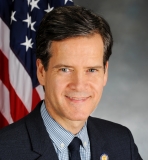
- Introduced: Jan 14, 2025 (Senate Docket No. 721) by Sen. Ryan C. Fattman (petitioners also Joseph D. McKenna and Bruce E. Tarr).
- Legislative actions: Referred to Judiciary (Jan 14); House concurred (Feb 27); read twice and referred to Finance (May 21); advanced through readings and committee steps; substituted by A3307A (June 11, 2025). Hearings were scheduled for July 9, 2025. The bill would take effect upon passage.
Purpose / intent
- To limit the amount of unused sick leave hours that state employees and certain public higher-education employees can accumulate, thereby reforming sick-leave “buyback” exposure and future liabilities for the Commonwealth.
Key provisions
1. Caps on accrual
- No employee of the Commonwealth shall accrue more than 1,000 hours of unused sick leave credits (adds subsection (e) to M.G.L. c.29, §31A).
- The same 1,000‑hour cap applies to employees of public institutions of higher education listed in M.G.L. c.15A, §5 (adds subsection (f)).
Transition / grandfathering (Section 2)
- The cap takes immediate effect for employees who currently have ≤1,000 hours.
- Employees who, as of the effective date, have more than 1,000 hours are not forced to lose those existing hours immediately. They:
- May not accrue sick-leave credits in excess of their current balance.
- May accrue new credits after using sick time, but only up to the 1,000‑hour maximum (i.e., once their balance falls below 1,000 hours they can replenish up to—but not beyond—1,000 hours).
Administrative rulemaking (Sections 3–4)
- The Personnel Administrator must promulgate revised rules under M.G.L. c.7, §28 to implement the change for Commonwealth employees.
- The Department of Higher Education and the University of Massachusetts must revise necessary rules and policies for affected public higher‑ed employees “as soon as practicable.”
Who is affected
- State (Commonwealth) employees covered by M.G.L. c.29 benefit rules.
- Employees of state public higher‑education institutions enumerated in M.G.L. c.15A, §5 (e.g., state universities, community colleges where applicable).
- Employers (state agencies and public colleges/universities) that administer sick-leave accruals and buyback programs will need to adjust policies and payroll accounting for future accruals and potential buybacks.
Potential fiscal and operational impacts
- Likely reduces long‑term sick‑leave accrual liabilities for the Commonwealth by imposing a 1,000‑hour cap going forward.
- Some employees currently holding balances above 1,000 hours are temporarily grandfathered, which may delay immediate savings.
- Agencies and higher‑ed institutions will incur administrative costs to amend rules, update payroll systems, and communicate changes.
Notes
- 1,000 hours equals about 125 eight‑hour workdays; the bill refers to hours, not days, so conversions depend on local scheduling.
- The bill was substituted by A3307A; that substitute should be reviewed for any differences before final assessment.