

WeVote

Bill

Bill

HR 9341

AI-Ready Federal Data Guidelines Act

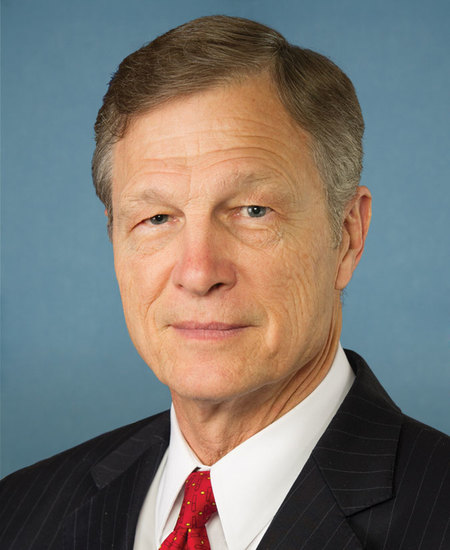
119th Congress Introduced by Brian Babin and 1 co-sponsor

NIST would publish voluntary AI-ready data guidelines for preparing open government data for AI training, plus pilots to test conformity and interoperability.

Committee Consideration and Mark-up Session Held
0
WeVote Research Nonpartisan
Bill Summary · HR 9341

Overview

HR 9341, the AI-Ready Federal Data Guidelines Act, introduced June 18, 2026, would require the Director of the National Institute of Standards and Technology (NIST) to develop voluntary guidelines to help federal agencies prepare open government data assets for use in training artificial intelligence (AI) models. The bill tasks interagency coordination and envisions pilot programs to test conformity assessment procedures for AI-ready datasets. It emphasizes open data, interoperability, and alignment with existing federal guidelines.

Purpose and Intent

  • Establish a framework to ensure federal open government data assets intended for AI training are well-prepared, accessible, and suitable for use in AI development.
  • Promote consistency in data formatting, labeling, quality evaluation, metadata, maintenance, and availability.
  • Facilitate responsible adoption of AI across sectors by providing guidelines that improve data usability and interoperability.

Key Provisions

  • Section 21A (added to the NIST Act):

    • Development of voluntary AI-ready data guidelines by the NIST Director, in consultation with:
    • Director of the Office of Science and Technology Policy
    • Secretary of Energy
    • Director of the Office of Management and Budget
    • Heads of other appropriate federal agencies
    • Guideline elements to be addressed (to the extent practicable):
    • Data formatting and structure to ensure AI interpretability
    • Data labeling and annotation methods (including automated and expert-guided approaches)
    • Data quality evaluation for suitability in AI
    • Metadata and documentation enabling appropriate interpretation
    • Data maintenance and ongoing updates
    • Data availability and improved automated access to publicly available information
    • Emphasis on flexible implementation across use cases and sectors
    • Aim for consistency with Circular A–119 (OMB) and inclusion of conformity assessment procedures, where practicable
  • Pilot programs (Section 21A(b)):

    • The Director may conduct pilot programs to develop conformity assessment procedures for AI-ready datasets in specific sectors/domains.
    • Pilots:
    • Shall not exceed one year
    • Develop supplemental guidelines aligned with the main guidelines
    • Assess impact on usability, interoperability, and readiness for AI
    • Identify challenges for future implementation and maintenance
    • Include a transition plan to non-Federal entities for ongoing governance
    • Prioritized topics:
    • National security and industrial competitiveness implications (e.g., biotechnology/biomanufacturing)
    • Datasets controlled and maintained by Federal agencies
    • Participation limited to no more than two concurrent pilots, conducted through federally funded programs, National Laboratories, colleges/universities, or private-sector partnerships
  • Congressional briefings:

    • The Director must brief the House Science, Space, and Technology Committee and the Senate Commerce, Science, and Transportation Committee on implementation within one year of guideline publication and annually for five years.
  • Prohibitions and definitions:

    • The Director may not reprogram funds from other NIST programs to carry out this section.
    • Key terms defined, including agency, AI, AI model, AI system, open government data asset, conformity assessment, and others.

Who Would Be Affected

  • Federal agencies that produce or maintain open government data assets intended for AI training.
  • NIST, OSTP, the Department of Energy, OMB, and potentially other federal agencies involved in data governance and AI initiatives.
  • Researchers and private-sector partners participating in pilot programs and conformity assessments.
  • Open data communities relying on federal datasets for AI development.

Timeline and Process

  • Guidelines development process to be initiated by NIST in coordination with specified agencies.
  • Pilots (up to two concurrent) could run for up to one year each.
  • Initial congressional briefing within one year after guidelines are published, followed by annual briefings for five years.

Notes

  • The bill explicitly designates guidelines as voluntary.
  • It repeals a provision (subsection f of section 22A) related to the NIST Act, aligning statutory references with the new framework.

This summary provides a concise view of the bill’s aims, major components, and potential impacts on federal data governance and AI training infrastructure.

Compiled from official sources — confirm details with the bill’s official record.

Sign in to ask a question.