

WeVote

Bill

Bill

HR 10146

AI Advertising Disclosure Act

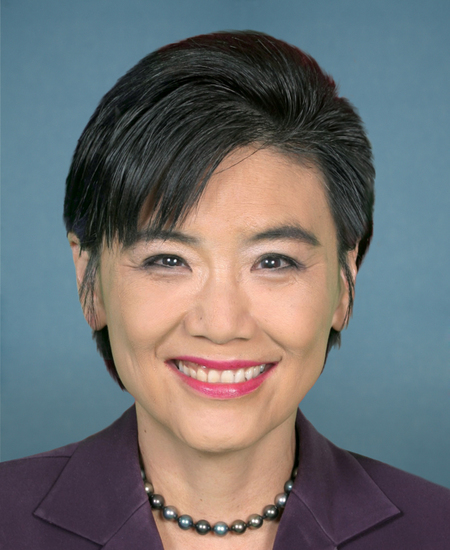
119th Congress Introduced by Judy Chu and 2 co-sponsors

AI tools must clearly disclose when content is influenced by commercial arrangements, with a registry, enforcement, and private actions for noncompliance.

Introduced in House
0
WeVote Research Nonpartisan
Bill Summary · HR 10146

Overview

HR 10146, the AI Advertising Disclosure Act, introduced August 24, 2026, would require certain AI-powered tools to disclose when content is influenced by commercial arrangements. The bill aims to increase transparency around sponsored content in AI responses, with specific disclosure rules, enforcement mechanisms through the FTC, and a private right of action for affected individuals. It creates a registry and user-accessible confirmation of commercial influence within conversations. The act would take effect 12 months after enactment.

Main purpose and intent

  • To ensure users are clearly informed when AI-generated content is influenced by commercial relationships or sponsored content.
  • To establish consistent disclosure standards for covered tools across consumer-facing AI applications.
  • To empower regulatory enforcement and provide a private right of action to deter deceptive practices.

Key provisions and changes

  • Definition and scope

    • Covered entity: any person, company, or organization deploying a covered tool for consumer-facing use with more than 50,000 monthly active users.
    • Covered tool: AI interactive service or app generating non-predetermined responses, accepting open-ended input, and producing adaptive output; includes AI chatbots and generative search features.
    • Commercial arrangement: money, data, preferential access, or other consideration influencing AI content.
    • Sponsored content: AI-generated content that mentions or promotes a product/service due to a commercial arrangement.
    • Generative search synthesis feature: synthesized answers produced by AI inside search/retrieval interfaces.
    • Voice-based tools: disclosures must be delivered without diminishing salience (no audio tricks to obscure the disclosure).
  • Mandatory disclosures (section 2(a))

    • Disclosures required when AI content:
    • Mentions, recommends, presents, or favors a product/service due to a commercial arrangement.
    • Is generally influenced by a commercial arrangement (brand mentions, rankings, omissions) embedded in advice or informational content.
    • Is generated using prompts, data, or fine-tuning provided/funded by a third party under a commercial arrangement.
    • Contains an affiliate link or referral code.
    • Form of disclosure:
    • Clear, conspicuous, plain language, visible without scrolling.
    • Identifies the specific nature of the relationship (paid promotion, sponsored, affiliate).
    • Retained if the conversation is saved, exported, or shared.
    • Not obscured by design (color, font size, placement).
    • For voice tools, disclosed without reducing salience (no audio manipulation to hide it).
  • Prohibited practices (section 2(b))

    • Instructing an AI to deny being AI or its commercial relationship when asked.
    • Designing interfaces to obscure disclosures.
    • Presenting sponsored content as organic AI reasoning when it is not.
  • Operator obligations (section 2(c))

    • Commercial Arrangement Registry: internal real-time registry of all third-party commercial arrangements influencing AI content.
    • User confirmation: during a session, users must be able to confirm whether any response was subject to a commercial arrangement.
  • FTC rulemaking authority (section 2(d))

    • FTC to issue regulations within 180 days of enactment, and every 3 years thereafter as technology evolves, under 5 U.S.C. § 553.
  • FTC enforcement (section 2(e))

    • Violations treated as unfair or deceptive acts or practices under the FTC Act.
    • FTC has enforcement powers and can apply relevant FTC Act provisions.
  • State actions (section 2(f))

    • States can file actions to enjoin, enforce, seek damages/restitution, or obtain other relief.
    • States must notify the FTC prior to filing; FTC may intervene.
    • If the federal action is active, states may face a stay on similar actions against overlapping defendants.
  • Private right of action (section 2(g))

    • Individuals can sue in state or federal court for:
    • Injunctions and/or monetary damages (minimum of $1,000 per violation, or actual damages, whichever is greater).
    • Possible adding damages up to three times for willful/knowingly violations.
    • Attorney’s fees and costs to prevailing plaintiffs.
    • Statute of limitations: actions must be filed within 2 years of discovery of the violation.
    • Remedies are nonexclusive; other remedies remain available.
  • Definitions (section 2(h))

    • AI: as defined in the National Artificial Intelligence Initiative Act of 2020.
    • AI chatbot, commercial arrangement, covered tool, sponsor content, generative search synthesis feature, and voice-based tools are defined with specifics as above.
    • State: includes the District of Columbia, U.S. territories, and federally recognized tribes.
  • Effective date (section 2(i))

    • The act takes effect 12 months after enactment.

Who and what would be affected

  • Covered entities operating consumer-facing AI tools with more than 50,000 monthly active users (e.g., AI chatbots, AI-assisted search features, voice-based AI tools).
  • Users interacting with such tools, who would gain disclosures and a mechanism to identify commercial influence in responses.
  • Regulators (FTC) and state attorneys general, who would enforce and interpret the rules.
  • Developers and platforms integrating AI tools, who would need to maintain a real-time commercial arrangement registry and ensure disclosures in UI/UX.

Procedural and timeline aspects

  • Regulation: FTC rulemaking within 180 days of enactment, then every 3 years to adapt to AI tech changes.
  • Compliance on disclosures: required upon display of any sponsored content in AI output.
  • Registry maintenance: ongoing, real-time internal registry of commercial arrangements.
  • Private action timeline: 2-year discovery window for filing lawsuits.
  • Effective date: 12 months after enactment to allow implementation.

Compiled from official sources — confirm details with the bill’s official record.

Sign in to ask a question.