

WeVote

Bill

Bill

SB 2095

A BILL for an Act to amend and reenact section 27-09.1-11 of the North Dakota Century Code, relating to excusing law enforcement officers from jury duty; and to provide for application.

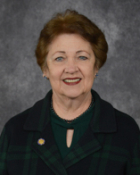
69th Legislative Assembly (2025-26) Introduced by Diane Larson

Allows courts to excuse full-time law enforcement officers from criminal jury service, reducing officer participation on juries and narrowing the jury pool.

Second reading, failed to pass, yeas 14 nays 33
0
WeVote Research Nonpartisan
Bill Summary · SB 2095

Summary — SB 2095 (North Dakota): Excusing Law Enforcement Officers from Jury Service

Status: Second reading — failed to pass (yeas 14, nays 33)
Introduced: March 7, 2025
Primary sponsor: Senator Larson

Main purpose

SB 2095 would amend and reenact North Dakota Century Code section 27‑09.1‑11 to explicitly authorize courts to excuse full‑time law enforcement officers from jury service when the service would be for a criminal trial. The bill clarifies who qualifies as a “law enforcement officer” for this purpose and preserves the court’s existing ability to excuse jurors for hardship, extreme inconvenience, or public necessity.

Key provisions

  • Amends NDCC 27‑09.1‑11 (Excuses from jury service).
  • Defines “law enforcement officer” to include:
    • full‑time salaried sheriffs, sheriff’s deputies, police chiefs, policemen,
    • any individual licensed under chapter 12‑63 to perform peace‑officer duties who is employed full‑time by a state or political‑subdivision criminal justice agency or branch.
  • Retains the court’s existing authority to excuse prospective jurors for undue hardship, extreme inconvenience, or public necessity for a period determined by the court; at the end of that period the individual must reappear as directed.
  • Adds a specific, separate ground for excusal: an individual who is a law enforcement officer may be excused if the jury service would be for a criminal trial.
  • Application clause: the act would apply to any jury summons sent after the statute’s effective date.

Who would be affected

  • Primary: full‑time law enforcement officers as defined above (sheriffs, deputies, police chiefs, licensed peace officers employed by criminal‑justice agencies).
  • Secondary: trial courts (who would apply the new excusal ground), jury administrators, criminal defendants and attorneys (potentially affecting jury composition), and the general pool of prospective jurors in counties with active criminal dockets.

Potential impacts and considerations

  • Practical effect: courts would have explicit statutory authority to excuse law enforcement officers from serving on criminal juries, likely reducing the number of sworn officers seated on such juries.
  • Policy considerations: supporters may argue this avoids conflicts of interest or the appearance of bias; opponents may note it reduces representation of persons with law‑enforcement experience and could shrink the available jury pool for criminal matters.
  • Administrative: jury panels and scheduling may be modestly affected if a category of prospective jurors is regularly excused for criminal trials.
  • Because the bill failed its second reading (14–33), it did not become law at that time; if reintroduced or amended, its application would begin only after enactment and the effective date specified in law.

If you want, I can prepare a short pros/cons briefing or model amendment language for a narrower or broader excusal rule.

Compiled from official sources — confirm details with the bill’s official record.

Sign in to ask a question.