

WeVote

Bill

Bill

HR 8467

ZOMBIE Act

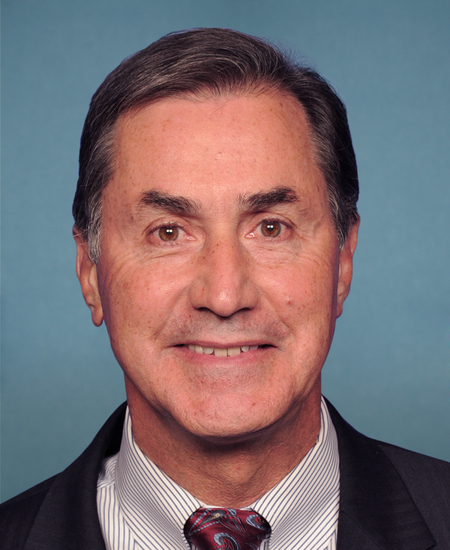
119th Congress Introduced by Gary Palmer

The bill tightens focus on preventing financial loss by improper payments, requiring detailed risk assessments, enhanced transparency, and cross‑agency coordination to reduce fraud

Motion to reconsider laid on the table Agreed to without objection.
0
WeVote Research Nonpartisan
Bill Summary · HR 8467

Summary of H.R. 8467 (119th Congress): Zeroing Out Monetary Benefits Improperly Expended Act (ZOMBIE Act)

Format: Markdown for readability

1) Purpose and Intent

  • Bill Title: Zeroing Out Monetary Benefits Improperly Expended Act, or the ZOMBIE Act.
  • Purpose: Reform the Payment Integrity Information Act of 2019 to reorient and strengthen executive-branch focus on preventing improper payments that result in financial loss to the government. Emphasizes risk-based management, transparency, and enhanced collaboration among agencies to reduce fraud and improper payments.

2) Key Provisions and Changes

A. Definitions and Scope

  • Expands the definition of “financial loss to the Government” to cover payments exceeding the correct amount that results in a net loss to the federal government.
  • Clarifies that not all incorrect payments constitute a “financial loss” (e.g., correct payments made with improper administrative procedures may be excluded).

B. Improper Payments Resulting in Financial Loss

  • Reframes and tightens reporting requirements to focus on improper payments that lead to actual financial loss.
  • Requires detailed tracking and reporting of improper payments that cause financial loss, including related fraud.

C. Estimates and Reporting

  • Agency Budget Justifications: Agencies must include in their annual budget justification an estimate of improper payments that result in financial loss.
  • Risk Assessment Guidance: Within one year of enactment, Treasury must develop risk assessment guidance to evaluate fraud and improper payments, including:

    • Likelihood and magnitude of payment errors, both those that do and do not result in financial loss.
    • A formula for estimating financial loss.
    • References to government-wide fraud risk management documents (e.g., GAO frameworks).
  • Agency Risk Assessments: Agencies must perform risk assessments for programs listed as high-priority and for newly authorized programs before any disbursement of federal funds (and for existing programs prior to the next disbursement).

D. Program Inventory and Reporting

  • Requires annual listing of programs and activities that must be reported on the Program Inventory, with emphasis on those leading to financial loss.
  • Expanded reporting to include the status of:
    • Fraud risk management entities and responsibilities
    • Progress on implementing fraud risk mitigation controls, including Do Not Pay and other Treasury/Inspector General data assets
    • Compliance with government-wide fraud risk guidance (GAO framework)

E. Oversight, Coordination, and Accountability

  • Mandates a cross-agency liaison mechanism: each agency with a high-priority program must designate a senior official to coordinate with OMB, Treasury, IGs, and the Pandemic Response Accountability Committee to report actions taken and planned reforms.
  • Requires ongoing and documented coordination meetings at least annually (non-audit or investigative purposes).

F. Data Access and Transparency

  • Agencies must provide access to necessary records and data assets to support fraud risk assessment and improper payment prevention, including data from government, state/local governments, and private-sector entities.

G. Budgetary and Compliance Implications

  • Revisions to oversight and reporting requirements affect budgetary planning, with a stronger emphasis on preventing financial loss rather than merely reducing improper payments.
  • Changes to reporting cadence (not less than every 3 years for certain reports) and expanded data disclosures.

3) Who or What is Affected

  • Federal executive agencies that administer programs with significant payment lines (e.g., Social Security benefits, grants, procurement, payroll, and other federal disbursements).
  • Office of Management and Budget (OMB), Department of the Treasury (Bureau of the Fiscal Service), Government Accountability Office (GAO) references, and Inspectors General (IGs) of respective agencies.
  • Do Not Pay Initiative and other Treasury data assets used to prevent fraud.
  • Legislative branches’ budget committees (as indicated by required reporting to the Senate and House Budget and Appropriations Committees).

4) Procedural and Timeline Aspects

  • Introduction Date: April 23, 2026.
  • Action Path: Referred to the House Committee on Oversight and Government Reform.
  • Timeline Highlights:
    • Within 1 year after enactment: Treasury to develop risk assessment guidance.
    • Within 6 months after guidance is issued: agency heads must conduct risk assessments for listed programs before disbursement (and for newly authorized programs prior to disbursement).
    • Reporting cadence shifts to not less than every 3 years for certain agency reports.
    • Ongoing mandatory coordination meetings at least once per fiscal year.

5) Notable Details

  • The bill’s short title references “Zeroing Out Monetary Benefits Improperly Expended Act” and acronym “ZOMBIE Act.”
  • It makes targeted textual changes to the Payment Integrity Information Act of 2019, reframing definitions, improving clarity on what constitutes financial loss, and elevating fraud risk management practices.

If you’d like, I can provide a side-by-side comparison with the current Payment Integrity Information Act of 2019 or generate a one-page explainer for non-technical audiences.

Compiled from official sources — confirm details with the bill’s official record.

Sign in to ask a question.