

WeVote

Bill

Bill

S 4321

YouthBuild for the Future Act

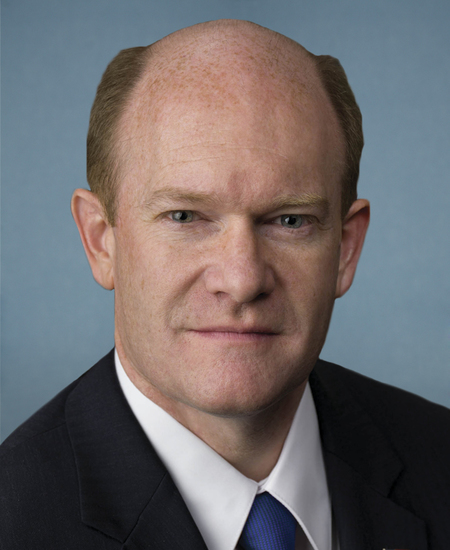
119th Congress Introduced by Chris Coons and 4 co-sponsors

Expands YouthBuild funding and programs to broaden access (rural/Indigenous focus), enhance participant supports, and create employer-partnered opportunities through new grants.

Introduced in Senate
0
WeVote Research Nonpartisan
Bill Summary · S 4321

Summary: YouthBuild for the Future Act (S. 4321, 118th Congress — 119th Session)

Note: This summary reflects the bill as introduced in April 2026 and outlines its stated purpose, key provisions, affected parties, and timelines.

Purpose and intent

  • Reauthorize and expand the YouthBuild program under the Workforce Innovation and Opportunity Act (WIOA).
  • Create a new set of program enhancements and funding streams to support YouthBuild participants, with added emphasis on rural areas, Indigenous communities, and employer partnerships.
  • Improve coordination with other federal workforce and anti-poverty programs, and enhance data use and participant support services.

Key provisions and changes

Section 2. YouthBuild Program (amendments to WIOA Sec. 171)

  • Rural and Indigenous-focused reservations: For any fiscal year with more than $125 million appropriated, 20% of the amount over $125 million must be reserved for:
    • Grants to rural-area applicants.
    • Grants for programs operated by tribes or entities serving Indigenous peoples (including Alaska Natives and Native Hawaiians) to run YouthBuild programs.
  • Grant administration: After the rural/Indigenous reservation, the Secretary may use remaining funds to award grants for YouthBuild programs.
  • Program enhancements to participant services:
    • Adds meals/food assistance as part of allowed services.
    • Requires sharing information and assistance to participants about eligibility for Federal and State means-tested benefits (e.g., SNAP) and Child Care and Development Block Grant programs.
    • Adds supportive services to ensure full participation of individuals with disabilities.
  • Use of funds for matching: Allows grant funds to be used to meet matching requirements under the National and Community Service Act (or similar requirements) if used in line with subsection (e)(3).
  • Performance and consultation:
    • Requires the Secretary to consult annually with YouthBuild program implementers when establishing expected performance levels to account for workforce development and postsecondary education experiences.
    • States an annual funding opportunity release to align with the annual grant announcements.
  • State wage data access: Requires states to facilitate access to wage data for YouthBuild participants, while preserving privacy protections.
  • Authorization of appropriations (fiscal years 2027–2032):
    • 2027: $159.5 million
    • 2028: $167.5 million
    • 2029: $175.9 million
    • 2030: $184.7 million
    • 2031: $193.0 million
    • 2032: $203.6 million

Section 3. YouthBuild Employer Partnerships (new Sec. 171A under WIOA)

  • Purpose: Establish a new grant program to fund consortia that develop employer partnerships to create or expand YouthBuild employment and training opportunities.
  • Eligible consortia: Must include:
    • A YouthBuild program-operating entity.
    • A public or private employer within the local or regional area.
  • Application requirements: Must include employer needs assessments, partnership descriptions, proposed use of funds, and a plan to evaluate effectiveness.
  • Priority: Preference given to proposals partnering with joint labor-management apprenticeship programs.
  • Use of funds: To develop or expand employment and training opportunities aligned with local labor market needs.
  • Appropriations: Authorized $20 million per year for FY2027–FY2032 to carry out Sec. 171A.

Administrative and structural changes

  • Table of contents updated to reflect the new Sec. 171A.
  • Minor language updates to reflect terminology changes (e.g., “youth offender” to “youth justice-involved individual”; “foundational skill needs” replaces “basic skills deficient”).

Who would be affected

  • YouthBuild program participants (primarily young people in underserved communities, including rural areas and Indigenous communities).
  • YouthBuild program operators and consortia.
  • Employers and labor-management partnerships involved in YouthBuild employment opportunities.
  • States that administer WIOA funds and manage wage data for participants.
  • Organizations seeking federal grants for YouthBuild operations and employer partnerships.

Timelines and funding cycles

  • Annual grant opportunities are to be released on a predictable schedule.
  • Authorization and funding levels span FY2027 through FY2032, with stepped increases in appropriations.
  • The new Sec. 171A would begin with appropriations authorized for the same period (FY2027–FY2032).

This bill aims to expand YouthBuild reach, bolster participant supports, and deepen employer engagement to improve workforce outcomes for youth.

Compiled from official sources — confirm details with the bill’s official record.

Sign in to ask a question.