

WeVote

Bill

Bill

HR 6621

Workforce of the Future Act of 2025

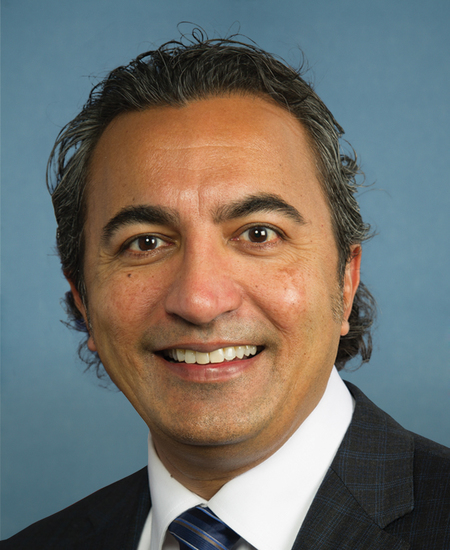
119th Congress Introduced by Ami Bera and 8 co-sponsors

The bill expands federally funded, equity-focused training and education in emerging AI tech to boost jobs and help workers adapt to AI-driven industries.

Introduced in House
0
WeVote Research Nonpartisan
Bill Summary · HR 6621

Overview

  • Bill: HR 6621 – Workforce of the Future Act of 2025
  • Type: Federal legislation introduced in the 119th Congress
  • Purpose: Promote a 21st-century workforce by expanding emerging and advanced technology education and by funding training and quality employment for workers in industries most affected by artificial intelligence (AI).
  • Sponsorship: Lead sponsor Dean Cleaver; numerous co-sponsors including LaMonica McIver, Al Green, Dan Goldman, John Larson, Eleanor Holmes Norton, Ami Bera, Jill Tokuda, Emanuel Cleaver, Shri Thanedar.

What the bill seeks to do

  • Establish national attention to AI’s impact on jobs and workforce needs.
  • Create and fund grants to expand emerging and advanced technology education (EATE) and related workforce development.
  • Provide targeted training and employment support for workers in industries projected to be most affected by AI.

Title I: Impact of Artificial Intelligence on Jobs

  • Sec 101 (Sense of Congress)
    • Acknowledges AI’s potential to disrupt jobs but emphasizes opportunities to prepare workers to work with AI and mitigate displacement.
  • Sec 102 (Definitions)
    • Sets definitions for AI, community college, higher education, labor organizations, local/state education agencies, minority-serving institutions, technical colleges, tribal colleges, and other terms used in the title.
  • Sec 103 (Report on Artificial Intelligence)
    • Requires three-way reporting by the Secretary of Labor, Secretary of Commerce, and Secretary of Education.
    • Timelines:
    • Interim report due within 6 months after enactment.
    • Final report due within 1 year.
    • Updated report due within 3 years after the final report.
    • Content of reports (b): Data needs, data ownership and accessibility, industries and occupations growth, impact on job quality, opportunities for stakeholders, collaboration mechanisms, demographic impacts, skills and education needed, delivery methods, industry and education partnerships, and recommendations on data access and policy/program options.

Title II: Emerging and Advanced Technology Education and Workforce Development

  • Sec 201–202 (Findings and Definitions)
    • Findings highlight growth in AI/tech-based occupations, existing gaps in EATE, and disparities in access to high-quality technology education.
    • Expands the definition of EATE to cover computational thinking, software/hardware design, AI, quantum computing, cloud and data topics, privacy and security, and related STEAM fields.
    • Eligible entities defined (schools, districts, tribes, community/technical colleges, labor organizations, state workforce agencies, and higher education institutions).
  • Sec 203 (Department of Education Grants)
    • Grants to eligible entities to expand EATE.
    • Funding split: 50% to projects under subsection (c) (EATE activities) and 50% to projects under subsection (d) (teacher development and recruitment).
    • Grants duration: 3 to 5 years.
    • Preference considerations: Alignment with AI workforce reports and addressing barriers faced by demographics identified in Section 103.
    • Multiple awards: Generally one grant per eligible entity, but consortia may receive multiple awards; lead fiscal agent restrictions apply.
    • Application requirements include actionable plans to reach all high school students within 5 years, provide a K–12 progression to EATE, expand STEAM access, monitor/evaluate, sustain activities post-grant, and outline industry engagement.
    • Activities funded (c)(1):
    • Teacher training in EATE with PD opportunities.
    • Access to high-quality learning materials, online options, equipment, and broadband.
    • Plans to broaden STEAM access and reduce equity gaps.
    • Student mentoring and ongoing industry input.
    • Collaboration with industry to align curricula with AI job needs.
    • Upfront limitation: max 15% of grant funds may be used for equipment purchase.
    • Permissible activities (c)(2) include regional industry collaboration, recruitment of instructional staff, sustainability planning, and dissemination of best practices.
    • Teacher-focused funding (c)(3) and obligations (c)(4) cover support for teacher development and loan forgiveness/tuition reimbursement.
  • Sec 204 (Department of Labor Grants)
    • Grants to support workforce training for workers most impacted by AI.
    • Eligible entities may form consortia; grants last 3–5 years.
    • Priority given to entities involving labor organizations representing workers in AI-impacted industries/occupations.
    • Target population (b)(1): workers with high school diplomas in industries likely to grow due to AI or those involuntarily separated within the prior year and eligible for unemployment benefits.
    • Activities (b)(2): training, skill certifications, continuing education to update and maintain high-skill, high-wage jobs in in-demand sectors, including emerging/advanced tech.
  • Sec 205–206 (National Activities, Evaluations, and ESRA Amendment)
    • National activities: Up to 2.5% of Education and Labor grant funds can be reserved for national technical assistance, evaluation, and dissemination.
    • Evaluations: Third-party evaluations to assess scalability and worker engagement effectiveness.
    • Authorization of appropriations:
    • Education grants: $160 million for FY 2026.
    • Labor grants: $90 million for FY 2026.
    • Amendments to the Education Sciences Reform Act to incorporate emerging technology education metrics into elementary and secondary school accountability.

Who would be affected

  • Eligible entities: State education agencies, local education agencies, eligible Tribal schools, community colleges, technical/postsecondary institutions, minority-serving institutions, labor organizations, and relevant State workforce agencies.
  • Students: K–12 students (through EATE integration and STEAM expansion) and higher education students pursuing technology education.
  • Workers: Those in industries projected to grow with AI, and workers at risk of displacement, particularly those with HS diplomas.
  • Educators: Teachers and paraprofessionals targeted for professional development and recruitment.

Key timeline and process elements

  • Interim and final AI workforce reports due within 6 months and 12 months of enactment, respectively; an updated assessment due within 3 years after the final report.
  • Grants for Education and Labor sectors run 3–5 years.
  • National activities and evaluations occur concurrently, with up to 2.5% set aside for national work.
  • ESRA amendment adds AI-education metrics to elementary/secondary school reporting.

Practical implications

  • The bill would increase federal investment to expand AI-related education and workforce programs.
  • It emphasizes equity, rural and underserved communities, and collaboration with industry and labor organizations.
  • It creates structured data collection and periodic reporting to guide policy and program decisions.
  • It aims to reduce the technology skills gap and prepare a workforce capable of developing, deploying, and working alongside AI.

Compiled from official sources — confirm details with the bill’s official record.

Sign in to ask a question.