

WeVote

Bill

Bill

HR 9008

Worker Rights and Support Act

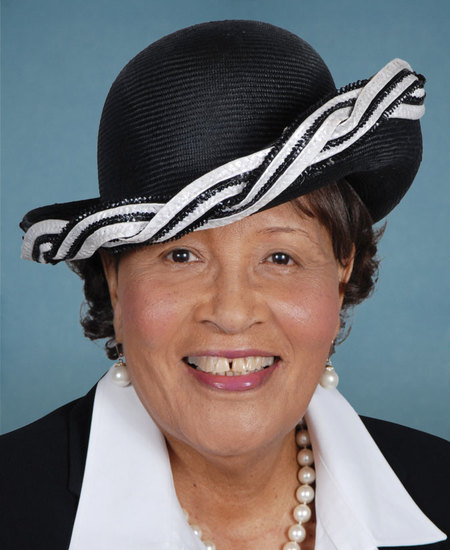
119th Congress Introduced by Alma Adams and 9 co-sponsors

The bill would require employers under the FLSA to provide mandatory meal, rest/restroom, and medical breaks with specific pay rules and enforcement.

Introduced in House
0
WeVote Research Nonpartisan
Bill Summary · HR 9008

Overview

  • Bill: HR 9008
  • Session: 119th Congress
  • Title: Worker Rights and Support Act
  • Purpose: Amend the Fair Labor Standards Act of 1938 to require employers to provide specific break opportunities for employees, including meal breaks, rest/restroom breaks, and medical breaks, with related enforcement and preemption provisions.

Main purpose and intent

  • Establish a national statutory standard mandating mandatory breaks for workers.
  • Ensure employees receive time for meals, rest/restroom needs, and certain medical-related breaks with compensation rules.
  • Clarify enforcement mechanisms and penalties for violations.
  • Preserve existing protections under collective bargaining agreements and state laws that provide greater protections.

Key provisions and changes

Creation of Section 8 in the FLSA (Required Breaks for Employees)

  1. Meal Breaks
    • For every 6-hour period of work, employers must provide a break time of at least 30 minutes for a meal.
    • Payment:
      • Generally, the break need not be paid (not required to compensate) unless the employee is not fully relieved of all work or not free to leave the premises during the break.
      • If the employee is not fully relieved or is required to remain on-site, the break must be paid at a rate of at least 1.5 times the employee’s regular rate.
  • Waiver:
    • Employees may voluntarily waive the meal break (consent required).
    • Employers may not compel a waiver.
  1. Rest and Restroom Breaks

    • In each 4-hour work period, employers must provide a break time that is either:
      • 10 minutes or
      • The time needed to use the nearest functioning restroom (the longer of the two).
    • Breaks must be compensated at the employee’s regular rate.
  2. Medical Breaks

    • For medical conditions communicated by a health care provider (directly or via the employee), employers must provide breaks not exceeding 20 minutes each, as reasonably required.
    • Breaks must be compensated at the regular rate.
  3. Time Worked

    • All paid breaks under this section count as time worked.
  4. Preemption and Collective Bargaining

    • The requirements do not override existing collective bargaining agreements that provide greater protections.
    • They do not preempt state laws that offer greater protections than those under the bill.

Enforcement and Penalties

  • Prohibited Act: Employers violating Section 8 would be added to existing prohibited acts under the FLSA (extending protections to include breaks).
  • Penalties: The bill authorizes legal or equitable relief as appropriate to effectuate the purposes of Section 8.
  • Statute of Limitations: Amends Portal-to-Portal Act timing to include enforcement of Section 8 actions.

Technical Amendments

  • Repeals Section 10 of the FLSA (noting alignment with the new structure).
  • Minor cross-references to ensure wage and break-time provisions are consistently connected (including references to Section 6, 7, and 8).

Who/what would be affected

  • Employers covered by the Fair Labor Standards Act (most private sector employers and some public sector workers).
  • Employees, who would gain guaranteed meal, rest, restroom, and medical breaks with specified pay conditions.
  • Labor unions and workplaces with existing collective bargaining agreements, which may already provide more favorable break protections.
  • State laws that already offer greater protections would continue to apply and not be preempted.

Procedural and timeline aspects

  • Introduced in the House on May 21, 2026 by a bipartisan cohort of sponsors.
  • Referred to the House Committee on Education and Workforce for consideration.
  • The bill outlines new requirements beginning from enactment (no specific phase-in timeline provided in the text).

Potential impact (high-level)

  • Employees: Clear, federally mandated break rights with pay considerations; potential improvements in health, safety, and productivity.
  • Employers: Administrative changes to scheduling and wage calculations; potential cost implications for paid breaks where applicable.
  • Legal/Enforcement: Expanded FLSA enforcement scope and penalties to cover break provisions; potential additional litigation or compliance costs.
  • Labor market: Could influence job quality standards and bargaining dynamics, particularly in industries with long shifts or high on-site demands.

Compiled from official sources — confirm details with the bill’s official record.

Sign in to ask a question.