

WeVote

Bill

Bill

HB 4725

WORKER PROTECTION UNIT

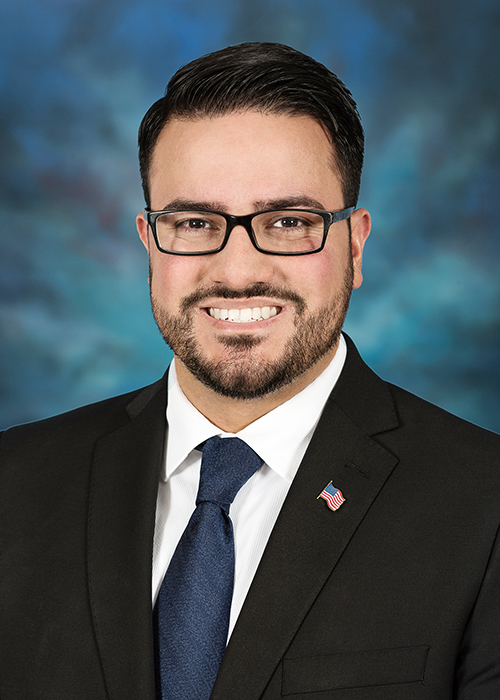
104th Regular Session Introduced by Omar Aquino and 7 co-sponsors

The bill strengthens the Attorney General’s Worker Protection Unit by expanding its authority to conduct inspections, issue warrants, and enforce worker protections more effectivel

Sent to the Governor
0
WeVote Research Nonpartisan
Bill Summary · HB 4725

Summary of HB 4725 (104th Illinois General Assembly) – Worker Protection Unit

Title: WORKER PROTECTION UNIT

Sponsor: Rep. Jay Hoffman (Co-sponsor: Rep. Theresa Mah)

Filed: April 15, 2026

Purpose (as inferred from text and amendments): To strengthen investigative and enforcement authority of the Attorney General’s Worker Protection Unit, including expanded powers to conduct inspections, issue warrants, and obtain compliance in cases involving worker protections. The amendment process indicates a focus on allowing negotiated resolutions, access controls, and clarified procedures for subpoenas and witness compliance related to inspections and enforcement actions.

Key Provisions and Changes (as reflected in the amended text and amendment history)

  • Investigation Resolution

    • The Attorney General may resolve an investigation by mutual agreement either before or after initiating formal action. This provides a potential alternative to litigation or formal enforcement actions.
  • Access to Premises

    • Employers may refuse to grant the Attorney General access to non-publicly accessible areas unless the Attorney General obtains an administrative inspection warrant (under subsection (c-35)). This creates a warrant requirement for access to sensitive or restricted areas of an employer’s premises.
  • Subpoenas and Witness Compliance

    • Revisions to subpoena timelines: “20 days after the date of service of the subpoena, at any time before the return date specified in the subpoena, or within a longer period as may be.” This expands or clarifies the window for compliance with subpoenas.
    • Wording updates to require witnesses to “comply” with orders, rather than “witness comply,” aligning procedural language.
  • Contempt and Fees

    • If a witness fails to comply with an order, the Attorney General may seek court intervention. The AG may recover reasonable fees and expenses incurred in obtaining the order. If contempt of court is found, the AG may seek a writ of attachment or an equivalent remedy.
  • Administrative Inspection Warrants

    • The amendment includes provisions for issuing administrative inspection warrants. Key elements include:
    • Warrants may be issued based on an affirmation showing a reasonable inspection is warranted.
    • A public interest in effectively enforcing any statute enforced by the Worker Protection Unit must sufficiently justify administrative inspection of the employer’s premises or records.
    • Warrants shall be issued only after receipt of an affidavit from a knowledgeable person outlining the grounds for the warrant.
    • Circuit judges must be satisfied that reasonable grounds exist before issuing a warrant.
  • Definition of Reasonableness

    • The standard for “reasonableness” in administrative inspections hinges on public interest and the effective enforcement of the statutes enforced by the Worker Protection Unit.

Process and Timelines (as evidenced by action history)

  • Early 2026: Bill introduced by Rep. Jay Hoffman; co-sponsorship added by Rep. Theresa Mah.
  • March 25, 2026: House Committee Amendment No. 1 adopted; bill passed Executive Committee (8-3-0) with amendments; moved to calendar for 2nd Reading.
  • April 7–16, 2026: Subsequent amendments filed (Amendment No. 2 and Amendment No. 3) refining inspection warrants, access provisions, subpoena timelines, and penalties; amendments referred to Rules Committee and then to Executive Committee.
  • Current status (as of amendment activity): Recommends adoption of Amendment No. 3 by Executive Committee; further floor action anticipated.

Who Would Be Affected

  • Employers: Subject to heightened oversight by the Attorney General’s Worker Protection Unit; potential access restrictions to non-public areas without warrants; exposure to administrative inspections and potential penalties for non-compliance.
  • Attorney General’s Office (Worker Protection Unit): Expanded authority to conduct investigations, issue subpoenas, obtain administrative inspection warrants, and seek court actions for non-compliance; ability to recover fees and expenses.
  • Workers and the Public: Potentially enhanced protection through stronger enforcement of worker protections and related statutes.

Significant Procedural and Timeline Aspects

  • Availability of mutual resolution during investigations.
  • Requirement of administrative inspection warrants for access to non-public areas.
  • Clear subpoena compliance windows and remedies for non-compliance (including contempt and cost recovery).
  • Warrant criteria based on affirmed facts and public interest, with judicial oversight.

Notes

  • The amendments emphasize procedural rigor for inspections and subpoenas, balancing investigative power with due process and judicial oversight.
  • Specific statutory references (e.g., subsection (c-35)) are referenced but not fully quoted in this summary; the text indicates a structured framework for administrative inspections alongside traditional investigative tools.

If you’d like, I can map these provisions to potential real-world enforcement scenarios or compare them with current Illinois law on administrative inspections and worker protections.

Compiled from official sources — confirm details with the bill’s official record.

Sign in to ask a question.