

WeVote

Bill

Bill

HR 10061

Wildfire Response and Readiness Act

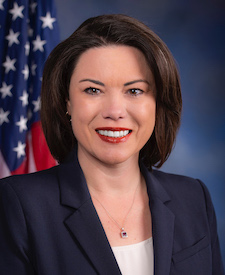
119th Congress Introduced by Angie Craig and 5 co-sponsors

Expands proactive wildfire management with prescribed fires, landscape restoration, community protection, and firefighter safety, funded and coordinated across federal and partner

Introduced in House
0
WeVote Research Nonpartisan
Bill Summary · HR 10061

Summary of HR 10061 — Wildfire Response and Readiness Act (119th Congress)

Purpose and overall aim

HR 10061 seeks to address wildfire readiness, response, recovery, and firefighter safety across federal, state, tribal, and local levels. The bill emphasizes expanding prescribed fire programs, advancing landscape-scale restoration, enhancing community protection, and modernizing the federal wildfire workforce. It also includes provisions to improve public health responses to wildfire smoke, and to support post-disaster reforestation and watershed protection.

Key provisions and changes

  • National Prescribed Fire Program (Division A, Title I)

    • Creates a framework for funding, implementing, and expanding prescribed fires on federal and certain non-federal lands.
    • Establishes a Collaborative Prescribed Fire Program to select and fund projects that meet landscape-level restoration goals, with strict eligibility criteria and prioritization (e.g., cross-boundary work, wildland-urban interface areas, Tribal resources, ecological restoration potential).
    • Requires a regional prescribed fire strategy and ongoing reporting (annual and five-year program reviews).
    • Allows up to 15% of certain agency funds (USFS and DOI) to be used for prescribed fire-related activities, including environmental reviews, site prep, outreach, and post-fire monitoring.
  • Reporting and oversight (Division A, Title I, Subtitle C)

    • Annual reporting to National Fire Planning and Operations Database on acres treated and funding used.
    • Congress receives a program-wide report every five years assessing progress and effectiveness.
  • Restoration, Recovery, and Reforestation (Division A, Title II)

    • Reauthorization and expansion of landscape restoration programs, with emphasis on cross-ownership collaboration and ecological restoration.
    • Development of a 10-year national wildfire plan and landscape-scale forest restoration projects, including input from the Joint Chiefs partnership.
    • Provisions to increase nursery and seed orchard capacity, seed collection, and reforestation supply chains; support for priority restoration projects; and encouragement of new funding mechanisms (e.g., conservation finance, good neighbor authority).
    • Post-disaster reforestation and watershed protection programs to accelerate recovery after major wildland fires.
  • Fire-adapted communities and public health (Division B)

    • Community protection grants and home hardening programs to expand resilience against wildfires; updates to at-risk community lists.
    • Investments in wildfire response technology (satellite monitoring, wildfire detection, data sharing, radio communications, and a Wildfire Science and Technology Advisory Board).
    • National smoke monitoring and health risk assessments; research to improve smoke prediction, public communication, and protective guidance during wildfire events.
  • Agency modernization and firefighter safety (Division C)

    • Workforce development including a Middle Fire Leaders Academy and a dedicated wildfire workforce grant program.
    • Provisions for civilian conservation centers, veteran-focused wildfire crews, and targeted pathways for converting seasonal firefighters to permanent federal employees.
    • Safety and compensation measures for wildland firefighters, including rest and recuperation leave, health provisions, retirement considerations, and parity with other federal firefighting roles.
    • Protections to stabilize the federal workforce and prevent reductions in force in key agencies.

Who is affected

  • Federal agencies: U.S. Forest Service, Department of the Interior agencies (e.g., BLM, NPS, FWS), and related departments.
  • State, tribal, and local governments, as well as non-governmental organizations and private entities engaged in prescribed fire and restoration activities.
  • Wildland firefighters, including federal, seasonal, veteran, and civilian staff, who would benefit from workforce improvements and safety provisions.
  • Communities at risk from wildfire through the Community Wildfire Defense/Protection programs and smoke health initiatives.

Timelines and procedural notes

  • The bill outlines program start-up steps, with emphasis on establishing task forces, funding allocations (e.g., up to $20 million per year for collaborative fire programs, with caps per project), and implementing landscape-scale plans within specified windows (1–2 years for planning and revisions).
  • Sunset provisions exist for certain restoration authorities, which are set to expire after seven years unless extended.
  • Regular reporting to Congress is mandated, including annual project-level reporting and multi-year program assessments.

Overall, HR 10061 consolidates and expands federal support for proactive wildfire management, ecosystem restoration, and firefighter safety, while increasing coordination with non-federal partners and focusing on community resilience and public health.

Compiled from official sources — confirm details with the bill’s official record.

Sign in to ask a question.